
Engineered to exact ANSI/ASME Class 150 through 2500 specifications and ASTM A182 criteria, built to withstand sour crude, subsea pressures, and aggressive process reagents across American industrial plants.
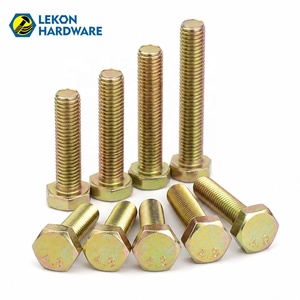
Engineered property classes 8.8, 10.9, and 12.9 carbon and stainless flange bolting for high-torque pipe connections.
View Details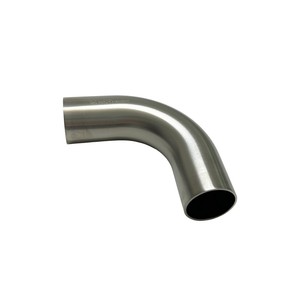
High-purity Ra < 0.5µm electro-polished fittings certified for US pharmaceutical, bioprocessing, and dairy facilities.
View Details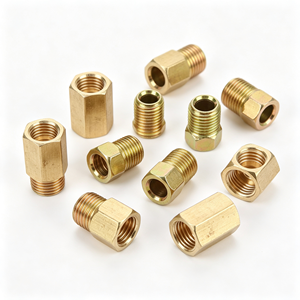
Precision forged ASME B1.20.1 NPT threads designed for industrial plumbing, instrument calibration, and cooling loops.
View Details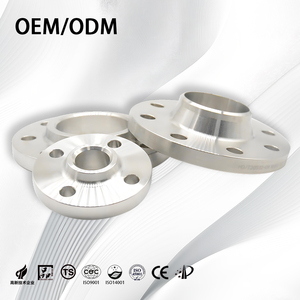
Heavy duty low-carbon stainless steel slip-on configurations machined for simple alignment in midstream pipeline installations.
View Details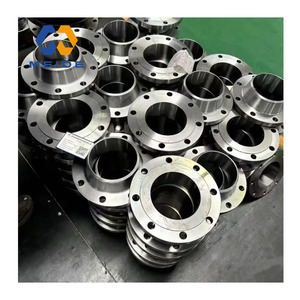
Non-destructive ultrasonic tested (UT) ring forgings manufactured for high-stress heavy machinery and structural pipelines.
View Details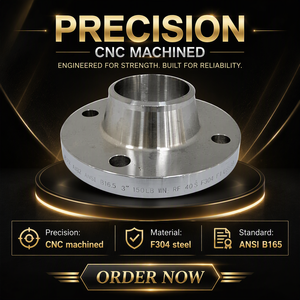
Class 150 to Class 2500 weld neck flanges engineered with tapered hub geometry to disperse severe thermal pipeline stress.
View Details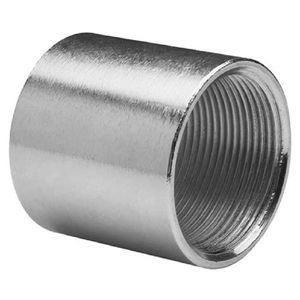
High-pressure socket-weld and NPT threaded couplings with zinc galvanized or rust-preventative black oil finish.
View Details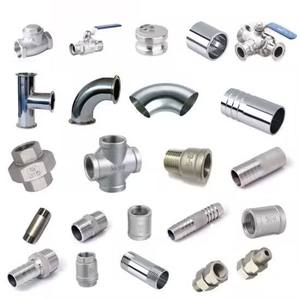
Precision formed ASME B16.9 buttweld and threaded fittings crafted to handle cyclic pressure loads in critical process skids.
View DetailsA rigorous metallurgical comparison showing why dual-certified ASTM A182 F316/316L remains the benchmark alloy for offshore, LNG, and petrochemical installations in the United States.
In process engineering, selecting the right flange material dictates plant safety, operating lifecycle, and scheduled downtime costs. Forged Stainless Steel 316L (UNS S31603 / WNR 1.4404) represents the primary austenitic solution specified across North American chemical processing facilities, Gulf Coast oil refining corridors, and Atlantic offshore platforms. The fundamental advantage of 316L lies in its strict carbon limitation (≤0.030%) combined with a dedicated 2.00% to 3.00% Molybdenum addition.
Standard grade 304 or 316 stainless steels, when subjected to the elevated thermal cycles of field welding (temperatures ranging between 450°C and 850°C), suffer from Chromium Carbide precipitation at the austenite grain boundaries. This depletion of unbonded chromium creates localized galvanic cells, precipitating severe intergranular corrosion under caustic or acid wash. The ultra-low carbon chemistry of 316L completely avoids carbide formation, maintaining superior weldability without requiring costly post-weld solution annealing.
| Elemental Parameter / Mechanical Metric | ASTM A182 F316 (Standard) | ASTM A182 F316L (Low Carbon) | Rajtilak Dual Certified 316/316L |
|---|---|---|---|
| Carbon (C) Max % | 0.080% | 0.030% | 0.025% (Controlled Low) |
| Molybdenum (Mo) % | 2.00 – 3.00% | 2.00 – 3.00% | 2.10 – 2.50% (Guaranteed Range) |
| Nickel (Ni) % | 10.00 – 14.00% | 10.00 – 15.00% | 10.50 – 12.00% |
| Chromium (Cr) % | 16.00 – 18.00% | 16.00 – 18.00% | 16.80 – 17.50% |
| Tensile Strength, Min (ksi / MPa) | 75 ksi / 515 MPa | 70 ksi / 485 MPa | 75 ksi / 515 MPa |
| Yield Strength (0.2% Offset Min) | 30 ksi / 205 MPa | 25 ksi / 170 MPa | 30 ksi / 205 MPa |
| Intergranular Corrosion Test | Susceptible if unwelded | ASTM A262 Practice E Pass | ASTM A262 Practice E Mandatory Pass |
By balancing precise melt chemistries in prime electric arc furnace (EAF) ingots, Rajtilak Metal guarantees that every forged flange yields the low-carbon corrosion immunity of 316L alongside the superior mechanical strength thresholds of standard 316. This provides complete structural headroom for high-pressure ANSI Class 300, 600, 900, 1500, and 2500 pipeline loops across US project layouts.
From cryogenic LNG terminals along the Gulf of Mexico to clean-room biomanufacturing suites in New England, our CE and ASME certified flanges deliver fail-safe sealing performance.
Louisiana and Texas hydrocarbon corridors rely on ASME B16.5 Class 300 and 600 Raised Face (RF) weld neck flanges in 316L. The high molybdenum concentration inhibits severe chloride-induced pitting corrosion caused by humid coastal environments and marine air exposure during high-pressure methane handling.
Pharmaceutical distillation columns and clean-in-place (CIP) loops in New Jersey, Massachusetts, and North Carolina demand AISI 316L flanges machined with uniform bore tolerances and smooth raised faces (125-250 Ra). Our sanitary grade components eliminate crevices, preventing bacterial harboring and bio-film build-up.
Californian coastal desalination setups and deepwater Gulf platforms specify 316L Blind, Ring Type Joint (RTJ), and Slip-On flanges. The alloy provides continuous resistance to high-velocity brine solutions, brackish sea intakes, and micro-fouling common to thermal evaporation headers.
How strict federal emissions mandates, Section 232 / 301 supply chain shifts, and CE-PED export integration are redesigning purchasing protocols for US procurement engineers.
US clean-air rules mandate near-zero leakage at mechanical pipe connections. Serrated spiral concentric finishes (125 to 250 AARH) machined on 316L raised faces guarantee ideal gasket seating stress to meet strict methane reduction guidelines.
With prohibitive Section 301 tariffs on Chinese steel, US buyers are prioritizing Government of India Recognised Export Houses like Rajtilak Metal, securing competitive duty advantages without compromising structural integrity or mill provenance.
American engineering firms handling multinational EPC projects routinely order components dual-certified to ASME B16.5 and European Pressure Equipment Directive (PED 2014/68/EU) with full CE compliance, streamlining inventory across international modular builds.
US inspection engineers now enforce instantaneous documentation validation. Every Rajtilak flange is laser-stamped with its unique melt heat number, directly correlated to EN 10204 3.1 mill certs verifying chemistry, tensile, elongation, and impact values.
Combining three decades of heavy forging experience, Indian Boiler Regulations (IBR) approvals, Engineers India Limited (EIL) credentials, and global export infrastructure to support US industrial demands.
Our quality management systems are ISO 9001 certified, reinforced by rigorous statutory approvals from EIL (Engineers India Limited) and IBR (Indian Boiler Regulations). Our supply track record includes demanding offshore builds, refineries, and projects certified for ADNOC and major Middle Eastern operators, proving our capability to meet US tier-1 engineering specifications.
We source prime forging billets exclusively from reputed primary producers across India, Japan, and South Korea. Operating dedicated open-die and closed-die hydraulic presses, our components feature continuous, uninterrupted grain flow along the flange hub and neck, ensuring resistance to fatigue, thermal shock, and catastrophic mechanical rupture.
Beyond flanges, Rajtilak Metal is an integrated manufacturer of high-tensile and stainless fasteners (ASTM A193 B7/B8/B8M, ASTM A194 2H/8/8M heavy hex nuts) and ASME B16.9 buttweld fittings. US buyers can bundle their complete piping assemblies into consolidated container loads, slashing freight administration and import overhead.
Essential guidance on certifications, dimensional standards, tariffs, and mechanical testing protocols for smooth commercial import into the United States.
A: While ASME B16.5 governs dimensional and pressure-temperature ratings in North America, CE certification under the European Pressure Equipment Directive (PED 2014/68/EU) guarantees that the forging factory maintains audited material provenance, verifiable Charpy V-notch impact testing, and qualified welding procedures. Dual compliance ensures our flanges can be deployed on domestic projects or international modular packages seamlessly.
A: Yes. Every single export shipment is accompanied by a genuine EN 10204 Type 3.1 Inspection Certificate documenting the chemical melt analysis, tensile properties, yield point, elongation, and hardness test results. Furthermore, our 316L material can be fully certified to NACE MR0175 / ISO 15156 for sour oil and gas service, with hardness strictly controlled below 22 HRC.
A: We machine raised faces (RF), flat faces (FF), and ring type joints (RTJ) in accordance with ASME B16.5 Section 6.4.5. Standard stock features a spiral serrated or concentric serrated finish of 125 to 250 micro-inches (3.2 to 6.3 micrometers) Ra, which provides the precise friction and bedding profile required for spiral-wound flexible graphite gaskets.
A: We maintain a massive ready stock of standard sizes (1/2" through 24" in Class 150, 300, and 600) for dispatch within 5 to 7 days from our Mumbai logistics hub via Nhava Sheva (JNPT) port. Ocean freight transit averages 25 to 35 days to US East Coast ports (New York, Savannah, Houston) and 35 to 42 days to West Coast ports (Los Angeles, Long Beach). Air freight is available for emergency plant shutdowns.
A: Absolutely. We regularly host internationally recognized third-party inspection agencies appointed by buyers, including SGS, Bureau Veritas, DNV, TÜV, and Lloyd's Register. TPI inspectors can review raw material heats, witness PMI testing, verify hydrostatic pressure tests, check dimensional accuracy, and inspect final export seaworthy wood packaging.
A: Austenitic stainless steels such as 316L possess a Face-Centered Cubic (FCC) crystalline microstructure that does not undergo a ductile-to-brittle transition temperature (DBTT), unlike carbon steels. Consequently, our forged 316L flanges retain exceptional impact toughness and elongation at cryogenic temperatures down to -196°C (-320°F), making them suitable for US LNG import/export piping.
Get immediate access to comprehensive dimensional tolerances, pressure-temperature de-rating curves, gasket seating data, and our export price schedules tailored for the United States industrial market.