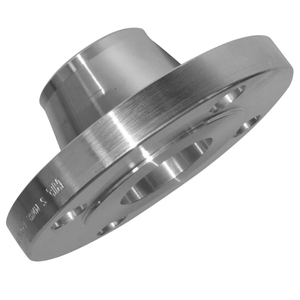
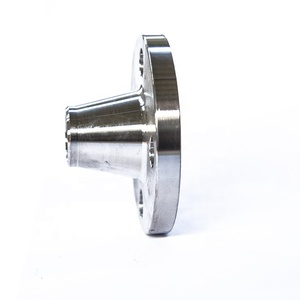
Fully compliant with ASTM A182, ASME B16.5, ASME B16.47, and JIS specifications with complete heat-sink traceability, NACE MR0175 qualification, and certified inspection reports.
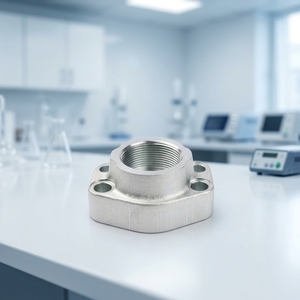
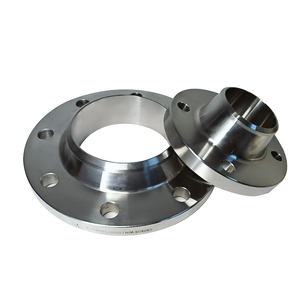
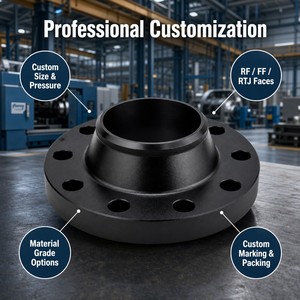
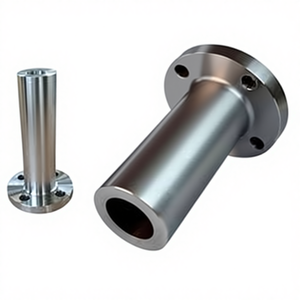
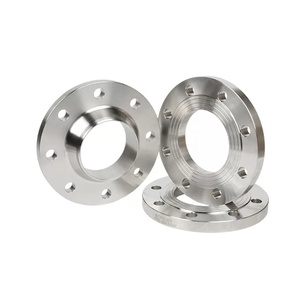
ASTM A182 represents the standard specification for forged or rolled alloy and stainless steel pipe flanges, forged fittings, valves, and components intended for elevated-temperature and highly corrosive service. For New Zealand's unique industrial matrix—stretching from the hyper-saline maritime atmospheres of Marsden Point and Taranaki offshore reserves to the aggressive geothermal wells of the Taupo Volcanic Zone—flange selection demands far more than nominal dimensional compliance.
In accordance with AS/NZS 1200 (Pressure Equipment Code) and AS 4041 (Pressure Piping), piping engineers across Auckland, Christchurch, and New Plymouth require certified forging integrity to eliminate hidden micro-porosity, intergranular carbide precipitation, and stress corrosion cracking (SCC).
Rajtilak Metal bridges the southern hemisphere supply corridor by offering fully certified, heat-sink verified forgings conforming to ASME B16.5, ASME B16.47 Series A & B, BS 10, and EN 1092-1 standards with verifiable EN 10204 Type 3.1 certification accompanying every crated lot.
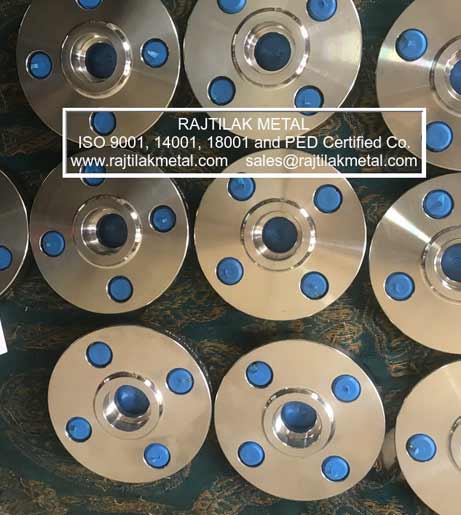
Targeted metallurgies tailored precisely for New Zealand's key processing, energy, and infrastructure sectors.
High concentrations of entrained H2S, silica, and high-temperature chloride brines require ASTM A182 F11 Class 2, F22, and F51 (Duplex 2205) weld neck flanges resistant to sulfide stress cracking (SSC) and erosion-corrosion.
Milk powder evaporators and automated CIP (clean-in-place) lines demand low-carbon ASTM A182 F316L and F304L flanges with internal Ra < 0.8 μm surface finishes to prevent bacterial colonisation and pitting from nitric acid washes.
Harsh South Pacific wave loading and splash-zone chloride exposure dictate ASTM A182 F53 (2507 Super Duplex) and F316L RTJ flanges engineered to ASME B16.5 Class 600 through Class 2500 to withstand severe marine atmospheric pitting.
Kinleith and Kawerau wood-pulp processing and emergent green ammonia plants utilize high-alloy Austenitic ASTM A182 F321 and F347 stabilized grades capable of operating without sensitization during thermal cycling up to 550°C.
Procurement engineers can reference our material performance parameters aligned with ASME Section II Part A and AS/NZS 1200.
| ASTM Grade | UNS Designator | Yield Strength Min. (MPa) | Tensile Strength Min. (MPa) | Typical NZ Industry Application | Equivalent Standards |
|---|---|---|---|---|---|
| A182 F304L | S30403 | 170 | 485 | General food processing, wine storage tanks, municipal water | EN 1.4307 / 304S11 |
| A182 F316L | S31603 | 170 | 485 | Dairy evaporators, coastal piping, marine cooling lines | EN 1.4404 / 316S11 |
| A182 F11 Cl. 2 | K11572 | 205 | 485 | Geothermal high-pressure steam separators, thermal power generation | 1.25Cr-0.5Mo / 16Mo3 |
| A182 F22 Cl. 3 | K21590 | 310 | 515 | Superheated steam headers, secondary cracking manifolds | 2.25Cr-1Mo / 10CrMo9-10 |
| A182 F51 (Duplex) | S31803 | 450 | 620 | Geothermal reinjection brines, pulp black-liquor digestion | EN 1.4462 / 2205 |
| A182 F53 (Super Duplex) | S32750 | 550 | 750 | Subsea gas extraction, high-chloride desalination plants | EN 1.4410 / 2507 |
How New Zealand’s transition to net-zero and rigorous asset lifecycle management is reshaping piping procurement.
With New Zealand expanding its baseload renewable geothermal capacity in the Central North Island, demand has transitioned from basic carbon flanges toward high-integrity ASTM A182 F11 and Duplex F51 flanges capable of withstanding non-condensable gas (NCG) acidic fluids without localized stress degradation.
Pioneering green hydrogen and synfuel pilots in Taranaki and Southland require severe fugitive emission prevention. Flange faces specified to ASME B16.5 are shifting toward ultra-precise RTJ (Ring Type Joint) grooves and serrated concentric finishes of 125-250 μin AARH to guarantee zero micro-leakage.
WorkSafe New Zealand and local tier-1 EPCs enforce strict adherence to design verification standards under the PECPR (Health and Safety in Employment - Pressure Equipment, Cranes, and Passenger Ropeways) regulations. Non-traceable or unverified mill origins are systematically rejected in favor of full EN 10204 3.1 certification.
Manufacturing forged piping components with absolute material accountability since 1991.
Operating from state-of-the-art forging lines in Mumbai, our products hold approvals from global statutory bodies including EIL, IBR, and major international operators across the Middle East, Southeast Asia, and Australasia.
Every individual flange is hard-stamped with its specific melt heat number, grade, class, schedule, and nominal bore size, allowing instant tracing back to raw forged billets sourced from verified primary steel mills.
In addition to ASTM A182 flanges, we manufacture corresponding high-tensile ASTM A193 B7/B8/B8M stud bolts and ASTM A194 2H heavy hex nuts, guaranteeing matched thermal expansion and galvanic compatibility across flanged joints.
Essential guidance for procurement directors, mechanical consultants, and site inventory managers.
Connect with our senior technical piping specialists to review your BOM specifications, material test protocols, and port-to-door delivery schedules for New Zealand projects.