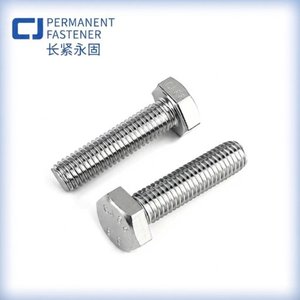
Precision-machined fasteners engineered for aggressive chemical processing, offshore energy infrastructure, cryogenic service, and heavy structural connections. Verified to DIN 933, ISO 4017, and ASME B18.2.1 specifications with complete EN 10204 3.1 heat traceability.
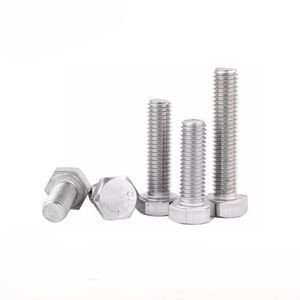
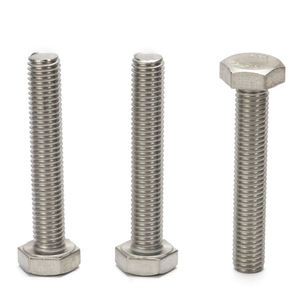
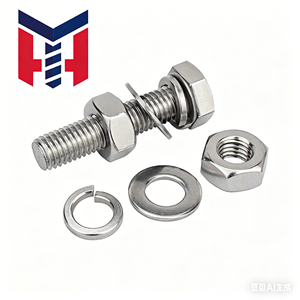
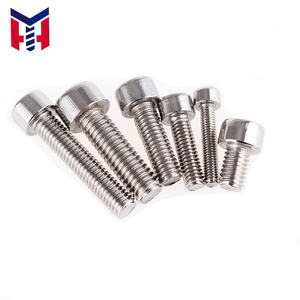
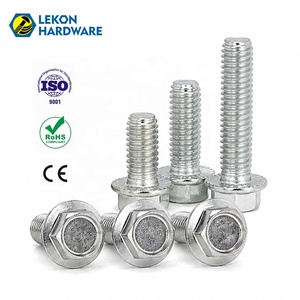
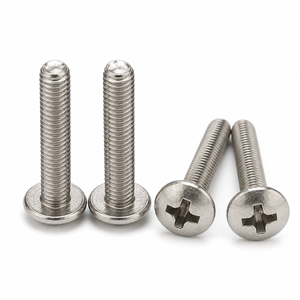
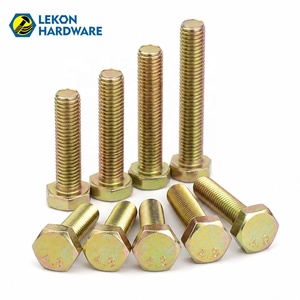
Established in Mumbai, India, as a premier Government of India Recognised Export House, Rajtilak Metal operates fully integrated forging, thread-rolling, and metallurgical testing laboratories approved by Engineers India Limited (EIL) and the Indian Boiler Regulations (IBR).
In critical industrial operations across oil and gas, petrochemical extraction, deep-water subsea manifolds, pharmaceutical reaction vessels, and nuclear power infrastructure, bolting integrity is not merely a hardware concern—it is an unconditional safety imperative. Founded in 1991, Rajtilak Metal has matured into one of the most trusted manufacturing partners and suppliers for precision stainless steel bolts, high-tensile fasteners, engineered flanges, and forged piping components worldwide. With official recognition as a Government of India Recognised Export House, an ISO 9001 certified quality management system, and rigorous product approvals under Engineers India Limited (EIL) and Indian Boiler Regulations (IBR), our manufacturing footprint answers the demanding technical requirements of international EPC engineering contractors.
Our comprehensive production facility combines hot forging presses capable of processing fastener diameters from M20 up to M72 in metric and 3/4" to 3" in Unified Coarse (UNC) threads, high-speed automated multi-station cold heading machinery for small-to-medium metric lines (M2 through M20), and precision CNC thread-rolling units that produce hardened, work-strengthened, fatigue-resistant thread crests without microscopic grain severance. Every production run is executed under tight metallurgical parameters using prime, chemistry-certified raw bar stock procured exclusively from Tier-1 melting mills in India, South Korea, and Japan.
Equipped with 11 advanced internal testing apparatuses: optical emission spectrometers for strict melt chemistry verification, computer-controlled universal tensile benches (up to 1000 kN), Rockwell/Brinell hardness testers, Charpy impact testing down to -196°C, and digital optical profile projectors ensuring thread pitch tolerances adhere precisely to 6g and 6H fits.
Strict non-destructive positive material identification (PMI) is performed on 100% of safety-critical shipments. Every finished bolt, stud, and nut is laser marked or cold-die stamped with the company logomark, exact material grade, property class, and batch heat number corresponding directly to EN 10204 3.1 Inspection Certificates.
Export track record delivering to ADNOC, Saudi Aramco-tier subcontractors, QatarEnergy projects, and major European industrial fabricators. Direct representation across Poland, Italy, the United Kingdom, the United States, Malaysia, Indonesia, Singapore, and GCC markets with seaworthy corrosion-inhibited packaging.
Selecting the appropriate stainless steel alloy and mechanical property class requires balancing chloride-induced stress corrosion cracking thresholds, pitting resistance equivalent numbers (PREN), yield points, and operational temperature ranges.
Industrial fasteners cannot be treated as generic commodities. Austenitic stainless steel bolts—most prevalent in engineering bill-of-materials—are primarily categorized under ISO 3506-1 designations: Grade A2 (AISI 304/1.4301) and Grade A4 (AISI 316/1.4401, 316L/1.4404). Grade A2 provides exceptional general atmospheric and mildly acidic oxidation resistance due to its 18% chromium and 8% nickel balance. However, when deployed in saline, coastal, or process streams containing halogen ions, A2 is vulnerable to localized breakdown of the passive chromium oxide film (Cr2O3), triggering rapid pitting and crevice corrosion.
In contrast, Grade A4 incorporates 2.0% to 3.0% molybdenum, elevating the alloy's critical pitting temperature (CPT) and establishing a calculated PREN value of 23–25 (compared to A2's 18–20). For marine atmospheric immersion, flare gas scrubbers, desalination brine pumps, and sulfuric handling, Grade A4-70 (cold-drawn, minimum tensile strength 700 MPa, 0.2% yield offset 450 MPa) or A4-80 (strain-hardened, minimum tensile strength 800 MPa, yield offset 600 MPa) constitutes the minimum engineering baseline.
Where design engineers confront ultra-critical sour hydrocarbon environments governed by NACE MR0175/ISO 15156, standard austenitic stainless steels risk chloride stress corrosion cracking (CSCC) at temperatures above 60°C. In such operational regimes, Rajtilak Metal manufactures and supplies advanced Duplex 2205 (UNS S32205 / 1.4462, PREN ≥ 35) and Super Duplex 2507 (UNS S32750 / 1.4410, PREN ≥ 42) bolting systems, as well as nickel-chromium-molybdenum superalloys including Inconel 625, Inconel 718, and Hastelloy C-276. These dual-phase and nickel matrix formulations combine yield strengths exceeding 750–850 MPa with near-immunity to pitting attack in high-chloride, sulfide-rich processing streams.
| Material Designation | Standard Equivalents | Yield Strength Rp0.2 (MPa) | Tensile Strength Rm (MPa) | Operating Temp Range | Corrosion Resistance / PREN |
|---|---|---|---|---|---|
| Austenitic A2-70 | AISI 304 / EN 1.4301 / DIN 933 | ≥ 450 | 700 – 1000 | -196°C to +400°C | PREN ~18–20 (Urban, Food, Chemical) |
| Austenitic A4-70 / A4-80 | AISI 316L / EN 1.4404 / ISO 3506 | 450 – 600 | 700 – 800 | -196°C to +450°C | PREN ~23–25 (Marine, Brine, Pulp) |
| ASTM A193 Grade B8 / B8M | SS 304 / 316 (Class 1 & 2 Carbide Sol.) | 205 – 655 | 515 – 860 | -254°C to +538°C | ASME Pressure Vessels, Steam Lines |
| Duplex 2205 | UNS S32205 / EN 1.4462 / F51 | ≥ 550 | 750 – 950 | -50°C to +280°C | PREN ~35 (Sour Gas, NACE MR0175) |
| Super Duplex 2507 | UNS S32750 / EN 1.4410 / F53 | ≥ 650 | 850 – 1050 | -50°C to +250°C | PREN ≥ 42 (Subsea, Offshore Platforms) |
| Nickel Alloy (Inconel 625) | UNS N06625 / W.Nr. 2.4856 | ≥ 415 | ≥ 827 | -196°C to +980°C | PREN > 50 (Extreme Acid, Flare Booms) |
Procurement executives in EPC construction and plant maintenance are transitioning away from fragmented regional spot-purchasing toward integrated, verified, and technologically resilient supply agreements.
Global supply disruptions, raw material export tariffs, and maritime freight volatility have made single-region sourcing unviable. Enterprise supply chains are prioritizing multi-hub manufacturing corridors, leveraging Indian producers like Rajtilak Metal who possess complete raw-material backward integration, domestic melting autonomy, and established bilateral free-trade framework capabilities.
The European Union's Carbon Border Adjustment Mechanism (CBAM) and North American Scope 3 emissions reporting mandate that fastener manufacturers calculate and disclose embedded carbon per metric ton of fabricated bolts. Leading factories are converting annealing furnaces to electric induction heating and selecting electric arc furnace (EAF) scrap-based steel to maintain tariff advantages.
Paper and static PDF mill test certificates are increasingly replaced by cryptographically validated digital documentation. QR-coded bolt heads and digital EN 10204 3.1 databanks link each structural connection directly to melt chemistries, heat-treatment thermal graphs, and elongation test records, eliminating counterfeit fasteners from critical builds.
Tier-1 contractors are reducing carrying costs by establishing vendor-managed buffer stocks with pre-qualified mills. Rajtilak Metal supports long-term framework agreements with consigned inventory hubs in Dubai, Singapore, and Rotterdam, allowing line-item call-offs of ASME B16.5 flanges and DIN 933 A4 bolts within 48-hour delivery windows.
From surface tribology and anti-galling nanocoatings to cold-forged thread profiles and sensorized smart bolting, modern industrial fastening is undergoing significant technological advancement.
Austenitic stainless steels are inherently prone to thread galling (cold welding) under torque load due to friction rupturing the protective oxide film. Innovations in dry-film molybdenum disulfide (MoS2), tungsten disulfide (WS2), multi-layer PTFE fluoropolymer, and ceramic-infused Xylan coatings allow repeated torquing without galling or thread seizure, eliminating wet greasy anti-seize pastes in cleanroom and offshore installations.
Traditional machined fasteners cut through natural metal grain lines, exposing structural stress-concentration micro-notches at thread roots. Modern production relies on severe plastic deformation through hydraulic thread rolling. This process continuously reorients the grain flow along the thread flank and root, inducing compressive residual stresses that increase dynamic fatigue life by over 300% under cyclic mechanical vibration.
For high-pressure pipeline flanges and subsea wellheads, torque values can vary up to ±30% in clamping preload due to nut friction variability. Advanced smart bolts now feature embedded piezoelectric transducers or magnetic ultrasonic measurement pins, enabling technicians to read exact elongation and clamping clamp force in real time without removing the torque tool.
Definitive technical solutions to the most common engineering and procurement questions regarding stainless steel fasteners, testing protocols, and compliance standards.
Request dimensional catalogs, project bill-of-materials cross-checking, custom engineering drawings, and direct mill quotation pricing for high-tensile stainless steel, duplex, and nickel alloy fasteners.