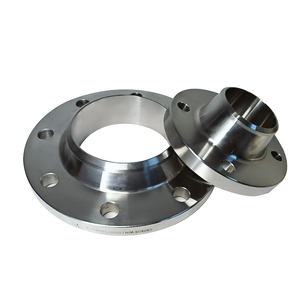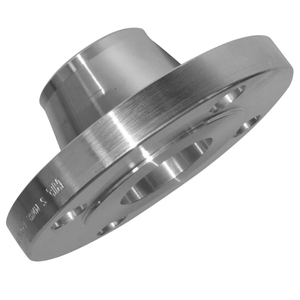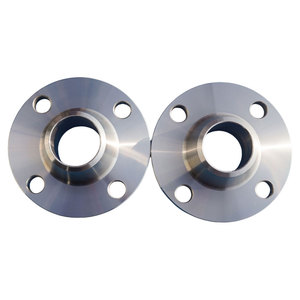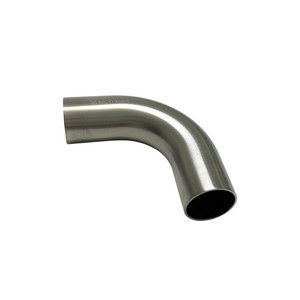
Direct factory-sourced branch connection fittings, forged neck components, and precision flanges meeting ASME, ASTM, DIN, and JIS pressure-temperature envelopes.
In high-pressure oil and gas exploration, offshore drilling systems, petrochemical cracking facilities, and superheated steam generation, swage nipples serve a pivotal hydraulic function that conventional reducers cannot address. While standard butt-weld concentric reducers governed by ASME B16.9 facilitate pipe-size step-downs in larger diameters (typically 2 inches through 48 inches), the swage nipple is the dedicated heavy-duty transitional fitting engineered specifically for small-bore piping systems ranging from NPS 1/8 (DN 6) through NPS 4 (DN 100), conforming strictly to standard practice MSS SP-95.
Designed for vertical fluid runs and high-velocity gas lines where uniform stress distribution is paramount. Concentric swages prevent asymmetric turbulent eddies, boundary layer separation, and localized cavitation erosion at pressure drop transitions.
Manufactured with a continuous flat bottom-of-pipe (BOP) or top-of-pipe (TOP) profile. Critical in horizontal hydrocarbon lines, condensate return networks, and chemical metering spools to prevent liquid pooling or explosive vapor locking.
Flexible termination combinations bridge heterogeneous piping connections without relying on extra weld joints or unreliable mechanical adapters. Manufactured to strict schedule wall tolerances.
Comprehensive data comparison for procurement specialists validating datasheets before issuing RFQs to Chinese forging facilities.
| Dimensional Standard | Governing Specification | Available Size Range (NPS) | Wall Thickness / Pressure Class | Common ASTM / ASME Materials | Inspection & MTC Level |
|---|---|---|---|---|---|
| MSS SP-95 Swage Nipples | MSS SP-95 / BS 3799 | 1/8" to 4" (DN 6 - DN 100) | SCH STD, XS, SCH 160, XXS (Class 3000/6000) | ASTM A105, A350 LF2, A182 F316L, F304L, F11, F22 | EN 10204 3.1 100% PMI + UT |
| ASME B16.11 Forged Fittings | ASME B16.11 / MSS SP-79 | 1/8" to 4" (Threaded & SW) | Class 2000, 3000, 6000, 9000 | ASTM A105, A182 F316L, F51, F53, F55, Inconel 625 | EN 10204 3.1 Hydrostatic / MPI |
| ASME B16.9 Buttweld Fittings | ASME B16.9 / MSS SP-43 | 1/2" to 48" (DN 15 - DN 1200) | SCH 10S, SCH 40, SCH 80, SCH XXS | ASTM A234 WPB, WPC, WP11, WP22, A403 WP316L | EN 10204 3.1 RT / UT 100% |
| ASME B16.5 / B16.47 Flanges | ASME B16.5, EN 1092-1 | 1/2" to 24" (B16.5) / 26"-60" (B16.47) | Class 150, 300, 600, 900, 1500, 2500 / PN6-PN400 | A105, A350 LF2, P235GH, P250GH, 1.4404, 1.4301 | EN 10204 3.1 Dimension + Hardness |
| High Tensile Fasteners | ASTM A193 / A194 / ISO 898-1 | M20 - M72 / 3/4" - 3" UNC | Grade 8.8, 10.9, 12.9 / B7, B8, B8M, 2H | Alloy Steel 4140, Stainless Steel 316, Duplex 2205 | EN 10204 3.1 Charpy V-Notch Proof |
In premium Chinese manufacturing hubs, two divergent production methodologies dominate swage nipple fabrication: cold rotary swaging from seamless line pipe and complete precision CNC turning from solid forged billets. While cold-formed nipples offer cost efficiencies in low-pressure utility lines, critical petrochemical installations specify components machined directly from closed-die or open-die forged bars conforming to ASTM A105, ASTM A350 LF2, or ASTM A182.
Under severe sour service conditions governed by NACE MR0175 / ISO 15156, cold-worked piping components suffer from localized lattice strain, residual tensile stresses, and severe susceptibility to Sulfide Stress Cracking (SSC) and Hydrogen-Induced Cracking (HIC). Qualified Chinese suppliers eliminate this risk by subjecting all forged carbon and low-temperature alloy swage nipples to post-forming normalizing or quench-and-temper thermal cycles, restricting bulk hardness strictly below 22 HRC (237 HBW).
Chemical composition controls: Carbon Equivalent (CE) ≤ 0.42%, Sulfur (S) ≤ 0.005% for ultra-clean melt, and strict Charpy V-notch impact toughness tested down to -46°C (-50°F) for A350 LF2 Class 1 subsea applications.
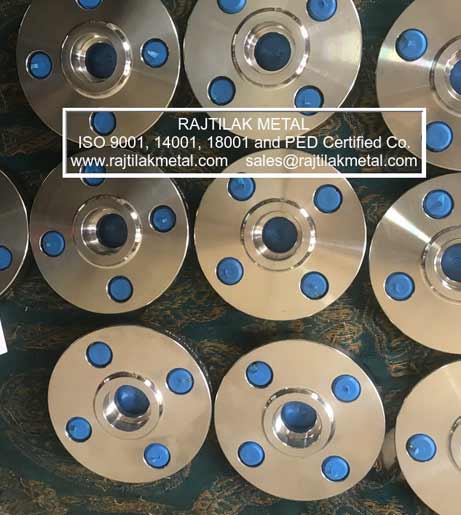
How Tier-1 Chinese manufacturers safeguard structural conformity across international procurement contracts.
Traceable heat numbers linked to primary steel mills in Baosteel, TISCO, or specialized Japanese/Korean smelters with verified ladle chemical analysis.
Precision closed-die forging with grain-flow optimization aligned parallel to the longitudinal pressure gradient, maximizing hoop bursting resistance.
Magnetic Particle Inspection (MPI) on thread roots, liquid penetrant testing (PT) on bevel edges, and calibrated ultrasonic sound-wave verification.
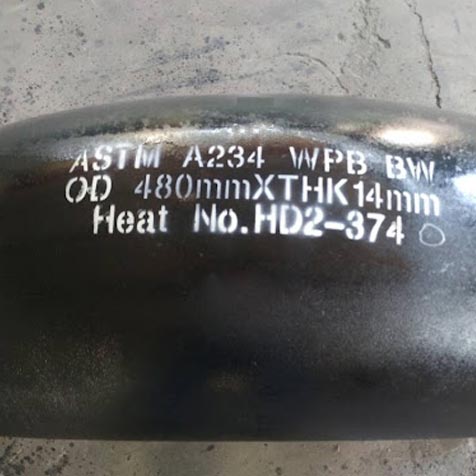
Permanent dot-peen laser stamping showing brand, ASTM grade, schedule, heat code, and comprehensive mill test reports containing physical tensile data.
Analyzing the strategic shifts in metallurgy, green supply chains, and automated manufacturing redefining the global fittings landscape for 2025–2030.
Transition toward low-diffusible-hydrogen steel grades. Clean secondary vacuum degassing (VD/AOD) eliminates micro-voids, avoiding hydrogen embrittlement in renewable energy transportation spools.
European Carbon Border Adjustment Mechanism enforces strict carbon foot-printing on steel components. Advanced Chinese factories utilize electric arc furnaces (EAF) powered by solar grids to minimize export tariffs.
Replacement of manual lathes with automated 5-axis CNC machining centers enables single-setup profiling of complex swage tapers, ensuring precision NPT thread pitch tolerance within +/- 0.01 mm.
Exponential growth in LNG regasification and brine desalination prompts shifts from standard 316L to Super Duplex 2507, 254SMO, and Inconel 625 swage nipples for uncompromised pitting resistance (PREN > 42).
Backed by a manufacturing heritage established in 1991, our production facilities and recognized supply operations bridge heavy forging mastery with strict Western engineering auditing standards. Operating under rigorous ISO 9001 certified quality management systems, our components are formally approved by EIL (Engineers India Limited), IBR (Indian Boiler Regulations), and proven across major operator contracts across the Middle East, Southeast Asia, Europe, and the Americas.
Crucial engineering clarifications on wall schedules, thread tapering, pressure integrity, and export compliance.