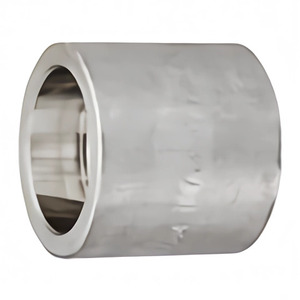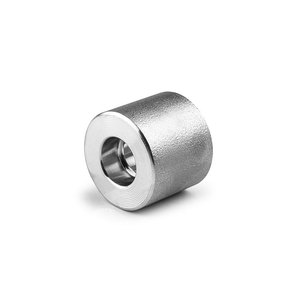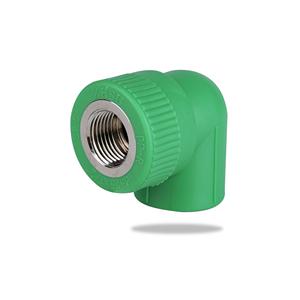
Direct supply from precision closed-die forging cells. Fully tested for critical process piping handling toxic, explosive, and supercritical line pressures.
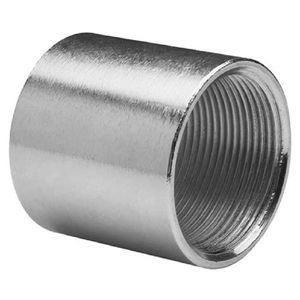
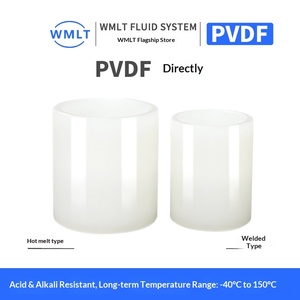
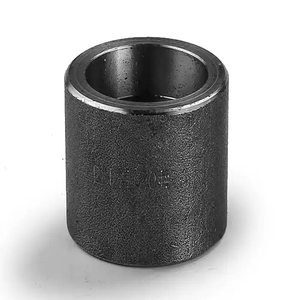
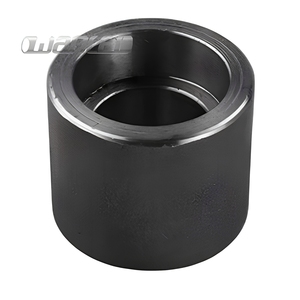
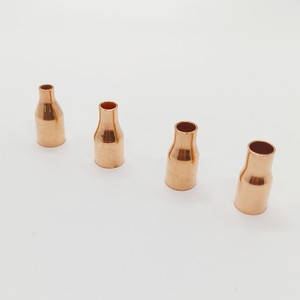
In high-pressure processing lines where pipe run integrity cannot tolerate micro-fissuring or joint relaxation under cyclical hydraulic hammer, ASME B16.11 Socket Weld Couplings represent the industry baseline for small-bore piping systems (typically NPS 1/8 to NPS 4). Unlike standard buttweld fittings that demand precise bevel prep and complex root-pass alignment on nominal bores, socket weld couplings use recessed counterbores to support the inserted pipe end, simplifying alignment during erection while ensuring a uniform flow transition.
However, modern piping metallurgy requires engineering teams to balance the mechanical advantages of socket connections against their thermal limitations. When high-pressure liquid or volatile gas runs undergo extreme thermal cycles, thermal expansion differentials between the fitting socket and the pipe can induce localized bending moments at the fillet weld root. Rigorous adherence to code standards—specifically ASME B31.3 Section 328.5.2—mandates that an approximate 1/16-inch (1.6 mm) axial gap must be mechanically preserved between the pipe bottom and the shoulder of the socket before laying down the fillet weld. This clearance avoids thermal lockup, minimizing stress concentration factors (SCF) and preventing crevice-induced fatigue fractures in petrochemical processing manifolds.
| Coupling Type | Standard Pressure Classes | Applicable Codes | Typical Metallurgy | Primary Industrial Use-Case |
|---|---|---|---|---|
| Full Coupling (SW) | Class 3000, 6000, 9000 | ASME B16.11, BS 3799 | ASTM A105, A182 F316L, A350 LF2 | Run-to-run pipe joining under extreme vibration |
| Half Coupling (SW) | Class 3000, 6000 | ASME B16.11, MSS SP-79 | A182 (F304L, F316L, F11, F22) | Vessel taps, instrument take-offs, and drain headers |
| Reducer Coupling | Class 3000, 6000 | ASME B16.11, MSS SP-95 | Carbon Steel, Inconel 625, Hastelloy C276 | Step-down line size alteration without flow turbulence |
| Polymer / PVDF Socket | PN16, PN25 | DIN 8077/8078, ISO 10931 | Virgin High-Purity PVDF / PPR | Aggressive acids, ultrapure deionized water circuits |
Global EPC contracts increasingly require complete traceability back to the parent ingot melt. Procurement models are moving away from traditional paper mill certificates to cloud-accessible digital certificates compliant with EN 10204 3.1 & 3.2, backed by permanent laser-etched 2D QR matrix identifiers that eliminate counterfeit risks in offshore installations.
With shallow reservoirs declining, energy processing environments carry increased levels of wet H₂S and carbon dioxide. Future supply demands favor NACE MR0175 / ISO 15156 certified duplex (2205), super duplex (2507), and nickel-chromium alloys (Inconel 625, Hastelloy C276) over standard ASTM A105 carbon steel to avoid sulfide stress cracking (SSC).
Conventional open-die hammer processing is shifting toward multi-axis CNC machining centers paired with closed-die near-net-shape forging presses. This improves socket bore concentricity, eliminates surface micro-porosity, and guarantees consistent insertion tolerances across large volumes, reducing project field-welding fit-up costs.
Combining decades of forging expertise with comprehensive metallurgical testing, fully aligned with global end-user expectations.
Our quality management infrastructure operates under full ISO 9001 registration. All pressure-retaining components meet strict design and testing protocols, holding EIL (Engineers India Limited) and IBR (Indian Boiler Regulations) manufacturing approvals for high-pressure boilers and steam pipelines.
We perform full mechanical and nondestructive verification on site. Facilities include direct-reading optical emission spectrometers (PMI), hydraulic burst proofing bays, charpy V-notch impact test rigs down to -196°C, and digital ultrasonic wall-thickness mapping machines.
Operating as a recognized industrial Export House, our distribution pipeline serves Tier-1 EPC ventures across the Middle East (UAE, Saudi Arabia, Qatar, Oman), Southeast Asia (Singapore, Malaysia, Indonesia), North America, and Europe with project documentation, custom seaworthy crating, and fast-track shipping.