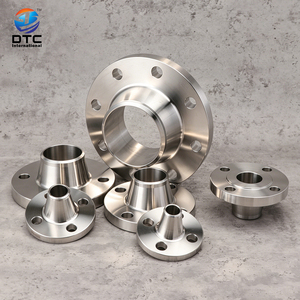

Verified forged steel flanges manufactured to ASME, EN, DIN, and API specifications. All components undergo full ultrasonic testing, hydrostatic verification, and complete metallurgical tracing.
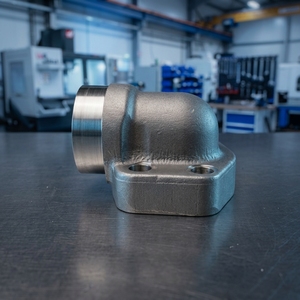
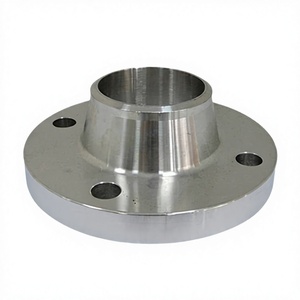
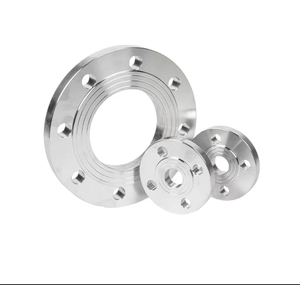
A rigorous comparative assessment of leading global forge masters and fabricators specializing in high-integrity ASME B16.5 Class 300, EN 1092-1 PN 40/63, and API pressure retaining components.
Established in 1991 in Mumbai. A Government of India recognized export house backed by EIL and IBR authorizations. Supplies fully traced ASME B16.5 and B16.47 Class 300 forged components.
Premier American manufacturer of carbon steel weld fittings and forged flanges based in Argo, Illinois. Commands substantial domestic market share in standard ASTM A105 piping components.
Pivotal European heavyweight headquartered in Cesana Brianza, Italy. Supplies critical offshore projects across the North Sea and Mediterranean with precision-engineered forged flanges.
Well-regarded specialty flange supplier providing swift deliveries across the Gulf Coast energy corridor. Stockholder and manufacturer of large-diameter ASME B16.47 series Class 300 flanges.
Situated in Oñati, Spain, ULMA is an international benchmark for high-pressure piping items. Excels in downstream chemical and cryogenic LNG Class 300 installations.
Founded in 1952, Officine Meccaniche G. Melesi is celebrated for producing extreme-duty heavy forgings for deepwater exploration and petrochemical refining applications.
Historical German forging firm renowned for meticulous dimensional adherence and tight microstructural controls conforming to DIN EN 1092-1 and ASME specifications.
Leading Asian heavy industry supplier delivering large volumes of machined flanges to Korean and international shipbuilders, FPSO integrators, and refinery modules.
Prominent North American manufacturer serving the oilsands, upstream midstream natural gas pipelines, and nuclear thermal power stations with high-grade flanged assemblies.
A powerhouse in specialized open-die and roll-forged products for energy conversion facilities, nuclear reactor secondary loops, and cryogenic processing facilities.
A common misconception among field engineers is treating "Class 300" as a static 300 psi threshold. In reality, Class 300 defines a comprehensive pressure-temperature envelope governed by ASME Section VIII Division 1 guidelines and material groupings.
| Material Specification | ASME Group | -20°F to 100°F (-29°C to 38°C) | 400°F (204°C) | 600°F (316°C) | 800°F (427°C) |
|---|---|---|---|---|---|
| ASTM A105 Carbon Steel | Group 1.1 | 740 psig (51.0 bar) | 635 psig (43.8 bar) | 570 psig (39.3 bar) | 410 psig (28.3 bar) |
| ASTM A350 LF2 (Low Temp) | Group 1.1 | 740 psig (51.0 bar) | 635 psig (43.8 bar) | 570 psig (39.3 bar) | 410 psig (28.3 bar) |
| ASTM A182 F304 Stainless | Group 2.1 | 720 psig (49.6 bar) | 495 psig (34.1 bar) | 435 psig (30.0 bar) | 380 psig (26.2 bar) |
| ASTM A182 F316L Stainless | Group 2.3 | 720 psig (49.6 bar) | 515 psig (35.5 bar) | 465 psig (32.1 bar) | 430 psig (29.7 bar) |
| ASTM A182 F22 Alloy Steel | Group 1.10 | 750 psig (51.7 bar) | 750 psig (51.7 bar) | 690 psig (47.6 bar) | 580 psig (40.0 bar) |
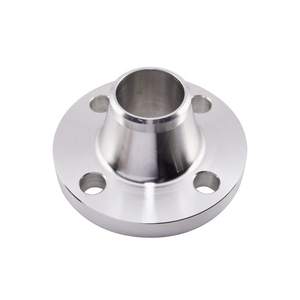
Under ASME B31.3 cyclic fatigue evaluations, a Class 300 Weld Neck flange exhibits a fatigue stress intensification factor (SIF) of 1.0 due to the smooth stress transition along its forged tapered hub. Conversely, a Slip-On flange relies on double fillet welds that generate an elevated stress intensification factor of 1.3, restricting its deployment under severe thermal shock or severe vibrating pump discharge conditions.
Class 300 flanges feature significantly larger bolt circle diameters (BCD) and heavier stud sizes than Class 150 counterparts. This geometry provides the higher clamping force required to seat Spiral Wound Gaskets (SWG) with flexible graphite filler and inner containment rings, preventing gasket blowout under extreme hydraulic surges and transient thermal cycling.
Capital project managers face shifts in decarbonization mandates, severe supply chain vulnerability, and the imperative for real-time digital material verification.
Traditional open and closed die forging often generates substantial flash and machining waste. Modern tier-1 forge shops are transitioning to closed-die isothermal tooling that reduces raw billet requirements by up to 28% while optimizing radial grain orientation along the critical flange neck.
Fraudulent mill test certificates (MTCs) represent a billion-dollar exposure in mission-critical hydrocrackers. EPC leaders now mandate optical QR encoding stamped directly onto flange rims, providing immediate, tamper-proof cloud access to melt chemistry, Charpy V-notch impact values, and 3rd-party witness reports.
With clean hydrogen pipelines and Carbon Capture, Utilization, and Storage (CCUS) projects proliferating, Class 300 flanges are subjected to supercritical CO2 depressurization refrigeration (-50°C) and hydrogen-induced embrittlement. This necessitates ASTM A350 LF2 Class 2 and vacuum-degassed F316L with micro-alloyed nickel buffers.
As a Government of India recognized export house headquartered in Mumbai, Rajtilak Metal has established over three decades of manufacturing dominance in forged flanges, buttweld fittings, and high-tensile fastener packages.
Holding verified approvals from Engineers India Limited (EIL) and the Indian Boiler Regulations (IBR), we engineer components suited for harsh sour service, offshore platforms, and aggressive chemical processing plants across 15+ export nations including the UAE, Saudi Arabia, Qatar, USA, and Europe.
Direct technical answers to common queries raised by quality assurance managers, piping designers, and international procurement officers.