
Girgaon, Mumbai, Maharashtra 400004, India [email protected] +91 9869506920

OEM/ODM Stainless Steel Elbow Manufacturer & Factories

Global Engineering Standards | High-Yield Austenitic & Duplex Alloys | Fully Traceable Mill Certification

Industrial & Sanitary Catalog

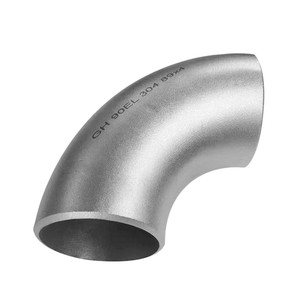
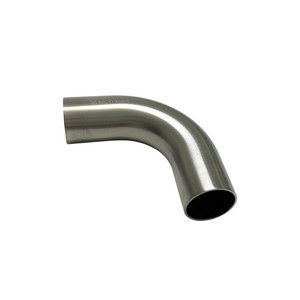
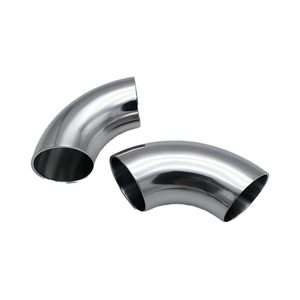
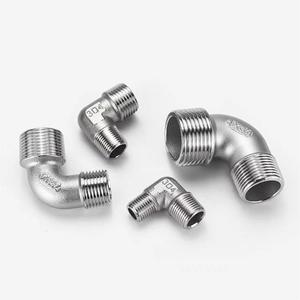
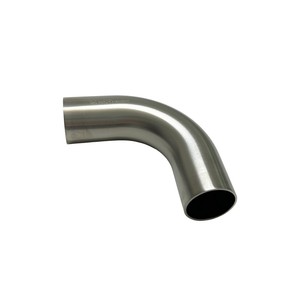
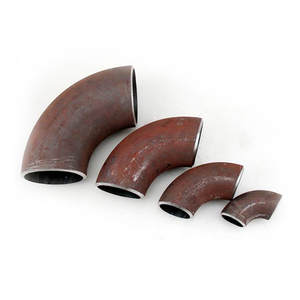
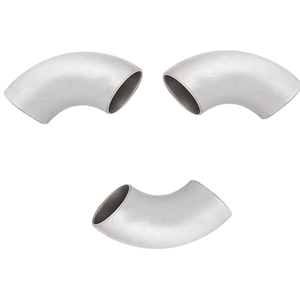
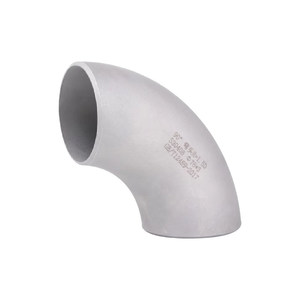
Featured Industrial & Sanitary Pipe Elbow Configurations

Engineered to ASME B16.9, ASME B16.11, DIN 11850, and 3-A Sanitary specifications. Seamless extruded, welded, and mirror-polished solutions ready for critical fluid networks.
30+
Years Metallurgical Precision
11
In-House Non-Destructive Lab Stations
100%
Positive Material Identification (PMI)
98.4%
On-Time Global Project Consignment
Industrial Insight

Engineering Integrity: Forming, Hydro-forming & Machining Disciplines

From petrochemical cryogenic lines to aseptic hygienic processing, flow change geometry is the most vulnerable hydraulic junction. Here is how modern OEM/ODM manufacturing resolves stress concentrations.

Seamless Mandrel Cold/Hot Pushing

For high-pressure lines governed by ASME B16.9 or DIN 2605, our factories utilize continuous mandrel expansion. This avoids severe wall thinning along the extrados (outer radius) and buckling along the intrados (inner radius).

  • Uniform wall thickness distribution (within ±0.2mm tolerance)
  • Elimination of localized longitudinal seam fatigue points
  • Ideal for critical steam headers, hydrocarbon loops, and subsea risers

Sanitary CNC & Electro-Chemical Polishing

Pharmaceutical and food-grade fluid lines require zero micro-fissures or chemical trapping zones. Our AISI 304 and 316L BPE-compliant sanitary elbows undergo cold forming followed by multi-stage robotic mechanical honing and electro-polishing.

  • Internal roughness controlled to Ra ≤ 0.4 μm (16 μin) or mirror Ra ≤ 0.2 μm
  • Passivated surface free of free iron and localized slag inclusion
  • Fully compliant with 3-A, ASME BPE, and EHEDG cleaning standards

Forged Socket Weld & Heavy NPT Machining

When high vibration, cyclic hydraulic hammer, or compact routing prevents butt-welding, our closed-die forged elbows (ASME B16.11 Class 3000, 6000, 9000) deliver unyielding mechanical shear strength.

  • Grain-flow preservation through controlled thermo-mechanical forging
  • ANSI/ASME B1.20.1 NPT and ISO 7-1 BSP thread precision gauging
  • Zero micro-porosity compared to traditional sand-cast components
Engineering Matrix

Material Grade Matrix & Working Pressure Thresholds

Evaluate standard dimensional allowances, structural metallurgy, and application scopes for project line class categorization.

Elbow Category Standard Specification Available Alloys Dimension / Size Span Primary Industrial Field
Seamless Butt-Weld (1.5D / 1.0D / 3D) ASME B16.9, MSS SP-43, EN 10253 ASTM A403 WP304/304L, WP316/316L, Duplex 2205 1/2" – 36" (DN15 – DN900) SCH 5S – XXS Refinery piping, offshore platforms, LNG cryogenic transfer lines
Forged Socket Weld & Screwed ASME B16.11, BS 3799 ASTM A182 F304, F316L, F321, Nickel Alloys 1/8" – 4" (Class 3000, 6000, 9000) High-pressure hydraulic circuits, marine fuel skids, instrumentation lines
Aseptic & Sanitary Hygienic ASME BPE, DIN 11852, SMS, ISO 2037 AISI 316L (Low-Ferrite), AISI 304, 1.4404 1/2" – 6" (OD Tube Sizes, 0.065" – 0.109") Biopharmaceutical processing, dairy pasteurization, purified water (WFI)
Heavy Carbon & High-Yield API 5L, ASTM A234 WPB/WPC, MSS SP-75 Gr. B, X42, X52, X60, X65, A420 WPL6 1/2" – 48" (Welded & Seamless) Cross-country crude transmission, power plant bypass, district heating
Future Insights

Future Procurement Shifts & Technological Trends in Piping Hardware

How sustainability directives, hydrogen readiness, and digital supply chain visibility are resetting international pipe elbow procurement standards.

1. Material Decarbonization & Green Scrap Sourcing

Global EPCs operating in Europe and the Americas are enforcing carbon-accounting quotas. Our forging and drawing mills use electric arc furnace (EAF) melts with high recycled alloy ratios, cutting embodied CO2 without sacrificing tensile yield.

  • Low-carbon footprint certification available per batch
  • Verified chemical analysis avoiding deleterious trace residuals
  • Adherence to green procurement protocols in energy infrastructure

2. Hydrogen Embrittlement & Sour Service (NACE MR0175)

With clean hydrogen mixing and deep sour wells, standard elbows face catastrophic microscopic cracking. Demand is pivoting rapidly to strictly controlled hardness limits (≤ 22 HRC) and ultra-low sulfur levels (≤ 0.002%).

  • Mandatory Solution Annealing with water quench controls
  • HIC (Hydrogen Induced Cracking) test validation for sour service
  • Controlled chemical equivalents for enhanced weldability

3. Digital Traceability via QR and Laser Heat Numbering

The era of faded paper mill tags is over. Modern procurement managers mandate physical QR tagging linked to immutable material test databases, preventing alloy mixing on sprawling field construction sites.

  • Micro-dot laser engraving survived sandblasting and pickling
  • Real-time scanning directly to EN 10204 3.1 digital MTC reports
  • Elimination of counterfeit risk in safety-critical process lines
Why Choose Our Foundries

Global OEM/ODM Authority: Why EPC Contractors Partner With Us

Operating since 1991 as an internationally accredited manufacturer and Government of India Recognized Export House, our facilities combine raw-material pedigree with meticulous mechanical QA.

Certified Material Inflow

Sourced strictly from premier melts in India, South Korea, and Japan. Fully audited chemical heats verifying chromium, nickel, and molybdenum content before production cut.

EIL & IBR Approvals

Official certifications from Engineers India Limited (EIL) and Indian Boiler Regulations (IBR), qualifying our elbow fittings for extreme boiler pressure and supercritical service.

Full NDT In-House Fleet

Hydrostatic testing, Ultrasonic flaw detection, Radiographic inspection, and Spectro PMI machines ensure zero wall defects, internal inclusions, or micro-cracking.

Complete Project Export Handling

Seaworthy fumigated crating, bevel edge protectors, moisture barrier packaging, and direct coordination with third-party agencies (SGS, TÜV, Lloyd's Register, Bureau Veritas).

Procurement Knowledge Base

Frequently Asked Questions (FAQ) for Pipe Fitting Sourcing

Authoritative answers to technical parameters, quality verification, and logistics protocols for piping procurement specialists.

How does a Long Radius (1.5D) elbow differ hydrodynamically from a Short Radius (1.0D) elbow?
A Long Radius (LR) elbow has a centerline curvature equal to 1.5 times the nominal pipe diameter, offering a gentler change of fluid direction that minimizes turbulence, cavitation, and frictional pressure drops. Short Radius (SR, 1.0D) elbows are chosen strictly when compact piping space prevents 1.5D installation, such as in offshore skids, vessel jackets, and crowded marine engine rooms, but they impart higher head loss and erosion risks under abrasive flows.
What documents accompany every export shipment to guarantee metallurgical traceability?
Every production batch is supplied with an EN 10204 3.1 Mill Test Certificate (MTC). This document details exact heat numbers, melt chemical composition (C, Si, Mn, P, S, Cr, Ni, Mo, N), mechanical tensile yield, elongation values, and Rockwell/Brinell hardness test results. Furthermore, each elbow is permanently hard-stamped or laser-marked with heat numbers, size, schedule, grade, and manufacturing trademark for direct spool-to-melt verification.
Why is AISI 316L preferentially specified over standard SS304 for chemical and pharmaceutical elbows?
AISI 316L contains 2.0% – 3.0% Molybdenum, which substantially improves resistance to chloride pitting, crevice corrosion, and acidic media. The "L" designation signifies low carbon (≤ 0.03%), which prevents chromium carbide precipitation along grain boundaries during welding, eliminating intergranular corrosion risks without requiring post-weld solution heat treatment.
Can your factories fabricate custom angles such as 30°, 60°, or non-standard reduction elbows?
Yes. Beyond standard 45°, 90°, and 180° return bends, our OEM/ODM operations specialize in custom cold-bent, hot-drawn, or segmented mitered elbows engineered to client drawings. We routinely produce reducing elbows (combining angle transformation and diameter transition into a single component to eliminate an extra weld seam) and custom compound radius bends.
What surface finishes are standard for industrial versus food-grade applications?
Industrial fittings typically feature an acid-pickled, passivated mill finish (or sand-blasted finish for carbon alloys). Sanitary, food, and beverage-grade elbows receive multi-stage orbital mechanical grit polishing followed by electro-chemical polishing, achieving an interior surface roughness of Ra ≤ 0.4 μm (or mirror finish Ra ≤ 0.2 μm) to prevent bacterial biofilms and guarantee Clean-In-Place (CIP) performance.
How do you handle third-party pre-shipment inspections (TPI)?
We regularly collaborate with major international inspection agencies nominated by buyers, including Lloyd's Register, DNV, SGS, Bureau Veritas, and TÜV. Inspectors are provided complete facility access to witness PMI verification, hydrostatic testing, wall-thickness ultrasonic gauging, dye-penetrant checks, and dimensional verification before stamping packing releases.

Ready to Secure High-Precision Fittings for Your Pipeline?

Submit your material take-off (MTO), datasheets, or custom piping drawings directly to our engineering team. Rapid technical review, quotation, and metallurgical documentation delivered within 24 hours.

Contact Us