
Girgaon, Mumbai, Maharashtra 400004, India [email protected] +91 9869506920
Technical Whitepaper & Global Export Guide

OEM/ODM Sockolet Fittings Exporter & Exporters

Precision-Forged 3000#/6000# Branch Connection Outlets Manufactured to MSS SP-97 & ASME B16.11 Under Stringent ISO 9001, EIL & IBR Certified Engineering Disciplines

Engineered Inventory

High-Integrity Piping Outlets, Forged Flanges & Pressure Connections

Verified pipeline components configured for extreme pressure class requirements, aggressive fluid delivery, and cyclic mechanical operations worldwide.
1991
Established Manufacturing Baseline
100%
EN 10204 3.1 Traceable Heat Melt
11+
In-House Metallurgical Testing Units
98%
Global On-Time Delivery Rate

Comprehensive Technical Analysis: Sockolet (Socket-Weld Branch Outlet) Mechanics

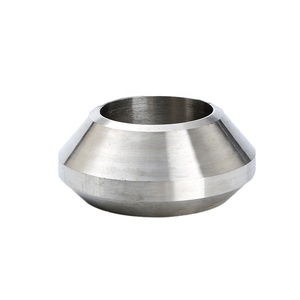
In modern process plant design, reducing stress intensification factors (SIF) at branch-to-header pipe junctures is paramount. A Sockolet represents a 90-degree self-reinforced branch connection fitting forged according to MSS SP-97 specifications and machined with an internal counterbore socket adhering to ASME B16.11 dimensional standards. Engineered to substitute conventional reducing tees and reinforced welding pads, Sockolets furnish integral reinforcement through a contoured body profile that seamlessly transfers hydrodynamic hoop stress and external bending moments away from the critical weld toe.

Unlike threaded configurations (Threadolets) that introduce micro-notches susceptible to fatigue propagation, or full-penetration butt-weld designs (Weldolets) requiring elaborate radiography verification, the Sockolet leverages an internal socket weld. When joining small-bore tubing or nominal piping (typically 1/8" through 4") to larger distribution mains (from 1/2" up to 48"), the Sockolet features a distinct internal lip. Critical installation protocols govern this junction: fitting fit-up requires an approximate 1/16-inch (1.6 mm) minimum clearance at the socket base prior to fillet welding to absorb differential thermal expansion between the branch pipe and fitting forged body, completely precluding axial thermal cracking.

Design Supremacy

OEM/ODM Customization & Metallurgical Engineering

Bridging design datasheets to operational environments with specialized metallurgy and custom-tolerance machining.

Forged Grain Alignment

Closed-die and open-die forgings undergo precision thermal mechanical control processing (TMCP). Unlike machining directly from bar stock, our forged Sockolet blanks follow uninterrupted grain flow contours that parallel internal fluid boundaries, multiplying burst resilience under cyclic impulse pressures.

Broad Alloy Spectrum

Manufactured across ASTM A105 carbon steel, ASTM A350 LF2 low-temperature steel, ASTM A182 austenitic stainless steel (F304/F304L, F316/F316L, 904L), Duplex 2205, Super Duplex 2507, and advanced nickel alloys (Inconel 625, Hastelloy C276, Monel 400) for zero-corrosion service.

Full Code Compliance

Pre-engineered to integrate seamlessly with ASME B31.1 (Power Piping), ASME B31.3 (Process Piping), and NACE MR0175/ISO 15156 sour hydrocarbon extraction environments, satisfying EIL and IBR regulations through audited quality assurance loops.

Sockolet Dimensional & Metallurgical Specifications

Engineered branch outlet ratings and wall-thickness classifications for EPC procurement calculations.

Fitting Class Run Pipe Size (Header) Branch Size (Socket OD) Standard Equivalents Service Application Rating
Class 3000 (Standard) 1/2" to 48" NPS (DN15 - DN1200) 1/8" to 4" NPS Matches SCH 40 / STD Wall Run Pipe General Refinery, Utility Water, Steam Headers
Class 6000 (Extra Strong) 1/2" to 36" NPS (DN15 - DN900) 1/8" to 2" NPS Matches SCH 80 / XS Wall Run Pipe Offshore Gas Compression, High-Pressure Hydraulic
Class 9000 (Special) 1/2" to 24" NPS (DN15 - DN600) 1/2" to 1-1/2" NPS Matches SCH 160 / XXS Wall Run Pipe Subsea Injection, Supercritical Steam, Hydrogen
Custom Contoured Per Engineering Drawing Extended Length / Flanged Outlets MSS SP-97 / ASME Sec VIII Div 1 Vessel Nozzles, Instrumentation Bleed Valves
Industry 4.0 & Strategic Sourcing

Future Procurement Trends for Branch Connection Fittings

How EPC contract administrators and global buyers are transforming sockolet and branch connection sourcing over the next decade.

Digital Material Passports & Heat Tracking

Paper-based mill test certificates are transitioning rapidly to blockchain-secured Digital Material Passports (DMP). EPCs demand two-dimensional matrix codes laser-etched directly on every forged sockolet, allowing field mechanics to access raw ingot chemistry, Charpy V-notch impact values, and hydrostatic test charts via smartphone scanners.

Near-Net-Shape Isothermal Forging

Sustainability and carbon border taxes (CBAM) are compelling procurement managers to scrutinize the buy-to-fly ratio of piping components. Advanced closed-die isothermal forging minimizes raw material waste by 35% compared to vintage drop-forging, lowering embodied carbon while producing uniform surface integrity requiring minimal machining passes.

Hydrogen-Ready & Sour Gas Standards

With clean-energy transitions accelerating, buyers increasingly specify "Hydrogen-Ready" branch connections. This mandates HIC (Hydrogen Induced Cracking) and SSCC (Sulfide Stress Corrosion Cracking) compliance per NACE TM0284/TM0177, alongside ultra-low sulfur raw heats (S ≤ 0.002%) and controlled hardness ceilings (max 22 HRC).

Development Trends in Socket-Weld Branch Engineering

Next-generation metallurgical developments driving longer asset lifecycles and leak-free reliability.

Automated Multi-Axis CNC Profile Milling

Traditional manufacturing relied heavily on turret lathes, creating minor variations along the saddle contour (the branch-to-header mating curve). Contemporary automated 5-axis CNC machines now interpolate contour geometries from finite element model profiles, ensuring 100% root-gap alignment during field fitting without extensive manual grinding.

Corrosion Resistant Alloy (CRA) Cladding

For deepwater subsea trees and ultra-sour refinery splitters, full Inconel 625 solid sockolets present substantial cost premiums. Development in plasma transferred arc (PTA) and laser weld overlay allows manufacturing a robust carbon steel (ASTM A350 LF2) base body cladded internally with 3.0 mm of Alloy 625, matching exotic metallurgy performance at 45% lower Capex.

Additive-Subtractive Hybrid Production

Wire Arc Additive Manufacturing (WAAM) paired with precision sub-tier machining has emerged for urgent shut-down outages requiring large-bore or non-standard radius sockolets (e.g., 4" branch onto 42" run pipe in titanium or Hastelloy). The lead time for rare forgings drops from 16 weeks to 72 hours while meeting MSS SP-97 mechanical toughness standards.

Why Rajtilak Metal is the Premier Global Sockolet Exporter

Operating as a Government of India Recognised Export House since 1991, Rajtilak Metal serves critical energy, chemical, and marine EPC contracts across more than 20 countries, including the United Arab Emirates, Saudi Arabia, Qatar, Oman, Turkey, Malaysia, Singapore, Poland, Italy, and the United States. Our manufacturing facility in Mumbai maintains an exhaustive array of quality credentials:

  • Institutional Approvals: Fully approved by Engineers India Limited (EIL) and Indian Boiler Regulations (IBR), with extensive track record executing orders destined for ADNOC, Saudi Aramco, and SABIC specification envelopes.
  • Raw Material Selection: We exclusively procure tested billet stock from premier, tier-one steel producers across India, South Korea, and Japan, completely eliminating re-melt impurities and non-metallic inclusions.
  • In-House Testing Facility: 11 specialized testing stations execute Spectro Chemical Analysis, Tensile & Yield Testing, Charpy V-Notch Sub-Zero Impact (down to -196°C), Positive Material Identification (PMI), Ultrasonic Thickness Profiling, and Wet Fluorescent Magnetic Particle Examination.
  • Complete Documentation: Every export consignment includes EN 10204 Type 3.1 Mill Test Certificates, NACE MR0175/ISO 15156 hardness verification, third-party inspection sign-offs (Lloyd's Register, DNV, Bureau Veritas, TUV, SGS), and heat-number hard-stamping linking the finished fitting back to its chemical ladle.

Whether supplying high-tensile ASTM A193 B7 stud bolts, ASME B16.5 heavy weld neck flanges, or specialized MSS SP-97 Class 3000/6000 Sockolets, our dedicated logistics specialists ensure customized maritime seaworthy palletizing, corrosion-inhibiting VCI plastic wrap, and barrier rust-preventative coatings tailored for equatorial ocean transits.

Technical FAQ

Frequently Asked Questions for Procurement Engineers

Detailed operational responses resolving engineering, fabrication, and sourcing inquiries.

What is the fundamental engineering difference between a Sockolet, Weldolet, and Threadolet?
While all three belong to the 90° integrally reinforced branch outlet family specified by MSS SP-97, their connection method to the branch pipe differs completely:
  • Weldolet: Provides a full-penetration butt-weld connection to the branch pipe. It matches the pipe schedule and is preferred for high-stress, cyclic, critical large-diameter branches where radiographic inspection (RT) is compulsory.
  • Sockolet: Features an engineered socket cavity per ASME B16.11 where the branch pipe is inserted and held by a fillet weld. It is used primarily for small-bore lines (typically ≤ 2" or 3") to achieve superior mechanical rigidity without interior weld splatter.
  • Threadolet: Provides female national pipe threads (NPT) or British Standard Pipe (BSP) threads. It requires no welding to attach the branch pipe, making it ideal for utility lines, instrument air, and non-hazardous drains where hot work is prohibited.
Why must a 1/16-inch (1.6 mm) gap be maintained before welding a Sockolet?
Per ASME B31.1 and B31.3 piping codes, inserting a branch pipe to full bottom contact inside the Sockolet socket before welding creates an axial thermal expansion lock. As molten weld metal solidifies and cools, longitudinal contraction generates extreme residual stress at the root. Furthermore, when the process line heats up during operation, differential thermal expansion causes the pipe end to press hard against the socket ledge, triggering premature stress-corrosion cracking or circumferential weld failure. Maintaining an approximate 1/16" gap prior to fillet welding provides necessary geometric clearance to absorb expansion movements.
How does the "Run Pipe Consolidation" work when sizing a Sockolet order?
MSS SP-97 specifies that outlet forgings are designed with curated saddle curvatures that accommodate a defined range of header (run) pipe outer diameters without compromising root penetration. For example, a single Sockolet pattern for a 1" branch may cover header diameters ranging from 3" to 8", or 10" to 36". This consolidation enables stockists and project contractors to significantly streamline their warehouse inventories without requiring a custom-milled forging for every specific pipe size. However, for critical high-pressure lines (Class 6000/9000), ordering the exact header diameter ensures tighter fit-up and minimized weld-gap variance.
What mill test certifications and QA procedures accompany an export order?
Every shipment dispatched by Rajtilak Metal is furnished with complete EN 10204 Type 3.1 inspection certification linking the individual heat number stamped on the fitting back to the initial steel melt. Testing protocols documented include Chemical Ladle Analysis (optical emission spectrometry), Mechanical Tensile, Yield & Elongation properties, Brinell/Rockwell Hardness tests, and Charpy V-notch impact values. If requested by the project datasheet, we also conduct Liquid Penetrant Inspection (PT), Magnetic Particle Examination (MT), Ultrasonic Testing (UT), and facilitate third-party inspection (TPI) witness testing through agencies such as Lloyd's Register, DNV, SGS, or TUV.
Can Sockolet fittings be customized for non-standard header geometries?
Yes. Through our specialized OEM/ODM manufacturing stream, we produce engineered branch outlets customized with special bore dimensions, non-standard saddle curvatures (such as mounting onto conical reducers, dished pipe caps, or elliptical pressure vessel shells), angled configurations (45° Latrolets or Elbolets mounted on the back of long-radius elbows), and high-pressure ratings exceeding Class 9000 to satisfy specific ASME Section VIII Division 1 & 2 finite element design verifications.
Which export packaging standards are implemented to protect machined socket faces?
Socket counterbores and external weld-prep bevels are highly sensitive to impact damage, mechanical nicks, and oxidation during ocean container transport. Our standard export packing includes cleaning each fitting, applying a durable rust-preventative oil film (or zinc phosphate coating on request), inserting heavy-duty polyethylene plastic push-in end caps into every socket, vacuum-wrapping small items in moisture-proof VCI poly-film, and packing in ISPM-15 heat-treated, fumigated seaworthy wooden boxes with internal steel banding.

Ready to Source Engineered Sockolets & High-Pressure Flanges?

Consult with Rajtilak Metal's technical sales engineers in Mumbai to receive dimensional drawings, NACE compliance sheets, and competitive commercial offers for your upcoming EPC turnarounds.