Girgaon, Mumbai, Maharashtra 400004, India [email protected] +91 9869506920

OEM/ODM Buttweld Pipe Fittings Factories & Exporter

Precision Engineering, Advanced Metallurgy, and Traceable Piping Solutions Certified to ASME B16.9, EN 10204 3.1, and International Pressure Vessel Standards.

1991
Established Heritage
100%
Ultrasonic & PMI Tested
50+
Global Export Markets
0-Defect
Quality Assurance Policy
Industry Whitepaper & Technical Scope

Engineering Fundamentals of Heavy-Duty Buttweld Fittings

A rigorous review of flow kinematics, structural weld integrity, and metallurgical grain consistency under cyclic thermal and pressure loading.

Structural Integrity & Flow Dynamics

Buttweld pipe fittings (elbows, tees, reducers, and caps) serve as the backbone of continuous, leak-free pipeline configurations. Unlike socket-weld or threaded connections, buttwelded systems create an intrinsically smooth inner conduit transition that dramatically limits fluid turbulence and localized cavitation.

  • Continuous Metal Bond: Eliminates crevice corrosion risks native to mechanical joint configurations.
  • Full-Penetration Welds: Transmits dynamic stress evenly across joint geometry under high cyclic stress.
  • Optimized Wall Thickness: Engineered transitions compliant with ASME B16.9 taper criteria prevent flow restriction.

Material Selection & Metallurgical Control

The operational longevity of buttweld fittings hinges entirely upon raw ingot homogeneity and calibrated post-forming thermal heat treatment. Rajtilak Metal leverages controlled thermo-mechanical processing to yield microstructures capable of surviving hostile operational environments.

  • Austenitic Stainless (ASTM A403 WP304/304L, WP316/316L): Solution-annealed at 1050°C+ and water-quenched to preserve intergranular corrosion immunity.
  • Carbon & Low-Temp Steel (ASTM A234 WPB, ASTM A420 WPL6): Normalized to refine ferrite-pearlite grain size, sustaining impact toughness down to -46°C.
  • High-Yield Pipeline Grades (MSS SP-75 WPHY 52/60/65/70): Controlled quenching and tempering optimize yield-to-tensile ratios for trans-continental distribution.

NDT Validation & Traceability Metrics

Every industrial fitting produced across our OEM/ODM facilities complies with rigorous NDT and metallurgical accountability protocols, ensuring turnkey compliance with international engineering procurement specifications.

  • Positive Material Identification (PMI): 100% handheld XRF verification prior to dispatch against ASTM alloy tolerances.
  • Wall Thickness Verification: Multi-point ultrasonic mapping to assure standard compliance without excessive thinning on the extrados.
  • EN 10204 Type 3.1 Certification: Complete chemical melt reports, Charpy V-notch impact profiles, and mechanical elongation statistics.
Component Group Applicable Standards Nominal Dimensions Schedule / Rating Classes Primary Material Grades
Seamless Buttweld Elbows (45° / 90° / 180°) ASME B16.9, DIN 2605, JIS B2312 1/2" to 24" (DN15 - DN600) SCH 10 through SCH XXS ASTM A234 WPB, ASTM A403 WP304L/316L, WP11, WP22
Welded / Fabricated Elbows & Tees ASME B16.9, MSS SP-75 26" to 72" (DN650 - DN1800) SCH 20, STD, SCH 40, SCH 80 A234 WPB, ASTM A860 WPHY 52/60/65, P235GH
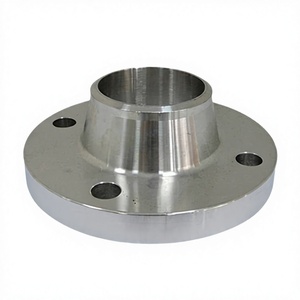
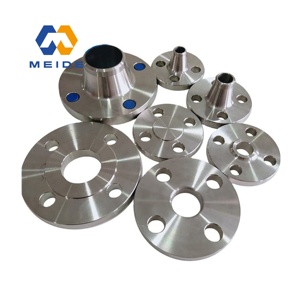
Forged High-Pressure Flanges ASME B16.5, ASME B16.47, EN 1092-1 1/2" to 60" Class 150 to 2500 / PN6 to PN400 ASTM A105, A350 LF2, ASTM A182 F304L/F316L/F51
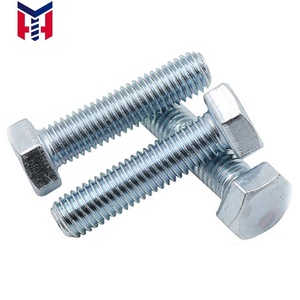
High Tensile Bolting & Fasteners ASTM A193, A194, DIN 933, ISO 898 M20 to M72 / 3/4" to 3" UNC Grades 8.8, 10.9, 12.9 / B7, B8, B8M Alloy Steel, 304/316 SS, Duplex 2205, Inconel
Strategic Sourcing Intelligence

Future Procurement & Manufacturing Trends (2025–2030)

Analyzing key supply-chain shifts, green steel mandates, modular EPC construction, and digital materials tracking across global industrial sectors.

1. Clean Energy Infrastructure & Hydrogen Embrittlement

As sovereign decarbonization initiatives accelerate, industrial piping infrastructure is shifting rapidly toward hydrogen blend transport, CCUS (Carbon Capture, Utilization, and Storage), and offshore green ammonia facilities. Conventional carbon steel grades are yielding to low-carbon, high-purity microstructures that actively mitigate hydrogen-induced cracking (HIC) and stress corrosion cracking (SCC).

Procurement teams are prioritizing specialized sour-service testing, tightly controlled hardness levels (maximum 22 HRC per NACE MR0175/ISO 15156), and chemistry with strictly limited sulfur and phosphorus concentrations (S ≤ 0.002%, P ≤ 0.010%).

2. Digital Traceability via QR & Blockchain Mill Heat Logs

Paper-bound test certificates are rapidly transitioning into cryptographically signed digital material documentation. Tier-1 EPC contractors and refinery operators across the Middle East, North America, and Europe increasingly mandate machine-readable Data Matrix markings directly on individual pipe fittings.

This automated verification stream enables field welding crews to instantly confirm wall schedules, chemical composition, melt source, and heat treatment batches via mobile scans, completely eliminating human errors during pipeline field assembly.

3. Modular Pre-Fabrication & Integrated Skid Sourcing

Skyrocketing onsite installation labor costs and challenging environmental conditions in offshore and arctic regions have prompted EPC firms to favor pre-assembled, containerized piping skids. Consequently, procurement strategies are pivoting from fragmented component acquisitions toward comprehensive, bundled packages.

OEM factories capable of supplying matched fittings, precision-faced weld neck flanges, high-tensile stud bolts, and custom-beveled spools within a single consolidated quality control audit capture substantial market advantages.

Enterprise Strengths Since 1991

Why International Engineering Consortia Rely on Our Works

Direct manufacturing prowess, comprehensive industry certifications, and over 34 years of mission-critical project fulfillment.

Recognized Export House Accreditation

Recognized as an official Export House by the Government of India, maintaining proven manufacturing credentials and long-standing supply track records across ADNOC, Saudi Aramco, and major European industrial hubs.

EIL & IBR Certified Facilities

Approved by Engineers India Limited (EIL) and compliant with the stringent safety provisions of the Indian Boiler Regulations (IBR), verifying design resilience under severe pressure-temperature service.

ISO 9001:2015 Quality Management

Our quality management framework governs every operational tier—from initial metallurgical spectrographic assaying to closed-die forging, multi-axis CNC beveling, and controlled solution heat treatment.

Full Dimensional & Metallurgical Traceability

Every buttweld fitting, flange, and high-tensile fastener bears clear heat number stamps, directly synchronizing with EN 10204 3.1 Mill Test Certificates for verifiable integrity back to the initial billet melt.

Exotic Alloys & Non-Standard Engineering

Extensive ready raw material inventories including ASTM A105, A234 WPB, SS 304L/316L, Duplex 2205, Super Duplex 2507, Titanium, and Nickel Alloys (Inconel, Monel, Hastelloy) for standard and custom drawings.

Comprehensive Bolting & Fastening Packages

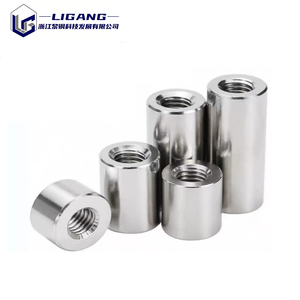
In-house manufacturing of ASTM A193 B7/B8/B8M stud bolts and ASTM A194 2H heavy hex nuts spanning M20 to M72, providing single-source mechanical sealing packages for complex piping projects.

Procurement Engineering FAQ

Frequently Addressed Technical & Sourcing Inquiries

Essential guidance covering fabrication compliance, certification protocols, and dimensional inspection criteria for project buyers.
What international manufacturing standards govern your buttweld fittings and flanges?
Our facilities engineer products conforming strictly to ASME B16.9 (factory-made wrought buttwelding fittings), ASME B16.5 and B16.47 (pipe flanges), ASME B16.11 (forged socket weld and threaded connections), MSS SP-75, MSS SP-97, EN 1092-1, BS 10, DIN, and JIS. Material chemistry and mechanical testing strictly comply with relevant ASTM/ASME specifications, including ASTM A234, A403, A420, A105, A182, and A350.
Can you supply complete EN 10204 Type 3.1 or 3.2 certification with our consignment?
Yes. Every order is delivered with verifiable EN 10204 3.1 Mill Test Certificates outlining ladle chemistry analysis, room-temperature tensile/yield values, elongation figures, Brinell/Rockwell hardness scores, and Charpy V-notch impact toughness (where mandated). Third-party inspection agency (TPIA) witness testing (e.g., Lloyd's Register, DNV-GL, Bureau Veritas, SGS, TUV) for EN 10204 3.2 validation can be scheduled seamlessly.
How do you verify wall thickness uniformity on buttweld elbows to prevent excessive thinning?
Extrados wall thinning during hot induction or cold mandril forming represents a critical failure mode if uncontrolled. We calculate pre-forming pipe stock parameters according to ASME B16.9 minimum design tolerances and perform 100% multi-point ultrasonic gauge measurements along the intrados, crown, and extrados curves to certify that the finished wall never falls below 87.5% of nominal thickness.
What weld bevel profiles and root face dimensions are standardly provided?
Fittings with nominal wall thicknesses under 0.19 inches (5mm) are provided with square cuts or plain ends. For thicknesses between 0.19" and 0.88" (5mm to 22mm), standard weld bevels feature a 37.5° ± 2.5° angle with a 0.06" ± 0.03" (1.6mm ± 0.8mm) flat root face. Wall thicknesses exceeding 0.88" are machined with a compound J-bevel per ASME B16.25 to prevent excessive filler metal deposition during automatic root pass welding.
Can your facility handle customized ODM components and large-diameter fabrications?
Yes. We possess heavy-duty open-die forging hammers, plate pressing brakes, and large-bed vertical turning lathes (VTL) capable of manufacturing custom buttweld reducers, large-diameter mitred elbows, special heavy-wall tees up to 72 inches, and bespoke forged components tailored precisely to engineering client drawings, finite element analyses (FEA), and non-standard line classes.
Which global regions do you export to, and what seaworthy packing standards are observed?
We routinely supply capital projects across Saudi Arabia, the UAE, Qatar, Oman, Turkey, Egypt, Malaysia, Singapore, Indonesia, Poland, Italy, the UK, and the USA. All pipe ends and flange raised faces are protected by plastic caps or wooden disc closures. Heavy items are systematically secured inside heat-treated, ISPM-15 certified seaworthy timber crates with moisture-barrier polyethylene liners and steel banding.

Ready to Optimize Your Industrial Piping Specifications?

Connect directly with our senior metallurgists and commercial estimators for comprehensive technical offers, CAD review, or custom OEM manufacturing schedules.