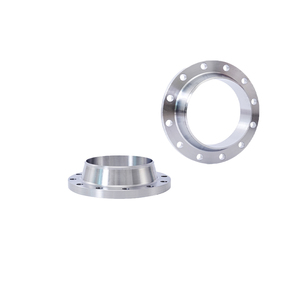

Precision-manufactured line components meeting ASME B16.5, ASME B16.9, MSS SP-97, and EN dimensional tolerances. Tested for extreme temperatures, fatigue endurance, and zero-defect pressure containment.
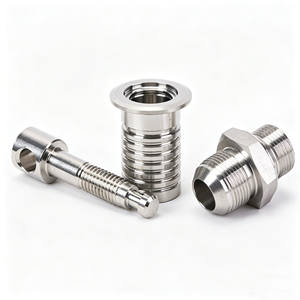
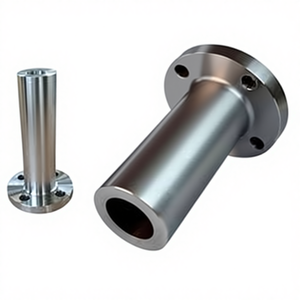
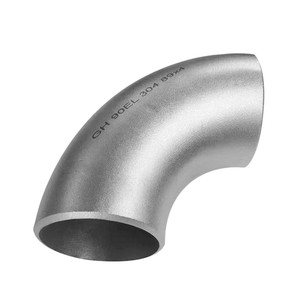
A comprehensive examination of ASME B16.5, DIN EN 1092-1, and BS 4504 threaded companion flanges for high-integrity plant construction, flammable medium conveyance, and retrofit applications.
Threaded flanges (screwed companion flanges) connect to externally threaded pipe spools without welding, making them vital for low-temperature or explosive areas where "hot work" permits are restricted.
Correct grain alignment from closed-die or open-die forging provides high yield strength, preventing micro-fissuring across root threads under heavy tightening moments.
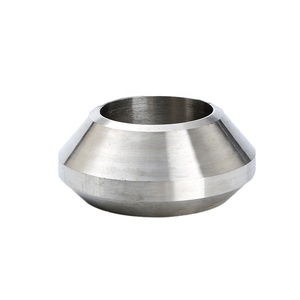
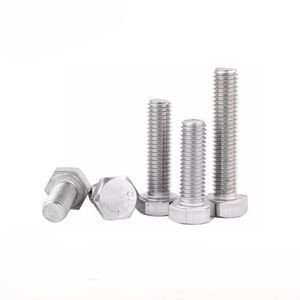
Enterprise procurement teams are migrating from piecemeal spot purchases toward bundled sourcing models that combine threaded flanges with forged branch outlets and high-tensile bolting.
Direct comparison of connection specifications, bore designs, pressure ceilings, and governing international standards for enterprise EPC design verification.
| Flange Type | Governing Standard | Nominal Size Range | Pressure Ratings | Facing Variations | Key Technical Limitation |
|---|---|---|---|---|---|
| Threaded (Screwed) | ASME B16.5 / DIN EN 1092-1 Type 13 | 1/2" to 6" (DN15 - DN150) | Class 150 to 2500 / PN6 to PN100 | RF, FF, RTJ | Avoid in severe thermal fatigue or high-vibration systems |
| Weld Neck (WN) | ASME B16.5 / B16.47 Series A & B | 1/2" to 60" (DN15 - DN1500) | Class 150 to 2500 / PN6 to PN400 | RF, RTJ, Flat Face | Requires certified on-site welders and radiography (NDT) |
| Socket Weld (SW) | ASME B16.5 / BS 3293 | 1/2" to 3" (Small bore lines) | Class 150 to 1500 / PN10 to PN100 | Raised Face (RF), RTJ | Internal crevice can cause accelerated local pitting corrosion |
| Slip-On (SO) | ASME B16.5 / EN 1092-1 Type 12 | 1/2" to 24" | Class 150 to 1500 / PN6 to PN63 | RF, FF | Lower fatigue life; double fillet weld required internally/externally |
| Blind Flange (BL) | ASME B16.5 / EN 1092-1 Type 05 | 1/2" to 48" | Class 150 to 2500 / PN6 to PN400 | RF, RTJ, FF | Highest bending stress at center under hydrostatic testing |
Modern wholesale manufacturers utilize multi-axis CNC turn-mill centers with single-point carbide tooling instead of manual thread chasers. This delivers sub-micron thread pitch accuracy, mirror-smooth root geometry, and eliminates galling during torque-down operations.
In response to sour crude and marine LNG demand, China's leading forging mills now supply carbon steel (ASTM A105) threaded companion flanges with Inconel 625 (UNS N06625) or 316L internal thread cladding, lowering base alloy costs while securing full pitting resistance.
International infrastructure projects increasingly prioritize low-carbon steel. Leading producers now implement clean-energy electric induction heating for billet preparation, minimizing scale formation while tracking embodied carbon for Scope 3 ESG compliance.
From initial billet selection through final seaworthy export packing, our production plants employ strict testing steps certified to international standards.
Every melt billet undergoes Optical Emission Spectrometry (OES) analysis to verify chemical composition, carbon equivalent (CE), and sulfur controls before cutting and forging.
Closed-die forging optimizes continuous grain flow along the flange hub and neck, maximizing resistance to hoop stress and internal line pressure surges.
Thread inspection utilizes calibrated master working gauges (L1, L2 plugs) to check pitch, taper angle, truncation, and thread crest roundness across every batch.
Clear, technical answers to common questions encountered by global piping designers, procurement managers, and mechanical contractors.
Threaded flanges are ideal where hot welding work is hazardous (e.g., operational refinery units or offshore gas decks) or where post-weld heat treatment (PWHT) is impractical. They are generally limited to non-critical cyclic services, utility cooling loops, water lines, and low-temperature systems.
Yes. If specified in the piping isometric, a small seal weld can be deposited at the junction between the pipe and the back of the flange hub. This should not be treated as a strength weld, but rather as an additional barrier against leakage in hydrocarbon, vent, or drain lines.
NPT threads follow ASME B1.20.1 with a 60° thread flank angle and flat crests/roots. BSPT (governed by ISO 7-1 / BS 21) uses a 55° thread angle with rounded crests and roots. Both share a 1:16 taper, but they cannot mate with each other without leaking or damaging threads.
Shipments include an EN 10204 Type 3.1 Inspection Certificate detailing heat numbers, chemical melt analyses, tensile/yield strengths, elongation, Charpy V-notch impacts, surface hardness (HBW), and raw billet source origin. Third-party agency stamping (SGS, DNV, Lloyd's) is available on request.
Send your bill of materials, engineering isometrics, or custom forged flange drawings for a detailed technical proposal and mill-direct quote.