Explore our certified catalog manufactured under strict EN 10204 3.1 quality control protocols, serving cryogenic, petrochemical, offshore marine, and nuclear power installations globally.
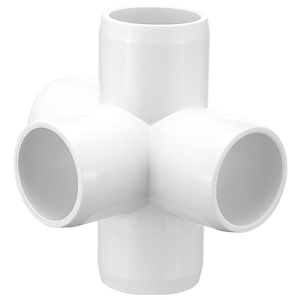
In high-velocity, corrosive chemical pipelines and subsea tie-backs, the stainless steel tee (equal tee and reducing tee) represents the most hydraulically stressed branch connection in the piping network. Under continuous internal cyclic loading, the transition zone—specifically the crotch radius and branch neck intersection—experiences pronounced shear and hoop stresses that exceed straight pipe loads by up to 2.4 times.
As premier Chinese manufacturers and direct factory suppliers, our stainless steel tee engineering adheres to both ASME B16.9 (Factory-Made Wrought Buttwelding Fittings) and MSS SP-43 (Lightweight Stainless Steel Fittings). Material integrity starts at the atomic level, utilizing austenitic grades (TP304, TP304L, TP316, TP316L, 321, 347H), duplex systems (2205 / S31803 / S32205), super duplex (2507 / S32750), and advanced super austenitic 6% Moly alloys (SMO 254 / UNS S31254).
Preventing localized intergranular corrosion (IGC) requires rigid suppression of chromium carbide precipitation at the grain boundaries. Every lot of our wrought tees undergoes mandatory solution annealing at 1050°C to 1150°C, followed by pressurized rapid water quench, strictly fulfilling ASTM A403 / ASTM A815 testing protocols (including ASTM A262 Practice E oxalic acid screening).
Dimensional tolerances, wall thinning ratios at the crotch, and metallurgical microstructure depend on the primary forming technique employed in our manufacturing plants.
Utilized for seamless tees from 1/2" to 12" (DN15 - DN300). Seamless stainless steel tubular blanks are placed inside a precision split-die tooling block. High-pressure liquid (up to 250 MPa) is synchronized with bilateral mechanical plungers compressing the pipe axis. The hydrostatic displacement extrudes the branch without inducing micro-fissures or circumferential wall necking, preserving flawless interior surface roughness (Ra ≤ 0.8 μm).
Key Benefit: Exceptional grain alignment and uniform wall thickness without thermal decarburization.
Engineered for large-bore piping networks up to 48" (DN1200) and heavy wall thicknesses (Schedule 160 to XXS). The pipe blank is locally preheated using intermediate frequency induction coils to 980°C–1080°C. A hydraulic mandrel pulls or pushes the extrusion head through a pre-drilled pilot hole. Strict metallurgical oversight ensures the transition radius maintains structural integrity without wall thinning beyond the ASME allowable limit (≤ 12.5%).
Key Benefit: Ideal for heavy-wall chrome-moly, alloy steel, and large-diameter offshore headers.
Root gap fit-up is paramount for automated orbital welding. Our factory outfits all stainless tees with precision CNC end-machining to ASME B16.25 standards. Available prep profiles include plain ends (PE), standard 37.5° single-V bevels, compound J-bevels for subsea lines, and specialized counterboring to match inner diameter (ID) tolerances (±0.5 mm) for automated pigging inspection compliance.
Key Benefit: Seamless on-site alignment, drastically reducing EPC field-welding hours and rejection rates.
True supply reliability begins at the steel mill. Our Chinese factory maintains direct strategic tier-one contracts with global primary stainless steel producers—including Tsingshan Holding Group, Baosteel, TISCO, and POSCO. Every billet, pipe, and plate heat lot is backed by complete mill documentation, verifying elemental nickel, chromium, and molybdenum stoichiometry before entering processing lines.
Our in-house QA/QC inspection testing center is certified to CNAS (ISO/IEC 17025), equipped with:
All production carries third-party certifications including Pressure Equipment Directive (PED 2014/68/EU Annex I), AD2000-W0, Indian Boiler Regulations (IBR), and has been audited for compliance with NACE MR0175 / ISO 15156 for sour gas operating conditions.
Procurement engineers and piping draftspersons can reference this technical verification baseline before submitting tender RFQs.
| Nominal Pipe Size (NPS) | Outside Diameter at Bevel (OD) | Center-to-End Run (C) | Center-to-End Branch (M) | Wall Thickness Schedules | Off-Center & Alignment Tolerance |
|---|---|---|---|---|---|
| 1/2" (DN15) | 21.3 mm (±0.8 mm) | 25.4 mm | 25.4 mm | SCH 10S, 40S, 80S, 160 | ± 0.8 mm |
| 1" (DN25) | 33.4 mm (±0.8 mm) | 38.1 mm | 38.1 mm | SCH 10S, 40S, 80S, 160 | ± 0.8 mm |
| 2" (DN50) | 60.3 mm (±1.6 mm) | 63.5 mm | 63.5 mm | SCH 5S, 10S, 40S, 80S, 160, XXS | ± 1.6 mm |
| 4" (DN100) | 114.3 mm (±1.6 mm) | 104.8 mm | 104.8 mm | SCH 5S, 10S, 40S, 80S, 120, 160 | ± 1.6 mm |
| 8" (DN200) | 219.1 mm (+2.4 / -1.6 mm) | 177.8 mm | 177.8 mm | SCH 10S, STD, 40S, 80S, 120, 160 | ± 2.4 mm |
| 12" (DN300) | 323.8 mm (+3.2 / -1.6 mm) | 254.0 mm | 254.0 mm | SCH 10S, 20, 40S, 80S, 120, 160 | ± 3.2 mm |
| 24" (DN600) | 609.6 mm (+6.4 / -4.8 mm) | 431.8 mm | 431.8 mm | SCH 10S, 20, STD, 40, 80S, XS | ± 4.8 mm |
Where catastrophic mechanical failure or fluid leakage is unacceptable, our high-integrity tees provide long-term service stability.
Subsea tie-backs and FPSO topsides handling unprocessed hydrocarbon flow with wet H2S, carbon dioxide, and saline seawater require UNS S31803 / S32205 Duplex and UNS S32750 Super Duplex tees. High pitting resistance equivalent numbers (PREN ≥ 42) resist chloride stress corrosion cracking under 200 bar operating environments.
Transferring liquefied natural gas at -162°C mandates TP304L or TP316L seamless tees that retain extraordinary face-centered cubic (FCC) lattice ductility. Our products undergo Charpy V-notch impact validation at cryogenic thresholds, demonstrating absorbed lateral expansion above 0.38 mm to avert low-temperature brittle fractures.
Manufactured to ASME BPE (Bio-Processing Equipment) specifications with high-purity electro-polishing (Ra ≤ 0.38 μm / 15 μin). Eliminates internal metallurgical dead-legs, biofilm stagnation cavities, and entrapment zones. Accompanied by full FDA elastomer ratings and sulfur control (0.005% to 0.017%) for high-repeatability orbital welds.
Analyzing global supply chain evolution, material science innovations, and sustainability imperatives shaping stainless steel fittings sourcing over the next decade.
Global EPC contractors and European plant builders increasingly mandate lower embedded carbon in their supply chains. Our facilities are transitioning toward 100% Electric Arc Furnace (EAF) stainless melts utilizing up to 85% certified recycled scrap, drastically trimming Scope-3 emissions per metric ton produced.
Paper Mill Test Certificates are rapidly becoming obsolete. Progressive procurement involves 2D DataMatrix lasers etched onto the branch of each tee. Scanning connects directly to encrypted cloud repositories displaying heat melt history, mechanical stress-strain diagrams, and chemistry sign-offs.
With clean hydrogen generation accelerating globally, branch fittings must withstand high-pressure gaseous hydrogen (350 to 700 bar). Specially alloyed 316L variants with nickel contents exceeding 12.5% provide superior resistance to hydrogen-assisted microcracking compared to baseline 304 steels.
With domestic vertical integration across raw mining, vacuum induction melting, tube extrusion, and high-speed CNC finish-turning, Chinese manufacturing hubs provide lead-time advantages of 35%–50% over fragmented European fabrication centers for bulk project quantities.
Addressing critical engineering questions regarding wall thickness compliance, standards overlap, and testing certifications.
During hydraulic bulging, tensile elongation occurs naturally across the crotch curvature. ASME B16.9 section 2.2 states that the minimum wall thickness at any given point on the fitting must not be less than 87.5% of the nominal wall thickness of the pipe to which it is matched. We prevent non-compliant crotch thinning by utilizing customized extra-heavy wall initial mother pipes (starting with 110% to 115% nominal thickness) and employing digitally synchronized axial hydraulic cylinders that feed material inward while radial hydraulic pressure bulges the branch. This maintains the finished crotch wall well above the 87.5% threshold.
ASME B16.9 covers heavy-duty factory-made wrought buttwelding fittings intended for standard to extreme pressure ratings across schedules 5S through XXS, with strict pressure-containment design requirements matching straight seamless pipe. In contrast, MSS SP-43 is a specialized standard developed specifically for low-pressure, corrosion-resistant applications using thin-walled Schedule 5S and 10S stainless pipes. MSS SP-43 allows shorter center-to-end branch dimensions and looser dimensional tolerances to optimize material volume and cost for chemical utility systems.
Yes. Dual certification is standard for our warehouse and factory production. By carefully managing ladle metallurgy, our stainless steel keeps carbon levels below 0.030% (satisfying the "L" grade requirement for intergranular corrosion prevention after welding) while maintaining nitrogen additions or cold-work mechanical properties that satisfy the higher minimum yield strength (205 MPa for 304, 170 MPa for 304L) and tensile requirements of the base straight grade.
As standard baseline procedure, 100% of our tees receive visual (VT), dimensional, and Positive Material Identification (PMI) via XRF analyzer before packaging. For seamless tees, Liquid Penetrant Testing (PT) of bevels and crotches is standard. For welded fabrication tees (ASME A403 WPW / WPX), 100% Radiographic Testing (RT) or Ultrasonic Testing (UT) along all longitudinal and circumferential weld seams is performed to ensure zero porosity, lack of fusion, or tungsten inclusions, fully certified under ASME Section V.
All finished tees undergo chemical immersion pickling and passivation according to ASTM A380/A967 to build a chemically uniform chromium oxide (Cr2O3) passive layer. For export logistics, every pipe end is fitted with heavy-duty polyethylene push-in end caps to prevent bevel deformation. Each component is individually wrapped with moisture-barrier film and packed into ISPM-15 compliant fumigated plywood cases lined with waterproof plastic sheeting to eliminate moisture and atmospheric salt intrusion during extended maritime transit.
Submit your line piping data sheets, MTO, or technical tender specifications. Our engineering estimating team delivers quotation packages—complete with weights, mill test cert templates, and lead-time guarantees—within 24 business hours.