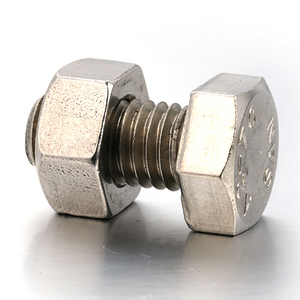
Structural Fastening

Precision-Engineered UNS S32205 / S31803 Fasteners, High-Integrity Flanges & Heavy Industrial Piping Solutions for Extreme Offshore, Marine and Chemical Environments.
Explore our heavy-duty industrial bolted joint, forged flange, and fluid handling product lines crafted to ASME, EN, DIN, and ISO precision metrics.
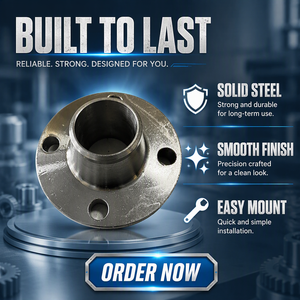
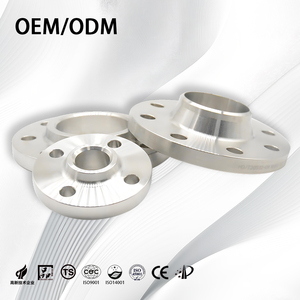
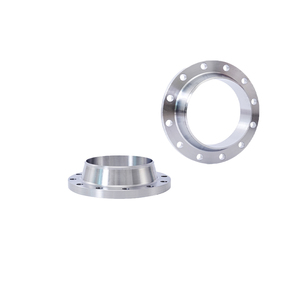
A rigorous breakdown of phase balances, stress corrosion cracking resistance, mechanical threshold limits, and global fabrication protocols for EPC engineers and technical procurement directors.
In high-stress offshore hydrocarbon processing, coastal infrastructure, subsea manifolds, and harsh chemical environments, conventional austenitic stainless steels like AISI 304 and 316 reach clear thermodynamic and mechanical limitations. Bolting systems fabricated from Duplex 2205 (UNS S32205 / UNS S31803 / DIN EN 1.4462) bridge this engineering gap. Possessing an engineered biphasic microstructure comprising roughly 50% delta-ferrite and 50% austenite, Duplex 2205 achieves a minimum yield strength of 450 to 550 MPa—more than double that of conventional 300-series austenitic alloys—alongside superior resistance to localized chloride pitting, crevice corrosion, and tensile stress cracking.
Precision-forged Duplex 2205 bolts supplied through verified Chinese production facilities conform rigidly to ASTM A1082, ASTM A276, ASTM A479, and ASME SA-182 standards. When specified as stud bolts under ASTM A193/A193M or heavy hex bolts under ASME B18.2.1, they provide high clamping reliability across piping flanges, pressure vessels, and subsea risers. This performance relies on maintaining an optimized chemistry of 22% Chromium, 5% Nickel, 3% Molybdenum, and 0.17% Nitrogen, resulting in a Pitting Resistance Equivalent Number (PREN) between 34 and 38.
Duplex 2205 fasteners deliver twice the proof load capacity of Grade B8/B8M bolts, enabling structural engineers to downsize bolt circle dimensions, shave flange face weights, and minimize total skid payloads.
With an explicit PREN range of ≥ 35, our 2205 alloy prevents stress-corrosion cracking (SCC) and localized chloride attack in sour gas rigs, marine atmospheres, and high-salinity multi-stage flash desalination plants.
Threads are precision rolled rather than cut, retaining continuous grain flows that prevent root micro-fissuring while minimizing thread galling during high-torque hydraulic tensioning.
To support material selection teams during FEED (Front-End Engineering Design), the table below highlights how Duplex 2205 compares mechanically with common commercial alloys under standard ASTM/ASME testing procedures:
| Fastener Material Specification | UNS / Material Designator | Min. Yield Strength (0.2% Proof, MPa) | Tensile Strength (MPa) | PREN Value Range | Standard Operating Temp. Window |
|---|---|---|---|---|---|
| Duplex 2205 (Solution Annealed) | UNS S32205 / EN 1.4462 | ≥ 450 - 550 | 655 - 880 | 34.0 - 38.0 | -50°C to 300°C (-58°F to 572°F) |
| Super Duplex 2507 | UNS S32750 / EN 1.4410 | ≥ 550 | 750 - 1000 | ≥ 42.0 | -50°C to 280°C (-58°F to 536°F) |
| Austenitic 316L (Class 1) | UNS S31603 / EN 1.4404 | ≥ 205 | 515 | 23.0 - 25.0 | -196°C to 550°C (-320°F to 1022°F) |
| High-Tensile B7 Alloy Steel | AISI 4140 / 4142 Q&T | ≥ 725 | 860 | N/A (Requires Coating) | -30°C to 400°C (-20°F to 752°F) |
| Nickel Alloy Inconel 625 | UNS N06625 / EN 2.4856 | ≥ 415 | 830 | ≥ 48.0 | -196°C to 980°C (-320°F to 1800°F) |
A strategic overview of industrial shifts influencing supply-chain contracts, regional sourcing hubs, and manufacturing standards for high-alloy bolting.
Offshore wind substations and green hydrogen generation skids are moving away from oversized coated carbon steel bolting. By leveraging Duplex 2205’s double yield strength, engineering teams can downsize bolt diameters by 20% to 30%, noticeably cutting structural weight without losing tensile reliability.
With only ~5% nickel compared to 10–14% in 316L and over 50% in Hastelloy or Inconel, Duplex 2205 provides a hedge against raw material price swings. International buyers are locking in multi-year framework agreements with large Chinese producers to stabilize capital project budgets.
Modern quality assurance systems go beyond simple paperwork. Major Chinese exporters are moving toward tamper-proof digital heat-log databases and QR-coded packaging, linking each fastener directly to its raw material melt heat, Charpy impact log, and microstructural phase validation report.
The manufacturing profile of Duplex 2205 fasteners has advanced significantly. Historically, mechanical drilling and machine turning led to uneven work hardening and residual surface stress, making bolts more susceptible to pitting. Modern, specialized Chinese facilities use computer-controlled multi-station cold heading alongside warm forging between 1000°C and 1150°C. This is followed immediately by rapid water quenching to prevent the formation of brittle intermetallic phases, such as Sigma (σ) and Chi (χ), which can form if the alloy lingers between 600°C and 950°C.
In addition, advanced CNC thread-rolling dies apply cold work to the outer diameter, compressing grain boundaries at the thread root. This treatment increases fatigue thresholds by up to 45% compared to cut threads, delivering the durability needed for cyclic pressure conditions in offshore risers and pulsating fluid networks.
Drawing on decades of manufacturing excellence, our partner facilities run under strict quality management systems certified to ISO 9001, EIL, and IBR requirements.
Supplying global projects continuously since 1991, supported by advanced forging plants, high-precision machining centers, and an experienced technical engineering team.
Our quality management systems hold ISO 9001 certification along with formal approvals from EIL (Engineers India Limited) and IBR (Indian Boiler Regulations) for critical-service piping.
Every fastener and forged component is hard-stamped with its unique melt heat number, directly tied to an EN 10204 3.1 Inspection Certificate documenting verified mechanical and chemical data.
Supplying major operators and EPC contractors across the UAE, Saudi Arabia, Qatar, Oman, Southeast Asia, Europe, and the Americas with on-time international logistics.
Straightforward technical and commercial answers to help procurement teams, quality control inspectors, and line engineers prepare their RFQs.
UNS S31803 was the original composition for 22% Cr duplex stainless steel. However, UNS S32205 specifies narrower, higher minimum limits for Chromium (22.0% to 23.0%), Molybdenum (3.0% to 3.5%), and Nitrogen (0.14% to 0.20%). This tighter chemistry ensures a minimum PREN ≥ 35 and eliminates poor nitrogen-depleted areas, providing superior localized pitting and crevice corrosion resistance. Our manufacturing partners supply fasteners dual-certified as both UNS S31803 and UNS S32205, fully compliant with EN 1.4462.
Fasteners are produced to ASME B18.2.1 (Heavy Hex Bolts), ASME B18.2.2 (Heavy Hex Nuts), ASME B18.31.2 (Continuous Stud Bolts), DIN 931/933 (Metric Hexagon Screws), and DIN 976 (Threaded Rods). Raw material testing follows ASTM A1082/A1082M, ASTM A276, ASTM A479, or ASTM A182 Grade F51/F60, with thread designs adhering to ASME B1.1 Class 2A/2B or ISO metric 6g/6H tolerances.
Stainless and duplex fasteners can be prone to friction galling during high-speed torque tightening. We address this by using fine-finish CNC thread rolling to reduce micro-surface roughness. We can also supply precision solid-film dry lubricants, PTFE coatings, Xylan® fluoropolymer systems, or hot-dip cadmium/electroless nickel plating. Mating Duplex 2205 bolts with hardened, dissimilar-hardness nuts (such as Super Duplex 2507 nuts or appropriately coated Grade 2205 nuts) also helps eliminate cold welding during installation.
Every export shipment includes comprehensive inspection packages according to EN 10204 Type 3.1. These cover wet chemical spectroscopy, tensile yield properties, Charpy V-notch impact performance at -40°C/-50°C, microstructural ferrite percentage checks (typically 40–60% via ASTM E562), ASTM A923 Method C intermetallic corrosion test results, and non-destructive surface examination logs. Independent Third-Party Inspection (TPI) through agencies like DNV, Lloyd's Register, BV, or SGS can also be coordinated prior to factory exit.
Duplex 2205 performs reliably across a standard operating temperature range from -50°C to +300°C (-58°F to +572°F). Prolonged exposure above 300°C can lead to 475°C spinodal decomposition, causing alpha-prime embrittlement that significantly reduces room-temperature impact ductility. At sub-zero temperatures below -50°C, the ferritic phase undergoes a ductile-to-brittle transition, making austenitic alloys (such as 316L or 310) or nickel-base alloys (such as Alloy 625) more suitable choices for dedicated cryogenic service.
Our sales engineering team can review your line-class specs, NACE MR0175/ISO 15156 requirements, and custom dimensional drawings to return an itemized commercial quotation with complete documentation.