
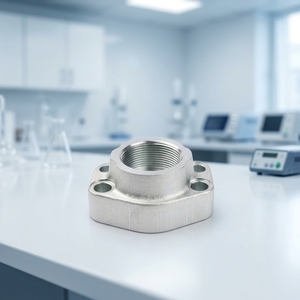
Featured Forged Piping Components
Engineered Flanges Catalog & Direct Factory Inventory
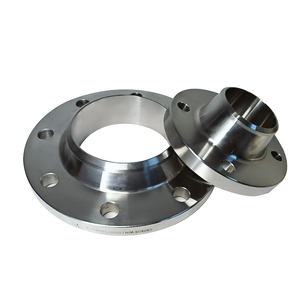
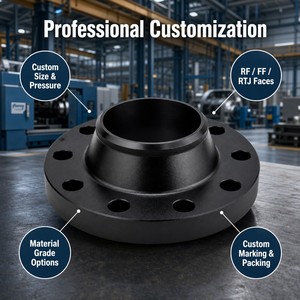
Browse our precision-machined connection components built to ASME B16.5, JIS B2220, and SAE specifications with 100% heat traceability.
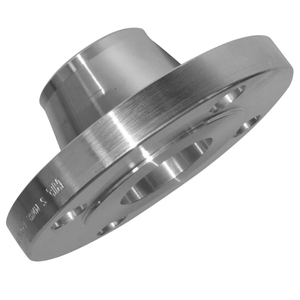
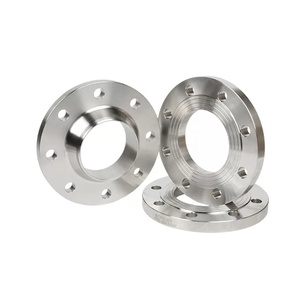
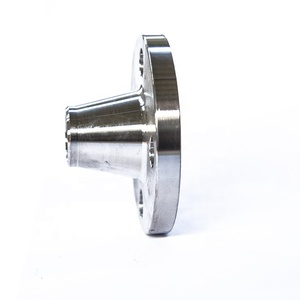
100%
Heat Number Traceability
±0.02mm
CNC Machining Precision
Class 2500
Ultra-High Pressure Tested
60+ Countries
Global Export Footprint
Material Engineering
ASTM A182 Grade Recommendations for Demanding Media
Selecting the optimal metallurgy balances corrosion resistance, mechanical strength under thermal cycling, and total cost of ownership.
Austenitic Stainless (F304/F304L, F316/F316L)
Engineered for food processing, desalination systems, and general chemical infrastructure. The low carbon content in F316L prevents chromium depletion and intergranular corrosion after welding. Highly recommended for offshore atmospheres and chloride-rich process piping.
Chrome-Moly Alloy (F11, F22, F91)
Tailored for high-temperature superheated steam headers, power generation boilers, and hydrocracking refineries. With chromium additions from 1.25% to 9% and molybdenum up to 1%, these grades maintain creep rupture resistance up to 650°C without graphitization.
Duplex & Super Duplex (F51, F53, F55)
Features a 50/50 austenitic-ferritic dual-phase microstructure providing double the yield strength of 316L. Excellent resistance to pitting and stress corrosion cracking (PREN ≥ 42) in high-salinity seawater injection, subsea risers, and acid-gas scrubbing.
| ASTM A182 Grade | Metallurgical Type | Tensile Strength (MPa) | Yield Strength min. (MPa) | Operating Temp Range | Primary Application Environments |
|---|---|---|---|---|---|
| Grade F304L | Austenitic Stainless | ≥ 485 | ≥ 170 | -196°C to 450°C | Cryogenic, general chemical, potable water & hygienic lines |
| Grade F316L | Molybdenum Stainless | ≥ 485 | ≥ 170 | -196°C to 550°C | Marine systems, sour gas piping, pharmaceuticals & acids |
| Grade F11 Class 2 | 1.25Cr-0.5Mo Alloy | ≥ 485 | ≥ 275 | -29°C to 593°C | Boiler piping, petrochemical heat exchangers, cracking furnaces |
| Grade F22 Class 3 | 2.25Cr-1.0Mo Alloy | ≥ 515 | ≥ 310 | -29°C to 620°C | High-pressure hydrogenation reactors & superheated steam lines |
| Grade F51 (S31803) | Duplex Stainless | ≥ 620 | ≥ 450 | -50°C to 280°C | Offshore platforms, chemical tankers, reverse osmosis units |
Industry Outlook
Procurement & Technological Trends in Forged Flanges
Strategic insights into the shifts affecting international EPC contracts, supply chain localization, and technical audits over the next decade.
1. Digital Product Passports & Traceability
Global operators are moving away from manual, easily forged 3.1 PDF certificates. The industry is adopting QR-coded laser marking that integrates heat chemical analysis directly with ERP databases. Every flange batch can be audited from steel melt scrap origin to final heat treatment cycles within seconds.
2. Near-Net-Shape Closed Die Forging
To reduce raw material wastage on high-value nickel alloys and duplex grades, Chinese export factories are replacing open-die free forging with hydraulic multi-directional closed-die systems. This ensures tighter grain boundary alignment, reduced machining time, and up to 15% cost savings passed on to EPC buyers.
3. Strict Demands for Sour Service Compliance
With increasing extraction in high-H2S gas reservoirs, projects now routinely mandate NACE MR0175 / ISO 15156 compliance. Flanges require rigorous HIC (Hydrogen-Induced Cracking) and SSC (Sulfide Stress Cracking) testing, stringent hardness caps (≤ 22 HRC), and precise quenching controls to eliminate residual micro-stresses.
Your Direct Manufacturing Partner for Critical Piping Connections
Operating with full internal forging capacity, multi-axis CNC machine lines, and automated submerged-arc heat treatment facilities, we eliminate third-party markups and guarantee complete specification alignment.
- Raw materials sourced strictly from Tier-1 certified steel mills with full chemical verification
- In-house physical lab: Spectrometer PMI, Charpy V-notch impact, Tensile, Hardness, and Ultrasonic testing
- EIL, IBR, and ISO 9001 certified production processes compliant with ASME B16.5, DIN, JIS, and BS 10
- Seaworthy export packaging: vacuum-sealed wrapping, anti-rust oiling, and heavy reinforced wooden crates
Looking for Direct Mill Pricing?
Send our engineering team your bill of materials, project line class sheets, or dimensional drawings for a comprehensive quotation within 24 hours.
Send an InquiryProcurement FAQ
Frequently Asked Questions by Overseas Pipe Engineers & Buyers
Clear, direct answers regarding certifications, testing standards, manufacturing tolerances, and delivery arrangements.
What are the key technical differences between ASTM A105 and ASTM A182 flanges?
ASTM A105 covers forged carbon steel piping components intended for ambient- and higher-temperature service in pressure systems. In contrast, ASTM A182 covers forged low-alloy and stainless steel piping components specifically designated for high-temperature, severe corrosive, or cryogenic service. If your operating environment contains sour gas (H2S), chlorides, high-temperature hydrogen, or operating temperatures beyond the safe range of carbon steel (over 425°C or sub-zero), ASTM A182 alloy (such as F11, F22) or stainless/duplex grades (F304L, F316L, F51) are strictly required.
Does your factory supply EN 10204 3.1 or 3.2 Inspection Certificates?
Yes. Every order is supplied standard with an EN 10204 3.1 Mill Test Certificate (MTC) detailing complete chemical composition, heat treatment charts, tensile properties, yield strength, elongation, and impact values tied to the stamped heat number on each piece. Furthermore, if your contract specifies third-party validation (such as DNV, Lloyds, BV, SGS, or TÜV), we support EN 10204 3.2 co-certification with witness testing at our factory.
How do you ensure flange raised face (RF) roughness complies with ASME standards?
Face serration geometry directly impacts gasket sealing reliability. Our CNC facing lathes produce controlled phonographic spiral or concentric serrations strictly in accordance with ASME B16.5 paragraph 6.4.5, yielding a finish roughness between Ra 3.2 µm to 6.3 µm (125 to 250 µin AARH) for standard spiral wound gaskets. Smooth finishes (Ra 1.6 µm to 3.2 µm) for ring type joint (RTJ) or specialized PTFE gaskets are verified using portable stylus profilometers.
Can you manufacture non-standard or long weld neck (LWN) flanges to custom drawings?
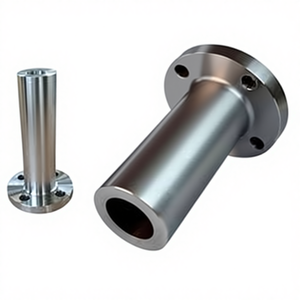
Yes. Our forging facilities accommodate both closed-die forging and large-diameter open-die ring rolling up to 3000mm OD. We routinely machine specialized Long Weld Neck (LWN) nozzles, orifice flanges with drilled pressure taps to ASME B16.36, spectacle blind assemblies, reducing flanges, and heavy anchor flanges manufactured strictly to customer-provided CAD/SolidWorks blueprints.
What Non-Destructive Testing (NDT) procedures are carried out prior to dispatch?
Standard production includes 100% Visual and Dimensional Inspection (using calibrated micrometers and 3D CMM machines) along with Positive Material Identification (PMI) on alloy and stainless batches. On high-pressure, critical, or sour service orders, we execute Ultrasonic Testing (UT) to detect sub-surface laminations, Magnetic Particle Inspection (MPI) or Liquid Dye Penetrant Testing (PT) for surface discontinuities, and hydrostatic pressure testing according to project datasheets.