
Manufactured to stringent ASME, EN, DIN, and JIS tolerances. Every batch is traceable to mother steel billets with full EN 10204 3.1 certification and non-destructive examination (NDE) compliance.
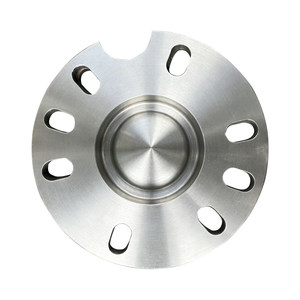
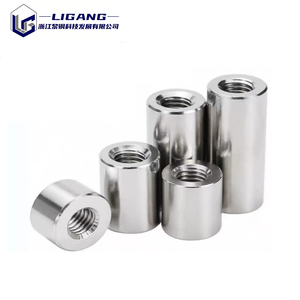
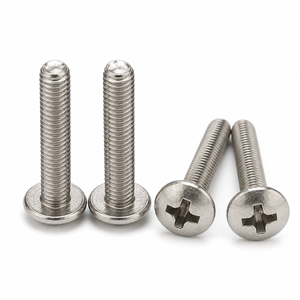
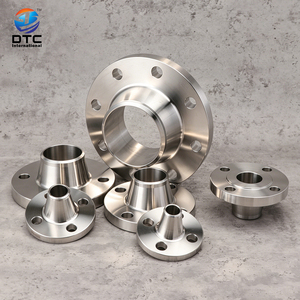
In fluid mechanics and process engineering, the boundary between steady-state operations and catastrophic containment failure is determined by the microstructure of the pipeline connections. As an international manufacturing and engineering consortium, we supply critical components across oil & gas, offshore energy, hydrogen distribution, nuclear generation, and marine installations where pressure containment is vital.
A forged pipe fitting is not merely a machined shape; it is a thermodynamically altered component possessing directional continuous grain flow, elevated yield strength, and superior fatigue thresholds compared to cast or conventionally fabricated fittings. Casting introduces inherent porosity, dendritic shrinkage, and crystalline inclusions. In contrast, precision closed-die and open-die forging forces the molecular matrix of austenitic stainless steel, low-temperature carbon steel, and chrome-moly alloys to flow along the mechanical contours of elbows, tees, unions, and flanges.
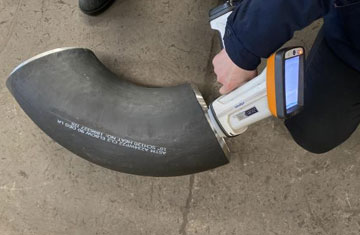
During the closed-die forging process, billet blanks are heated to material-specific recrystallization windows (typically 1150°C to 1250°C for ASTM A105 carbon steel, and 1180°C to 1220°C for ASTM A182 F316L stainless steel). High-energy hydraulic strikes crush coarse cast grains into fine, equi-axed sub-grains, effectively sealing microscopic micro-voids.
When fluids subject piping to extreme mechanical vibration, pulsating hydraulic shocks, or severe thermal cycling (such as in steam crackers or cryogenic liquefaction units), this unbroken grain structure channels stress vectors along the component perimeter rather than across cross-sectional grain boundaries. This fundamentally prevents stress corrosion cracking (SCC) and rapid brittle fracture.
Get a QuoteProcurement teams require total alignment between line datasheets and metallurgy. We produce, test, and stock forged piping fittings across 5 distinct alloy families, each validated through positive material identification (PMI) and spectrographic verification:
Forged to ASTM A182 in grades F304, F304L, F316, F316L, and 904L. Solution annealed at 1040°C followed by rapid water quenching to ensure full carbon re-dissolution and prevent chromium carbide precipitation at grain boundaries.
ASTM A182 F51 (UNS S31803), F53 (UNS S32750), and F55 (UNS S32760). Engineered with a strictly balanced 50/50 austenite-ferrite matrix to withstand localized pitting and chloride stress corrosion in aggressive marine and sour-gas wells.
ASTM A105N, ASTM A350 LF2 (Classes 1 & 2), and MSS-SP 75 (WPHY 52/60/65/70). Fully normalized to suppress brittle transformation temperatures, guaranteeing Charpy V-Notch impact absorption down to -46°C.
ASTM A182 F11, F22, F5, F9, and F91. Designed for extreme thermal endurance in supercritical boilers, fluid catalytic crackers (FCC), and power plant steam manifolds resisting hydrogen embrittlement and thermal creep.
Hastelloy C-276, Inconel 625, Incoloy 825, Monel 400, and Titanium Grades 2 and 5. Deployed in aggressive chemical processing, hydrochloric/sulfuric acid stripping, seawater desalination, and wet chlorine valves.
Engineered to interface seamlessly with standard pipeline schedules from Schedule 10 through Sch XXS.
| Component Group | Governing Specification | Nominal Size Range | Pressure Class / Schedule | Thread / End Connection Options | Inspection Mandate |
|---|---|---|---|---|---|
| Forged Socket Weld Fittings | ASME B16.11, BS 3799, MSS SP-79 | 1/8″ to 4″ (DN 6 – DN 100) | Class 3000, 6000, 9000 | Socket Weld Bore (ASME B16.11) | UT / MT / Dye Penetrant (PT) |
| Forged Threaded Fittings | ASME B16.11, BS 21, ISO 7-1 | 1/8″ to 4″ (DN 6 – DN 100) | Class 2000, 3000, 6000 | NPT (ASME B1.20.1), BSPT, BSPP | Thread Ring & Plug Gage Inspection |
| Buttweld Pipe Fittings | ASME B16.9, MSS SP-43, DIN 2605 | 1/2″ to 48″ (DN 15 – DN 1200) | SCH 10S to SCH XXS / Sch 160 | Beveled Ends (ASME B16.25, 37.5°) | 100% Radiographic / Ultrasonic Testing |
| Weld Neck & Blind Flanges | ASME B16.5, ASME B16.47 Series A/B | 1/2″ to 60″ (DN 15 – DN 1500) | Class 150, 300, 600, 900, 1500, 2500 | RF (125-250 AARH), RTJ, Flat Face | Dimensional CMM / Hardness HBW Checks |
| Branch Outlets (Olets) | MSS SP-97 (Weldolet, Threadolet, Sockolet) | Run: up to 36″, Outlet: 1/8″–4″ | STD, XS, Sch 160, Class 3000/6000 | Buttweld, Socket Weld, Threaded NPT | Macro Etch & Grain Flow Verification |
| High Tensile Studs & Bolts | ASTM A193, A194, DIN 931, ISO 4014 | M12 to M80 (1/2″ to 3-1/2″ UNC/8UN) | Grade B7, B8, B8M, Class 8.8, 10.9, 12.9 | Heavy Hex, Metric Coarse, Fine Pitch | Proof Load, Tensile & Charpy Testing |
Global EPC contractors and supply chain directors are navigating a structural shift in raw material compliance, digital verification, and global capacity distribution.
The risk of counterfeit documentation in piping components has pushed energy majors to demand digital MTCs tied to tamper-evident cryptographic heat records. Sourcing contracts increasingly require mill-to-fitting traceability with real-time chemical batch validation, reducing vendor qualification lead times by 60%.
Hydrogen distribution networks operate at pressures up to 700 bar, demanding metallurgical micro-cleanliness to stop hydrogen embrittlement. Top manufacturers now supply vacuum-degassed (VD/VOD) billets with sulfur levels ≤ 0.005%, verified through slow strain rate tensile (SSRT) testing.
Escalating raw material costs for nickel and duplex alloys have made legacy machining from bar stock economically unviable. Modern manufacturing leverages closed-die near-net forging coupled with 5-axis simultaneous CNC cells to achieve tight dimensional tolerance while reducing material waste by 35%.
Instead of managing fragmented purchase orders across flange makers, fitting suppliers, and fastener shops, EPC conglomerates are shifting to Tier-1 consolidated manufacturers who supply the entire pressure boundary package—including flanges, buttweld fittings, forged socket fittings, and high-tensile studs.
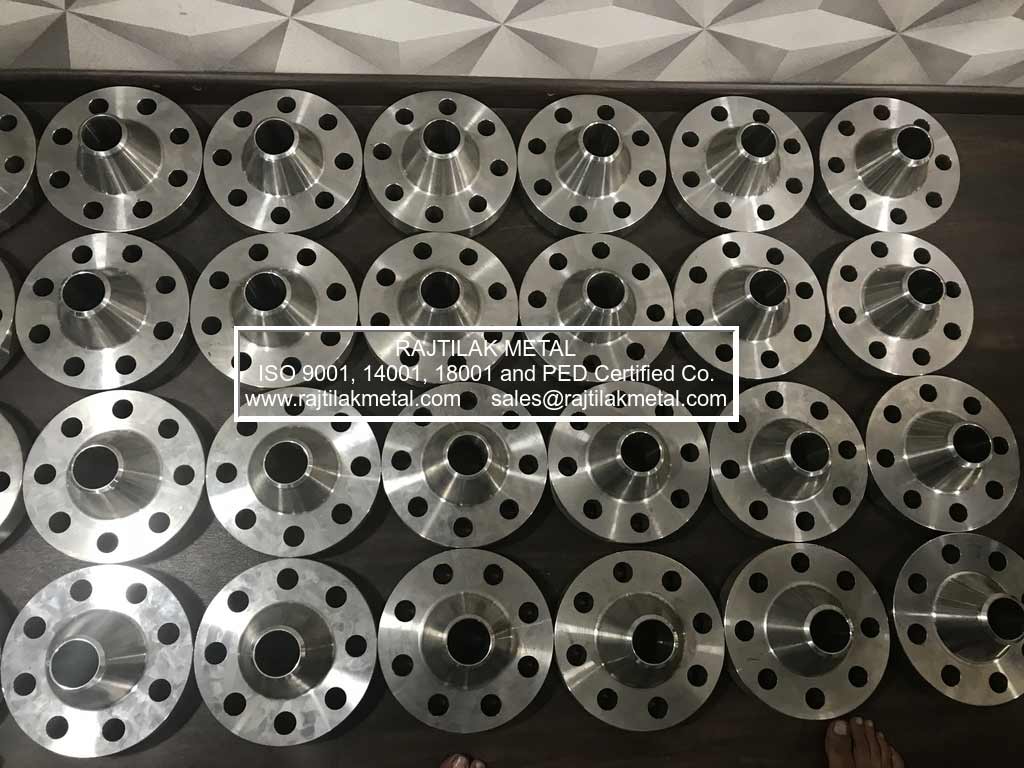
The piping industry has moved past legacy casting and manual machining. Today's demanding operating envelopes—deepwater subsea trees at 15,000 PSI, LNG terminals at -162°C, and petrochemical alkylation units—require precise manufacturing control.
Our production facilities utilize automated temperature-controlled induction billet heaters that eliminate overheating and decarbonization. Subsequent forging strikes are monitored by tonnage displacement sensors to ensure equal density distribution throughout the fitting geometry.
CNC turning centers run specialized tooling programs to produce serrated spiral raised face (RF) finishes with phonographic grooves calibrated precisely between 125 and 250 AARH (micro-inches), ensuring proper seating of spiral wound and kammprofile gaskets under high bolt loading.
Get a QuoteCombining decades of industrial manufacturing experience with rigorous quality management, certified by international accreditation bodies.
Decades of continuous international supply performance. Backed by institutional approvals including ISO 9001:2015, IBR (Indian Boiler Regulations), and EIL (Engineers India Limited) project qualifications.
Equipped with optical emission spectrometers, computerized tensile testing rigs, Charpy impact pendulums (-196°C capacity), hardness testers (Brinell/Rockwell/Vickers), and hydrostatic pressure test stations up to 25,000 PSI.
Holding extensive ready stock in certified forging blooms and billets across SS 304L, 316L, 904L, Duplex 2205, Super Duplex 2507, Carbon A105, A350 LF2, Alloy F11, F22, and Inconel 625, ensuring standard lead times as fast as 14 days.
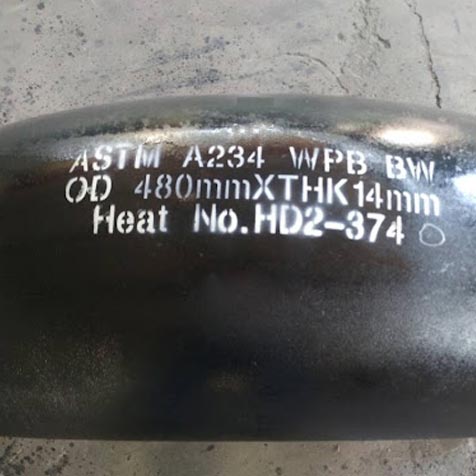
Every piece is stamped with material grade, nominal size, pressure rating, schedule, and melt heat number. Document dossiers include raw material heat chemistry, heat treatment charts, dimensional inspection reports, and third-party inspection sign-offs.
Regularly inspected and accepted by independent surveyor agencies including Lloyd's Register (LR), Bureau Veritas (BV), DNV GL, SGS, TUV Nord, and Velosi on major offshore and downstream projects.
To eliminate material mix-ups and ensure piping integrity, our quality assurance protocol inspects every phase of manufacturing:
Essential guidance covering technical requirements, pressure calculations, standards compliance, and international shipping.
Send your bill of materials (BOM), pipeline datasheets, or custom component drawings for a fast, compliant, and cost-effective quotation.