Refrigeration & Chemical
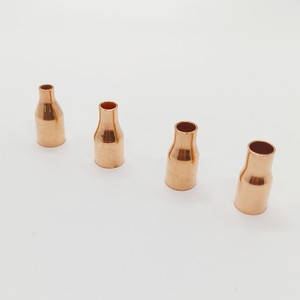

Fully traceable, mill-certified pipe fittings, forged flanges, and high-tensile connection components conforming strictly to ASME, ANSI, DIN, and ASTM specifications.
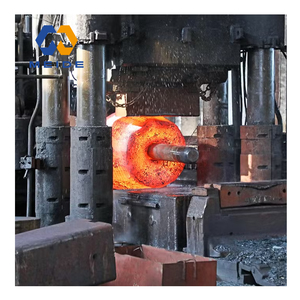
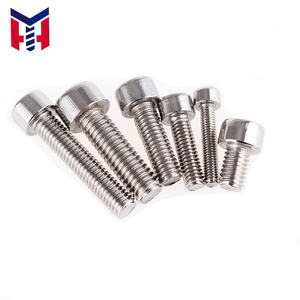
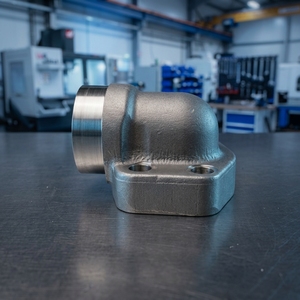
An authoritative operational guide to carbon steel quenching, tempering, proof-load mechanics, and pairing with ASTM A193 Grade B7 stud bolts in critical pressure retention.
| Standard & Grade | Material Type & Treatment | Hardness Range (Rockwell) | Proof Load Stress (UNC) | Primary Matched Stud | Typical Service Range |
|---|---|---|---|---|---|
| ASTM A194 2H | Medium Carbon Steel, Quenched & Tempered (min 455°C) | 24 to 35 HRC (248–327 HBW) | 175,000 psi (Heavy Hex) | ASTM A193 Grade B7 | -29°C to 427°C (-20°F to 800°F) |
| ASTM A194 2HM | Medium Carbon Steel, Quenched & Tempered (Stress Relieved) | 159 to 237 HBW (Max 22 HRC) | 150,000 psi (NACE MR0175 compliant) | ASTM A193 Grade B7M | Sour Gas / H2S Environments |
| ASTM A194 Grade 7 | AISI 4140/4142 Molybdenum Alloy, Q&T | 24 to 35 HRC | 175,000 psi | ASTM A193 Grade B7 / B16 | Up to 538°C High-Pressure Steam |
| ASTM A194 Grade 8 / 8M | AISI 304 / 316 Stainless Steel, Solution Annealed | 60 to 90 HRB | 75,000 to 80,000 psi | ASTM A193 Grade B8 / B8M | Cryogenic / Marine / Acid Service |
Grade 2H nuts undergo austenitizing at 850°C followed by a liquid quench and strict tempering above 455°C (850°F). This yields a homogeneous tempered martensite microstructure, eliminating brittle boundary transitions under cyclic thermal transients in Class 1500–2500 pressure systems.
Engineered with ASME B18.2.2 Heavy Hex dimensions, Grade 2H provides wider across-flats bearing area than standard finished nuts. The increased shear area prevents thread-stripping failure before the mated ASTM A193 B7 stud develops its ultimate tensile elongation limit.
For surface-coated 2H nuts (Zinc Electroplate, HDG, or PTFE), our manufacturing standard mandates immediate post-plate thermal de-embrittlement baking at 190°C–220°C for at least 4 to 8 hours to evacuate interstitial atomic hydrogen before stress application.
Leveraging over three decades of advanced heavy manufacturing expertise, serving refinery, petrochemical, and power infrastructure across 30+ export destinations.
Fully audited and certified under Engineers India Limited (EIL), Indian Boiler Regulations (IBR), and ISO 9001 quality management systems. Our hardware is pre-qualified for ADNOC, Saudi Aramco, and major Middle East offshore EPC installations.
100% heat-number steel tracing from primary melt to CNC threading. Every production batch is delivered with certified EN 10204 3.1 Mill Test Certificates containing chemical spectroscopy, Charpy V-notch impact, and proof-load test results.
Featuring state-of-the-art closed-die nut-forming presses, heavy hydraulic open-die forging hammer units, and multi-axis CNC lathes producing both metric (M20–M72) and UNC/UN (3/4" to 3") standard and specialized connections.
The critical fastener and flange market is experiencing rapid transformation driven by green hydrogen, sour hydrocarbon extraction, and automated cross-border compliance.
Traditional cadmium and hexavalent chromium electroplating are entirely phased out under international environmental mandates. Procurement programs are standardizing on Fluoropolymer (PTFE/Xylan), Zinc-Nickel (Zn-Ni) electroplating, and ceramic diffusion layers that deliver 3,000+ hours salt spray performance without hydrogen embrittlement hazards.
Deep-sea drilling and sour oil reservoirs dictate rigorous NACE MR0175/ISO 15156 adherence. Demand is shifting rapidly from standard 2H toward ASTM A194 Grade 2HM with modified sulfur-phosphorus limits, precise micro-alloy additions (Boron/Vanadium), and strict 22 HRC maximum hardness caps to resist Sulfide Stress Cracking (SSC).
Global supply chains require blockchain-authenticated EN 10204 3.1/3.2 certificates linked via 2D Data Matrix or laser-etched QR codes on the nut body. Engineering EPCs now require direct digital links back to initial ingot chemical analysis to eradicate counterfeit materials from safety-critical lines.
Essential technical, testing, and standard compatibility answers regarding ASTM A194 2H heavy hex bolting.
Our engineering sales desk reviews RFQs, drawings, and datasheets within 24 hours.