
Engineered for critical pressure-containment integrity across chemical, nuclear, and subsea pipelines.
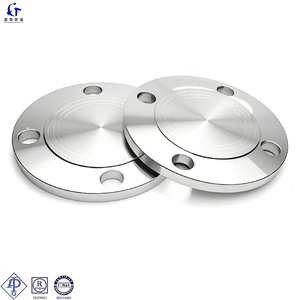
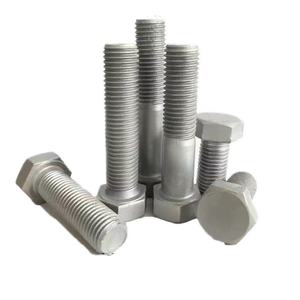
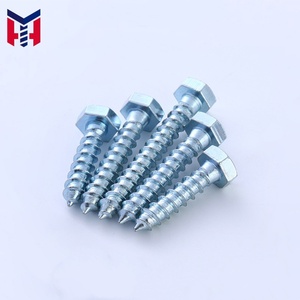
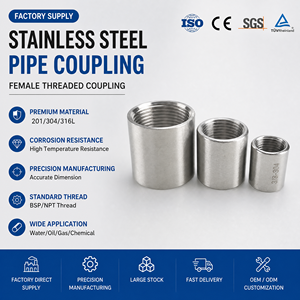
Building ultra-durable piping systems with metallurgical rigor, complete mechanical compliance, and strict international standard conformance.
Operating heavy-tonnage hydraulic presses and drop-forging stations capable of shaping solid billets into grain-flow aligned blanks up to 60 inches. Our forging thermal cycles eliminate porosity, micro-cracks, and internal stress, delivering structural integrity for extreme pressure classes.
Validated across ISO 9001 systems, EIL requirements, and Indian Boiler Regulations (IBR). Materials match NACE MR0175/ISO 15156 criteria for sour gas duty. Every single weld neck flange carries stamped heat numbers matched to EN 10204 3.1 inspection documentation.
Proven export logistics servicing major infrastructure and refining projects across the UAE, Saudi Arabia, Singapore, Europe, and North America. Sea-worthy wooden case packing, rust-preventive varnish coatings, and end-protectors ensure zero flange-face damage upon arrival.
An in-depth metallurgical analysis on stress distribution, hub taper design, and gasket seating dynamics.
The Weld Neck Flange (WNF) represents the gold standard for high-integrity, high-pressure, and cyclic thermal piping systems. Characterized by its long tapered hub, a weld neck flange transitions wall thickness gradually from the pipe's outer diameter down to the flange ring. This specific mechanical profile drastically diminishes high stress concentration at the base of the hub, transferring primary pipe bending moments into the pipe body rather than the bolted gasket interface.
When engineering critical systems for petrochemical refining, offshore exploration, and power transmission, choosing the correct flange configuration requires analyzing shear stress, fatigue endurance, and corrosion allowances. Weld neck flanges outperform slip-on and socket weld flanges under thermal fluctuations, pulsating operational loads, and mechanical water hammering.
| Dimensional Standard | Nominal Size Scope | Pressure Class / Rating | Predominant Materials | Target Industries |
|---|---|---|---|---|
| ASME B16.5 | 1/2″ to 24″ (NPS) | Class 150 – 2500 | ASTM A105, A182 F304L/F316L, A350 LF2 | Refineries, Chemical Plants, LNG |
| ASME B16.47 (Ser. A & B) | 26″ to 60″ (Large Bore) | Class 75 – 900 | A105, A694 (F52-F70), A182 F11/F22 | Mainline Pipeline, Cross-Country Gas |
| EN 1092-1 (Type 11) | DN 10 to DN 2000 | PN 6 to PN 400 | P245GH, P250GH, 1.4404, 1.4462 Duplex | European Process, Desalination, Water |
| DIN Standards (DIN 2631-2638) | DN 10 to DN 1200 | PN 6 to PN 160 | Carbon Steel C22.8, Alloy 16Mo3, 1.4301 | Power Generation, Industrial Boilers |
| JIS B2220 | 10A to 1500A | 5K, 10K, 16K, 20K, 30K | SS400, SF440A, SUS304, SUS316 | Shipbuilding, Far-East Industrial Utility |
Butt-Weld Joint Preparation: The hub of the weld neck flange is machined to match the inside diameter (ID) of the connecting pipe. Whether your specification requires Schedule 40, Schedule 80, Schedule 160, or XXS, precision CNC counterboring guarantees smooth fluid flow, eliminating internal turbulent eddy currents and erosion-corrosion phenomena across the weld zone. Beveled edges (37.5° standard bevel conforming to ASME B16.25) ensure penetration depth during Shielded Metal Arc Welding (SMAW), Gas Tungsten Arc Welding (GTAW), or Submerged Arc Welding (SAW).
How global EPC supply chains are navigating material traceability, environmental compliance, and delivery guarantees.
Tier-1 operators mandate digital material passports. Flanges must link laser-etched 2D DataMatrix codes directly to foundry melt heats, spectrometer reports, and Charpy impact tests, mitigating counterfeit material risks in high-hazard installations.
Deepwater exploration and harsh chemical synthesis have increased demand for Super Duplex (UNS S32750), Inconel 625, and Hastelloy C276 over standard carbon steel. Procurement teams require audited forging mills capable of controlling ferrite-austenite phase balances.
Precision die manufacturing saves critical energy and raw material. Advanced near-net closed die tooling limits excessive machining, preserving continuous metal fiber flow and boosting fatigue strength while reducing scrap rates.
With the introduction of the EU Carbon Border Adjustment Mechanism (CBAM), buyers require transparent carbon footprint documentation from electric arc furnace (EAF) steel sourcing down to billet reheat fuel consumption.
Modern manufacturing techniques delivering superior metallurgy and defect-free pipeline fittings.
To combine structural cost-efficiency with extreme corrosion protection, factories use automated Hot-Wire TIG systems to clad carbon steel flanges (such as ASTM A105) with 3mm of Inconel 625 or 316L on all wetted surfaces.
Traditional film radiography is giving way to advanced PAUT and Time-of-Flight Diffraction (TOFD). These methods produce rapid, multi-angle internal mapping of the flange neck, catching non-metallic inclusions and sub-surface laminations in real-time.
CNC machining centers turn flange gasket faces to exact phonographic spiral or concentric serrations (Ra 3.2 to 6.3 μm). This uniform finish guarantees consistent gasket bite and pressure containment without premature blowouts.
Expert guidance on standards, metallurgy, quality certifications, and factory audits.