
Why Choose ASME B16.5 Weld Neck Flange?
In high-pressure piping, connection design can decide whether a system remains stable or suffers repeated leakage. The ASME B16.5 Weld Neck Flange is engineered for demanding process, petrochemical, power, and refinery applications. Its tapered hub transfers stress gradually into the pipe. This reduces local turbulence and bending near the weld. ASME B16.5:2022 defines pressure-temperature ratings, dimensions, materials, facing types, and bolting requirements. ASME B31.3 also emphasizes qualified design, fabrication, examination, and testing for process piping. These standards provide structure, not magic.
Industry evidence supports careful flange selection. The American Petroleum Institute’s API 574 inspection guidance highlights corrosion, misalignment, gasket damage, and bolt condition as recurring piping concerns. DNV’s integrity reports similarly connect reliability with inspection quality, maintenance discipline, and human factors. A perfect flange can still fail after poor alignment. That detail is easy to overlook.
Mohinder L. Nayyar, author of the Piping Handbook, expressed a practical principle: “Piping reliability begins with disciplined design and construction.” His point fits this flange choice closely. A long tapered hub, visible weld preparation, and controlled bolt tightening create tangible installation advantages. You can see the difference beside a pump nozzle or hot process line. However, choosing ASME B16.5 Weld Neck Flange solely by pressure class is incomplete. Material compatibility, thermal cycling, pipe schedule, gasket selection, and welding procedure also matter. The weak point may be the installation, not the flange. That deserves honest review.
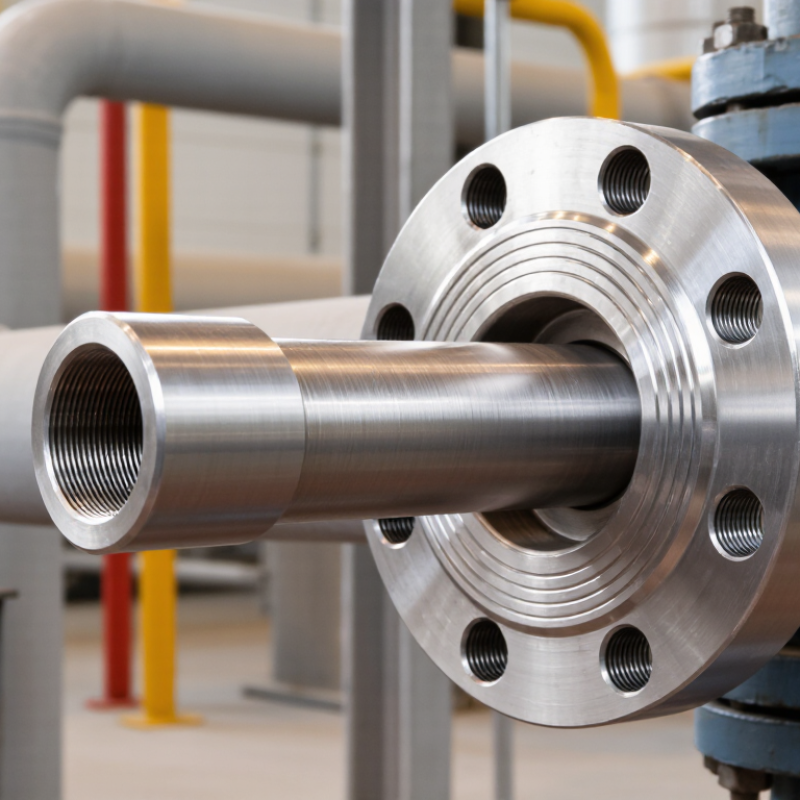
An ASME B16.5 weld neck flange is a forged, hubbed flange designed for butt welding to a pipe. Its long, tapered neck supports a gradual transition from the flange face to the pipe wall. This geometry helps reduce turbulence and stress concentration near the joint. The flange bore should match the pipe’s internal diameter and wall thickness.
ASME B16.5 defines key requirements for these flanges, including pressure-temperature ratings, dimensions, facing types, bolt-hole patterns, tolerances, and marking. It covers common nominal sizes from NPS 1/2 through NPS 24. Available pressure classes include 150, 300, 600, 900, 1500, and 2500. The selected class must match the design temperature, pressure, material, and service conditions.
During installation, technicians check alignment, root gap, bore transition, and weld preparation before welding. A small mismatch can create an internal lip, which may disturb flow or increase local stress. Qualified welding procedures and appropriate inspection are still necessary; the flange standard does not replace them. Gasket selection and bolt tightening also affect sealing reliability.
In my view, weld neck flanges are often chosen for demanding piping because their shape supports better load distribution. Still, they are not automatically the best option. Their higher cost, longer face-to-face length, and careful welding requirements deserve practical review before selection.
A weld neck flange supports strength through its long, tapered hub and butt-welded connection. This geometry creates a smoother transition from the pipe to the flange. It helps distribute bending forces and reduces stress concentration near the joint. In high-pressure lines, that detail matters. During site inspections, engineers often check the weld profile, alignment, and flange face condition closely. A small mismatch can affect sealing performance.
ASME B16.5 also provides standardized dimensions, pressure-temperature ratings, facing types, and bolt patterns. These requirements make component selection more consistent across engineered piping systems. The flange’s bore should match the pipe’s internal diameter as closely as practical. Better alignment can reduce turbulence and local erosion. It may also support more predictable flow behavior. Still, the flange is not a magic shield. Corrosion, poor welding, incorrect bolting, or thermal cycling can weaken the complete assembly.
Tips: Confirm the pressure rating at the actual operating temperature. Inspect the neck transition for visible damage. Use qualified welding procedures and verify bolt tightening in a controlled sequence. Keep flange faces clean and protected before installation. One overlooked washer can matter. Designers should also review external loads, vibration, and repeated temperature changes, because standard dimensions alone cannot cover every service condition.
Why Choose ASME B16.5 Weld Neck Flange?
ASME B16.5 weld neck flanges suit demanding piping systems because their tapered hubs distribute stress gradually. They are commonly selected for thermal cycling, vibration, and high-pressure service. The standard covers nominal pipe sizes from NPS 1/2 through NPS 24. It also defines flange dimensions, bolt patterns, facings, tolerances, and pressure classes.
Material selection depends on temperature, fluid chemistry, and design requirements. Carbon steel may suit general process lines, while stainless steel offers stronger corrosion resistance. Alloy materials can perform better under elevated temperatures. The flange bore should match the pipe wall and welding preparation. This detail is easy to overlook. It can affect flow, alignment, and weld quality.
Pressure classes include 150, 300, 400, 600, 900, 1500, and 2500. A higher class does not automatically fit every service. Pressure ratings change with material and operating temperature, so engineers should verify the applicable rating tables. ASME B16.5 works with related standards, including ASME B16.25 for butt-welding ends and ASME B16.20 for metallic gaskets. Larger flanges may require ASME B16.47 instead. In field inspections, checking the marking, facing condition, bore, and bolt-hole alignment prevents avoidable installation problems. The specification still needs careful review.
ASME B16.5 weld neck flanges are designed for reliable butt-weld connections, improved stress distribution, and demanding piping applications. The chart compares typical face-to-face dimensions for a NPS 4 flange across the six ASME B16.5 pressure classes.
Reference note: Always verify the exact material group, design temperature, facing type, bore, schedule, and applicable ASME B16.5 edition before fabrication or selection.
Why Choose ASME B16.5 Weld Neck Flange?
Why Weld Neck Flanges Suit Critical Piping Systems
Critical piping systems face pressure changes, thermal cycling, vibration, and repeated maintenance. A weld neck flange connects through a butt weld, creating a smoother load path than many raised-face alternatives. Its tapered hub also helps reduce stress concentration near the flange joint.
This matters around pumps, steam lines, process vessels, and high-temperature services. During field inspections, engineers often look closely at weld alignment, hub geometry, and signs of fatigue cracking. A properly selected ASME B16.5 flange provides controlled dimensions, pressure classes, facing options, and bolt-hole layouts. These details make installation and replacement more predictable.
It is not a cure-all.
Material compatibility still matters. The flange must suit the pipe, temperature, pressure, fluid, and welding procedure. Poor fit-up can weaken even a high-quality connection. I have also seen designs specify a weld neck flange without checking external loads from supports or thermal expansion. That oversight can shift stress into the nozzle or weld.
Reliable selection requires more than matching nominal diameter. Review the piping design, calculate loads, confirm material requirements, and inspect the completed weld. Radiographic or ultrasonic examination may be appropriate when the service risk justifies it. ASME B16.5 offers an important dimensional foundation, but engineering judgment completes the decision.
Why Choose ASME B16.5 Weld Neck Flange?
Selecting an ASME B16.5 weld neck flange starts with pressure, temperature, and service fluid. ASME B16.5 covers NPS 1/2 through NPS 24 and pressure Classes 150 through 2500. These ranges support chemical, power, oil, gas, and water applications. The weld neck design transfers stress through a tapered hub. This feature helps reduce turbulence and fatigue near the pipe joint.
Application conditions matter more than nominal size. For high-temperature steam, engineers should verify the material grade and pressure-temperature rating. For corrosive chemical service, corrosion allowance and fluid compatibility need careful review. In cyclic systems, thermal expansion can make flange rigidity especially important. The 2024 World Energy Investment report estimated global energy investment above 3 trillion dollars. More projects also mean more varied operating conditions.
Field inspection often reveals overlooked details. Bolt loading, gasket seating, pipe alignment, and welding quality can change joint performance. A Class 600 flange is not automatically safer than a Class 300 flange. It may introduce higher costs, heavier supports, and installation challenges. That assumption deserves review. Some engineers also focus heavily on pressure while underestimating vibration and thermal cycling. ASME dimensions provide consistency, but they do not replace engineering judgment, documented inspection, and application-specific calculations.
It is a forged, hubbed flange designed for butt welding to a pipe. Its tapered neck supports a gradual stress transition.
The tapered neck can reduce stress concentration and flow disturbance near the joint. It may also support better load distribution.
The standard commonly covers NPS 1/2 through NPS 24. Pressure classes range from 150 to 2500, depending on requirements.
Check design pressure, operating temperature, material, and service conditions together. A higher class does not automatically provide suitability.
Carbon steel suits many general process lines. Stainless steel offers improved corrosion resistance. Alloy materials may suit elevated temperatures.
They should check alignment, root gap, bore transition, and weld preparation. Small mismatches can create an internal lip.
No. Qualified welding procedures, inspection, gasket selection, and controlled bolt tightening remain necessary. The standard is only a dimensional foundation.
They suit demanding systems with pressure changes, vibration, thermal cycling, or high temperatures. Examples include pumps, steam lines, and process vessels.
Not always. They cost more, require careful welding, and have greater face-to-face length. The design review may still be incomplete.
Inspect the facing, bore, markings, bolt-hole alignment, and completed weld. External support loads and thermal expansion also need review.
An ASME B16.5 Weld Neck Flange is a precision-engineered pipe connection component designed for demanding industrial service. Its long tapered hub provides a smooth transition from the pipe to the flange, helping distribute stress more evenly and reducing the risk of deformation, fatigue, and leakage under high pressure or temperature. The flange is attached by butt welding, creating a strong, permanent connection suitable for critical piping systems.
This article explains how the ASME B16.5 Weld Neck Flange supports strength and pressure resistance through its geometry, material selection, and manufacturing requirements. It also reviews common materials, dimensions, pressure classes, and applicable standards, while highlighting why this flange type is often selected for refineries, power facilities, chemical processing, and other high-performance applications. Proper selection should consider pipe size, operating pressure, temperature, fluid characteristics, corrosion conditions, material compatibility, and installation requirements to ensure reliable and safe long-term performance.