Choosing a Stainless Steel Slip On Flange is not simply a matter of matching pipe size. A bright flange can still be the wrong flange. Pressure class, wall thickness, gasket type, bolt load, corrosion exposure, and welding access all influence service reliability. The International Stainless Steel Forum reported global stainless crude steel production of about 58.4 million tonnes in 2023. That scale reflects stainless steel’s continuing importance, but it does not remove the need for careful selection.
John H. Bickford, a recognized authority on bolted-joint engineering, stated, “The reliability of a bolted joint depends on design, assembly, and service conditions.” This principle applies directly to flange connections. A 6-inch Class 150 flange may look suitable on a workshop bench, yet temperature changes, vibration, or an unsuitable gasket can create leakage in operation. Small details matter.
This guide presents seven practical tips for selecting a Stainless Steel Slip On Flange. It considers ASME B16.5 dimensions, ASTM A182 material grades, facing options, corrosion resistance, and installation control. It also highlights traceability and supplier documentation, including heat numbers and pressure ratings. These checks are not glamorous. They prevent expensive surprises.
The process is not perfect. Standards may be misunderstood, and catalogue descriptions can hide important limitations. Therefore, compare the flange with the complete piping system, not a single drawing. A reliable choice begins with verified data, experienced review, and honest questions about actual service conditions.
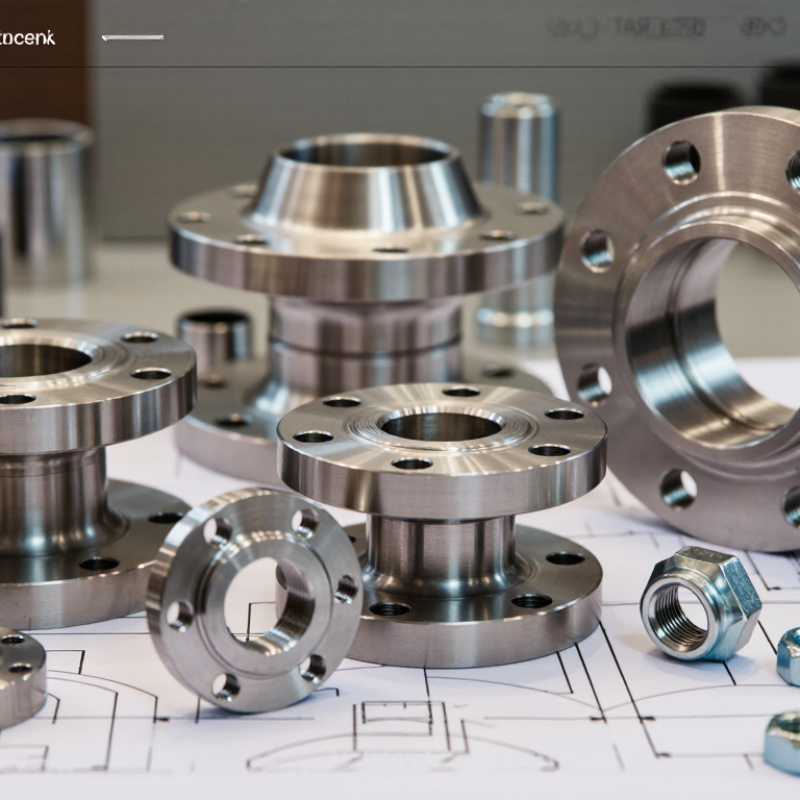
A stainless steel slip-on flange slides over the pipe and uses fillet welds for attachment. Its design supports faster alignment than a weld-neck flange.
The seven checks are simple.
Confirm pipe outside diameter, nominal size, pressure class, material grade, facing, bore, and corrosion exposure.
ASME B16.5 controls dimensions, pressure-temperature ratings, facing details, and bolt patterns for many flanges. Do not select by diameter alone. A 4-inch flange can have different wall thickness, bore, and rating requirements.
Match the flange material with the piping environment. ASTM A182 covers forged stainless steel flanges and helps verify chemistry and mechanical requirements. For chloride service, pitting resistance deserves careful attention. The PREN value can assist comparison, but it cannot replace application testing.
Check whether the flange face is raised, flat, or ring-type. The gasket must match that face.
Confirm bolt material, gasket seating stress, and thermal movement with the design engineer.
The International Stainless Steel Forum reported about 58.4 million tonnes of stainless steel production in 2023, showing the material’s broad industrial use. Yet broad demand does not guarantee suitability.
I still recheck the bore and schedule before ordering. That step feels slow. It prevents costly mismatch.
Also inspect weld access, pipe insertion depth, certificates, and surface damage. A polished face may look excellent, but scratches can affect sealing. Supplier drawings should be reviewed against the latest project specification.
Choosing the correct stainless steel grade starts with the operating environment, not the flange’s appearance. A polished surface can hide serious compatibility problems. In field inspections, corrosion often begins around bolt holes, welds, and gasket contact areas.
Grade 304 suits many indoor, dry, and mildly corrosive services. It may perform poorly where chlorides, saltwater, or chemical cleaners are present. Grade 316 contains molybdenum, which improves resistance to chloride-related pitting. However, selecting 316 automatically is not always justified. That assumption deserves a second look. For welded slip-on flanges, 316L can reduce the risk of corrosion near heated weld zones because of its lower carbon content. Duplex stainless steel may offer higher strength and better chloride resistance, but it requires tighter control during fabrication and welding.
Check the process temperature, pressure, fluid concentration, and cleaning chemicals together. A warm chloride solution can attack stainless steel faster than a cool solution. Consider crevices beneath gaskets and stagnant liquid inside piping. These details are easy to overlook. Galvanic contact with carbon steel bolts or nearby pipework can also create localized corrosion. Request material certificates, grade markings, and applicable dimensional standards before approval. Compare them with the piping specification and welding procedure, not just the quotation. If operating data is incomplete, pause the selection and verify it with a qualified corrosion engineer. A small uncertainty now may become a leaking flange later.
Choosing a stainless steel slip-on flange starts with the pipe, not the flange itself. Confirm the nominal size, outside diameter, wall thickness, and pipe schedule. A DN50 flange may not suit every 50 mm pipe. Measure the actual pipe when records seem uncertain.
Check the flange standard and facing type, such as ASME B16.5 and raised face designs. The bolt circle, hole count, and bolt diameter must match the mating flange exactly. A small mismatch can create installation stress. Verify the bore before welding. An incorrect bore may restrict flow or leave an unsafe internal step.
Pressure rating must match the system’s pressure and temperature conditions. Do not select a rating from pressure alone. Heat can reduce allowable working pressure. Review the pressure-temperature table and confirm the flange material, commonly stainless steel grades selected for corrosion resistance. Match the gasket material to the fluid, temperature, and facing. Confirm bolt strength and tightening requirements as well.
Field inspections often reveal one overlooked detail: the flange fits the pipe but not the valve. Check the complete assembly before ordering. Request material certificates and dimensional records for critical service. Standards provide control, but site conditions still matter. Recheck measurements; assumptions are easy to make and expensive to correct.
Dimensions should be your first physical check. Confirm pipe size, outside diameter, bore, flange thickness, bolt circle, hole diameter, and pressure class. ASME B16.5 provides dimensional tables for many standard sizes and pressure classes. Do not rely on a familiar drawing. A small bore mismatch can disturb flow and complicate installation. Check the mating flange too. Seven minutes of measurement may prevent hours of rework.
Material certificates matter. Select a grade suitable for temperature, chloride exposure, and process chemistry. ASTM A182/A182M covers forged stainless steel flanges and includes requirements for chemical composition and mechanical properties. Ask for heat numbers, test results, and positive material identification when service conditions are severe. The World Stainless Association reported 58.4 million tonnes of global stainless crude steel production in 2023. High production volume does not guarantee correct grade selection. I have seen attractive quotations hide weak traceability.
Surface finish affects sealing performance. ASME B16.5 commonly specifies a serrated flange finish around 3.2–6.3 μm Ra, or 125–250 μin, for standard raised faces. Confirm gasket compatibility before accepting that range. Inspect the face for deep tool marks, dents, discoloration, or grinding damage. Review forging quality, heat treatment, machining accuracy, and final inspection records. A pressure test may be necessary, but it cannot replace dimensional inspection. Manufacturing quality is easy to assume and harder to prove.
7 Tips for Choosing a Stainless Steel Slip On Flange
Start with the installation environment, not the catalog price. Confirm pressure, temperature, pipe schedule, face type, and bolt dimensions against ASME B16.5 or the project specification. Check weld access carefully. A slip-on flange usually needs internal and external welding, so cramped pipework can increase labor and inspection costs. Corrosion exposure also matters; the wrong stainless grade may fail long before the flange looks damaged.
Verify material certificates, heat numbers, and positive material identification before installation. Ask suppliers for dimensional inspection records and clear traceability. The International Stainless Steel Forum reported global stainless crude steel production of 58.4 million tonnes in 2023. High production volume does not guarantee consistent quality. Supplier controls still matter. Review their quality system, sampling process, delivery history, and response to nonconformities. Request a sample inspection before approving a large order.
Compare total cost, including machining, welding, testing, freight, replacement, and downtime. A low quote can still become expensive. I once underestimated inspection time on a small piping project. That estimate looked efficient, but it ignored access constraints. Build a simple cost sheet for each option. Include gasket compatibility and future maintenance. Ask whether local stock reduces schedule risk, but do not sacrifice certificates for speed. Check every drawing twice. Small errors become costly after welding.
| Tip | Evaluation Dimension | What to Check | Practical Reference Data | Effect on Selection and Cost |
|---|---|---|---|---|
| 1 | Confirm the applicable standard | Verify the flange standard, nominal pipe size, pressure class, facing, bolt pattern, and dimensional requirements before ordering. | ASME B16.5 covers flanges and flanged fittings for nominal pipe sizes NPS 1/2 through NPS 24. Common pressure classes include 150, 300, 600, 900, 1500, and 2500. | A matching standard reduces field modification, leakage risk, and rework. Higher pressure classes generally require more material and stronger bolting. |
| 2 | Match the material to the service | Consider corrosion exposure, fluid chemistry, temperature, chloride concentration, cleaning chemicals, and galvanic contact with adjoining components. | Common stainless steel forging grades include ASTM A182 F304/F304L and F316/F316L. F316/F316L generally offers better resistance to chloride-related corrosion than F304/F304L. | A more corrosion-resistant grade may have a higher purchase price but can reduce replacement, maintenance, and leakage costs in aggressive environments. |
| 3 | Evaluate installation requirements | Check available pipe length, alignment tolerance, access for welding, bolt access, gasket position, and whether the piping system requires frequent dismantling. | A slip-on flange fits over the pipe and is typically fillet-welded. It is often easier to align than a weld-neck flange but has lower fatigue resistance for severe cyclic service. | Slip-on designs can reduce fabrication complexity for standard, moderate-duty systems. Weld-neck designs may be more suitable for high-stress, high-cycle, or critical piping. |
| 4 | Check pressure and temperature limits | Use the pressure-temperature rating table for the exact material group, pressure class, and design temperature. Do not select by pressure class alone. | Allowable pressure decreases as temperature rises. The flange rating must also be compatible with the pipe, gasket, bolts, valve, and other connected components. | Correct rating prevents unsafe overloading and avoids paying for an unnecessarily high class. Engineering review is required for unusual temperatures or cyclic loads. |
| 5 | Verify facing, gasket, and bolting compatibility | Confirm raised-face or flat-face configuration, gasket material, bolt material, washer requirements, and the specified tightening procedure. | The flange face, gasket, and bolting system must be selected as a complete joint. Stainless steel fasteners can require attention to galling during installation. | Correct joint compatibility improves sealing performance. Extra installation controls, such as suitable lubricant or controlled tightening, may add labor but reduce leakage risk. |
| 6 | Assess supplier reliability and quality records | Request material test reports, heat or lot traceability, dimensional inspection records, surface-finish details, certificates of conformity, and documented quality procedures. | For pressure-containing components, traceability should connect the supplied flange to its material heat or production lot and specified standard. | A lower quoted price may become expensive if documentation is incomplete or parts fail inspection. Reliable records simplify receiving inspection and project approval. |
| 7 | Compare total cost of ownership | Compare unit price together with freight, inspection, machining, welding labor, gaskets, bolting, delivery time, warranty terms, replacement frequency, and downtime exposure. | Useful purchasing metrics include delivered cost per piece, documented lead time, nonconformance rate, minimum order quantity, and expected service life in the application. | The best value is not always the lowest unit price. A correctly specified flange with dependable delivery and documentation can lower installation and lifecycle costs. |
It slides over the pipe and attaches with internal and external fillet welds. Alignment is usually faster than with a weld-neck flange.
Confirm pipe outside diameter, nominal size, bore, thickness, bolt circle, hole diameter, and pressure class. Do not select by diameter alone. A small bore mismatch can disrupt flow and installation.
Consider temperature, chloride exposure, corrosion, and process chemistry. A higher corrosion-resistant grade may suit chloride service better. PREN comparisons help, but application testing still matters.
Confirm whether the face is raised, flat, or ring-type. The gasket must match the face design and seating requirements. Check the mating flange too.
Surface finish affects gasket sealing and leakage resistance. Inspect for dents, deep tool marks, discoloration, and grinding damage. A polished face can still contain harmful scratches.
Request material certificates, heat numbers, test results, and traceability records. Positive material identification may be necessary for severe service. Certificates matter.
Internal and external welding require enough working space. Cramped pipework can increase labor, inspection, and rework costs. Check insertion depth and weld access before installation.
Include machining, welding, testing, freight, replacement, maintenance, and downtime. A low quotation may hide inspection or access costs. I once underestimated inspection time. That estimate needed more thought.
Local stock may reduce schedule risk, but never replace required certificates. Review drawings, inspection records, quality controls, and nonconformity responses. Check twice.
Choosing the right Stainless Steel Slip On Flange is essential for creating a safe, durable, and efficient piping connection. Begin by understanding its design and function, including how it fits over the pipe and is welded into place. Select a stainless steel grade that can withstand the system’s temperature, pressure, corrosion exposure, and fluid conditions. The flange must also match the pipe size, wall thickness, pressure rating, and connection requirements to prevent leaks or installation problems.
Before purchasing, carefully verify dimensions, applicable industry standards, bolt-hole patterns, sealing surfaces, and surface finish. Manufacturing quality is equally important, so inspect material traceability, dimensional consistency, and overall workmanship. Finally, consider installation space, welding requirements, maintenance access, delivery capability, technical support, and total cost rather than focusing only on the initial price. A reliable supplier and properly selected flange can improve system performance, reduce maintenance needs, and provide dependable service over the long term.