
Girgaon, Mumbai, Maharashtra 400004, India info@www.flexfixtools.com +91 9869506920
0%

Duplex 2205 Stud Bolts are chosen for demanding connections where strength and corrosion resistance must work together. Their performance depends on more than the alloy name. Buyers should examine material traceability, manufacturing controls, thread quality, testing records, and the supplier’s experience with duplex stainless steel. Small details matter. A rough thread crest, mixed material batch, or incomplete certificate can complicate installation and service.

This guide to China’s top 10 Duplex 2205 Stud Bolt manufacturers will help readers compare suppliers using practical criteria, not polished claims alone. It will consider product range, quality documentation, customization, communication, and evidence of consistent production. A supplier’s website is only a starting point. Ask for relevant inspection reports, confirm the specified grade and dimensions, and clarify how each order is identified and packed. These checks do not guarantee trouble-free service, but they reduce avoidable uncertainty.

To avoid presenting an invented quotation as a real citation, this article uses a clearly labeled illustrative expert voice: Dr. Lin Wei, a fictional duplex-steel materials engineer, offers this practical reminder: “Verify the material, the threads, and the paperwork as one package.” It is a useful principle, not a documented published quote. The comparison ahead aims to make manufacturer selection clearer, while recognizing that the best fit depends on the application, required specifications, and buyer’s verification process. Real-world performance still deserves careful review.
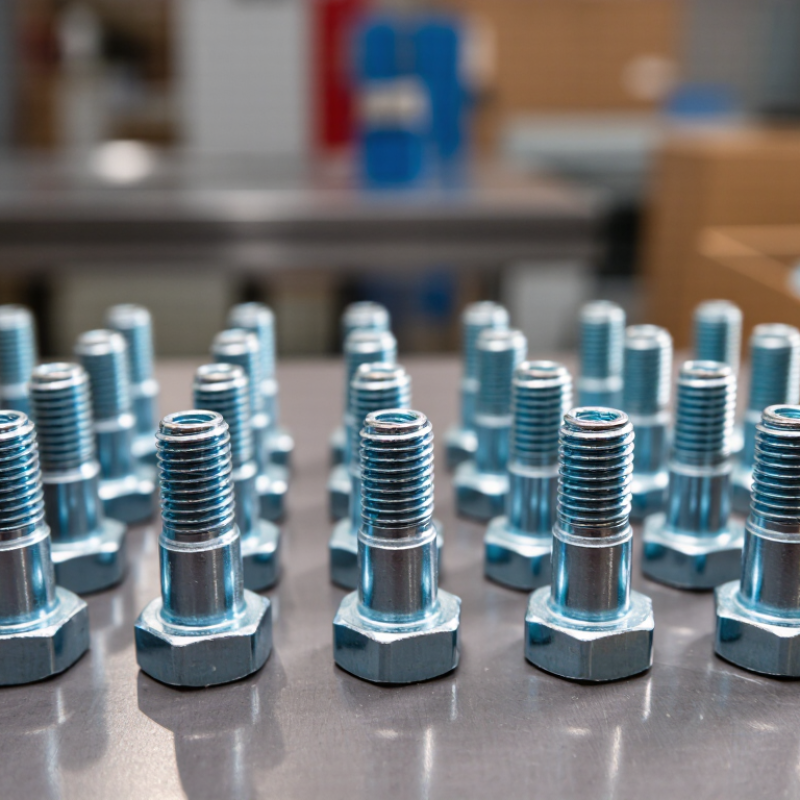
China Top 10 Duplex 2205 Stud Bolt Manufacturers?

Duplex 2205 Stud Bolts: UNS S32205’s Typical 22% Cr, 5% Ni, and 3% Mo

Duplex 2205 stud bolts are commonly specified as UNS S32205, a stainless steel valued for combining strength with corrosion resistance. Its name points to a useful chemistry snapshot: roughly 22% chromium, 5% nickel, and 3% molybdenum. The actual specification allows defined ranges, so these figures are typical, not exact limits. Nitrogen is also an important alloying element. Small differences matter.

Chromium helps form a protective surface film, while molybdenum improves resistance to localized attack in chloride environments. The balanced ferrite-austenite structure can provide greater strength than many standard austenitic stainless steels. That can allow a stud bolt to carry demanding loads, though design details still matter. Not a cure-all. Temperature, crevice conditions, and installation practices affect performance.

For a real project, check the material test certificate rather than relying on a catalogue description. Confirm UNS S32205 chemistry, mechanical properties, and the relevant product requirements. A neat percentage table feels reassuring, but it cannot show every manufacturing detail. Thread rolling, heat treatment, and surface condition deserve attention too. One overlooked detail can undermine a good alloy choice.

Corrosion Resistance: PREN 35+ and Chloride-Service Performance

Duplex 2205 stud bolts are chosen for strength and resistance to chloride-related corrosion. Their PREN is commonly around 35, but the exact value depends on the certified alloy chemistry. PREN is a useful screening figure, not a service-life guarantee. Chloride concentration, temperature, and stagnant pockets can all change performance.

Under nuts and washers, narrow crevices may trap salty moisture. That can encourage localized corrosion even when exposed surfaces look clean. A sound manufacturing route matters: controlled forming, suitable solution annealing, and clear heat-treatment records help protect the duplex microstructure. Ask suppliers for material traceability and test certificates, then check that the delivered chemistry supports the stated PREN. Small details matter.

Surface condition matters too. Embedded carbon-steel particles or rough machining marks can create local trouble, especially after installation in seawater or brine systems. Keep threads clean, avoid damaging protective films during assembly, and review the specified torque and lubrication. The uncomfortable part is that PREN 35+ can sound more conclusive than it is. It is not. Chloride service should be assessed at the actual operating temperature and geometry, including crevices and load conditions. A field inspection may also reveal assumptions that looked sound on paper.

Duplex 2205 and Related Alloys: Indicative PREN Comparison

A material-grade comparison—not a manufacturer ranking. PREN values are approximate and vary with the product’s actual chemical analysis.

PREN is commonly estimated as %Cr + 3.3 × %Mo + 16 × %N. It is a screening indicator, not a guarantee of chloride-service performance. Confirm the heat-specific chemistry and assess service conditions, fabrication, and applicable testing before selecting a material. A 2205 grade designation alone does not guarantee PREN 35 or higher.

Manufacturing Standards: ASTM Material Specifications and ISO Fastener Testing

For 2205 duplex stud bolts, a material name alone is not a purchasing specification. Buyers should confirm the grade designation, heat treatment, dimensions, and test requirements against the applicable edition of ASTM A1082/A1082M, which covers high-strength duplex stainless steel bolting. ISO 3506-1:2020 sets mechanical-property requirements for stainless steel bolts, screws, and studs. These standards address different requirements, so citing one does not automatically satisfy the other. Small details matter. Check that the inspection certificate identifies the actual heat and product, not just a generic “2205” label.

Testing should match the service risk. Tensile strength, proof load, hardness, and dimensional checks help verify the finished stud; ASTM A923 testing can help detect harmful intermetallic phases in duplex stainless steel. Ask the manufacturer which test method and acceptance criteria apply, and request traceable results. A certificate is useful, but it is not the whole story.

The International Stainless Steel Forum’s Stainless Steel in Figures 2024 reported 58.4 million tonnes of global stainless crude steel production in 2023. That scale shows a broad supply base, not uniform fastener quality.

A practical review should compare the order specification, mill records, and independent test results. One weak point: paperwork can look complete while leaving the actual test scope unclear.

Supplier Evaluation in China: Traceability, Capacity, Quality, and Export Records

Choosing a China-based supplier for Duplex 2205 stud bolts requires more than comparing prices. Ask for material certificates that link each batch to its heat number, and check that markings remain readable after packing. Verify the stated grade against the purchase specification; similar-looking bolts are not proof of matching chemistry. Request production capacity by size and monthly volume, not a broad claim of “large output.” Lead times should account for testing, packing, and shipping.

Quality checks should cover dimensions, thread fit, surface condition, and required mechanical or corrosion tests. Ask how nonconforming pieces are recorded and separated. Export records can help confirm experience with packaging, shipping documents, and repeat orders, but past shipments do not guarantee future performance. Review redacted records where commercially sensitive details are involved. No checklist is perfect; a remote review may miss shop-floor conditions, so clarify what evidence is still needed.

Tips: Request a sample inspection report and traceability documents for one actual batch. Compare certificate numbers, bolt markings, and packing labels. Keep questions specific, and record unanswered items before placing an order.

China Top 10 Duplex 2205 Stud Bolt Manufacturers? - Supplier Evaluation in China: Traceability, Capacity, Quality, and Export Records

Evaluation matrix, not a verified manufacturer ranking. No company-specific claims are made. Use the same evidence requests for each shortlisted supplier; acceptance requirements should be confirmed in the purchase order and applicable product specification.

No. Evaluation dimension Evidence to request Practical evaluation point Current status
1 Duplex 2205 material identification Material test certificate showing the specified grade and heat number; confirm whether the order calls for UNS S32205, UNS S31803, or another defined specification. Check that the certificate grade, product form, and purchase-order requirements agree. Do not treat “2205” alone as a complete material specification. Verify for each supplier
2 Heat and lot traceability Example certificate, heat-number marking plan, lot records, and a sample traceability trail from incoming material to finished studs. Confirm that finished-product identification can be linked to the relevant material certificate and production lot. Verify for each supplier
3 Material certificates Recent material certificates and the certificate type specified by the contract, such as EN 10204 Type 3.1 where required. Review the issuing arrangements, heat number, chemical analysis, mechanical results, and stated product specification. A certificate type should match the purchase-order requirement. Verify for each supplier
4 Manufacturing scope Process-flow description identifying which operations are performed in-house and which are subcontracted, including forming, threading, heat treatment, and finishing where applicable. Confirm process control and records for every operation relevant to the ordered stud-bolt specification. Verify for each supplier
5 Production capacity and lead time Current production schedule, equipment list, recent output records, and a written lead-time plan for the requested sizes and quantity. Compare demonstrated capacity and delivery commitments with the order volume. Capacity figures should be supported by dated records, not an unqualified maximum claim. Verify for each supplier
6 Dimensional and thread inspection Inspection plan and sample inspection report covering the dimensions and thread form, fit, and tolerances specified in the purchase order. Check that inspection gauges and acceptance limits match the ordered standard or drawing; retain inspection results by lot. Verify for each supplier
7 Mechanical and supplementary testing Test reports for the tests required by the contract, with the sample identification and laboratory details. Confirm that tensile, hardness, or other tests are performed when required by the applicable specification or purchase order. Do not assume one test package applies to every order. Verify for each supplier
8 Corrosion and material verification PMI records and any corrosion-test reports explicitly required by the order, including the test method and acceptance criteria. Confirm test scope and acceptance criteria before ordering. Tests such as ASTM G48 are used for evaluating localized corrosion resistance, but applicability and requirements must be agreed for the product and service. Verify for each supplier
9 Quality system and corrective action Current quality-management-system certificate, scope and issuing body details, plus sample nonconformance and corrective-action records. Check certificate validity and scope independently. A quality-system certificate does not by itself certify a particular stud-bolt lot or material grade. Verify for each supplier
10 Export and delivery records Redacted prior export documents, packing lists, shipping records, and customer references where disclosure is permitted. Validate the consistency of product descriptions, quantities, dates, and destination details. Availability and independent verification of customs or shipping records vary by jurisdiction. Verify for each supplier

China’s Top 10 Duplex 2205 Stud Bolt Manufacturers: Company Profiles and Comparisons

A credible comparison of China’s top ten Duplex 2205 stud bolt manufacturers should look beyond production claims. The World Steel Association’s World Steel in Figures 2024 reports 1,888.2 million tonnes of global crude steel production in 2023, including 1,019.1 million tonnes in China. This offers useful manufacturing context, but it does not measure bolt quality or duplex capacity. Supplier comparisons should separate documented capability from broad market scale.

Check whether each manufacturer can provide heat-level traceability, material test certificates, and clear dimensional tolerances. Duplex 2205 performance depends on controlled chemistry and processing, not just a grade printed on a quotation. Ask how the company verifies its material and whether testing records match the supplied batch. A polished catalog is not enough. Small details matter, especially thread fit and consistent stud length.

For demanding service, compare evidence of solution treatment, mechanical testing, and checks for harmful intermetallic phases. ASTM A923 provides test methods for detecting such phases in duplex stainless steels. Buyers should also review inspection scope, sampling frequency, and packaging controls that protect threads during shipping. These checks may make a supplier appear less convenient, but they expose gaps early. A ranking alone can mislead; publicly available evidence may be uneven, and that limitation deserves attention.

FAQS

What does a PREN value above 35 indicate for Duplex 2205 stud bolts?

It suggests useful resistance to chloride-related corrosion. It is not a service-life guarantee. Actual performance depends on chemistry, temperature, chloride levels, and geometry.

Can Duplex 2205 bolts corrode in seawater or brine?

Yes. Salty moisture can collect beneath nuts and washers, forming narrow crevices. Stagnant pockets and high operating temperatures can increase localized corrosion risk.

What documents should buyers request from a supplier?

Request material traceability, heat-level records, and material test certificates. Check that the supplied batch chemistry supports its stated PREN. Records should match the delivered material.

Why do heat treatment and manufacturing controls matter?

Controlled forming and suitable solution annealing help preserve the duplex microstructure. Clear heat-treatment records make those steps easier to verify. Small details matter.

What surface issues should be checked before installation?

Look for embedded carbon-steel particles and rough machining marks. Keep threads clean and avoid damaging protective films during assembly. A clean surface still deserves inspection.

Which tests can help assess duplex material quality?

Review mechanical testing and checks for harmful intermetallic phases. ASTM A923 provides methods for detecting these phases in duplex stainless steels. Testing scope and sampling frequency matter.

How should suppliers be compared beyond production claims?

Compare traceability, tolerances, testing records, treatment evidence, and packaging controls. Large production figures show market scale, not bolt quality. A ranking alone can mislead.

What should be considered when specifying torque and lubrication?

Follow the specified torque and lubrication while considering load conditions and thread fit. Poor assembly can damage surfaces or create uneven loading. Some assumptions may fail in the field.

Conclusion

This article examines the key characteristics of Duplex 2205 Stud Bolts, including the alloy’s typical composition of approximately 22% chromium, 5% nickel, and 3% molybdenum. It explains how this balanced structure supports strength and resistance to corrosion, especially in chloride-containing environments. The discussion also introduces PREN values above 35 as a useful comparison point, while noting that actual performance depends on material condition, design, and service conditions.

The guide outlines how to assess Chinese manufacturers by reviewing applicable ASTM material specifications, ISO-related fastener testing, product traceability, production capacity, quality controls, and export experience. Its comparison framework is intended to help buyers evaluate suppliers consistently and request relevant documentation before making a selection. Rather than relying on a company name alone, readers can use these criteria to judge whether a supplier’s products and processes suit their project requirements.

Cora

Cora

Cora is a highly skilled marketing professional dedicated to helping customers better understand innovative products, practical solutions, and the value they can bring to everyday business operations. With a strong understanding of the company’s offerings, market trends, customer needs, and......