
Girgaon, Mumbai, Maharashtra 400004, India [email protected] +91 9869506920
0%

Choosing reliable ASME B16.9 Buttweld Fittings suppliers requires more than comparing prices or browsing polished websites. These fittings connect critical piping sections, where poor dimensions, weak welds, or incomplete documentation can create costly problems. A dependable supplier should understand material grades, wall thickness, pressure requirements, and installation conditions.

This guide reviews 10 Best ASME B16.9 Buttweld Fittings Suppliers using practical purchasing criteria. The evaluation considers manufacturing experience, product consistency, dimensional control, inspection procedures, and certification support. It also examines material traceability, testing records, packaging quality, delivery performance, and technical communication. Small details matter. Clean bevels, accurate elbows, and readable heat numbers can simplify site work.

The best supplier is not always the cheapest.

A strong catalog does not prove reliable production. Buyers should request current certificates, sample inspection reports, and clear tolerance information before placing large orders. Supplier references can also reveal how a company handles delays, replacements, and unexpected specification changes. This review aims to provide a useful starting point, not an unquestionable verdict. Some information may change, and certain claims still require direct confirmation. That limitation deserves attention. Procurement teams should match each supplier’s capabilities with project standards, operating temperatures, corrosion risks, and required delivery schedules. Careful verification remains essential, especially for power, chemical, oil and gas, and industrial processing applications.
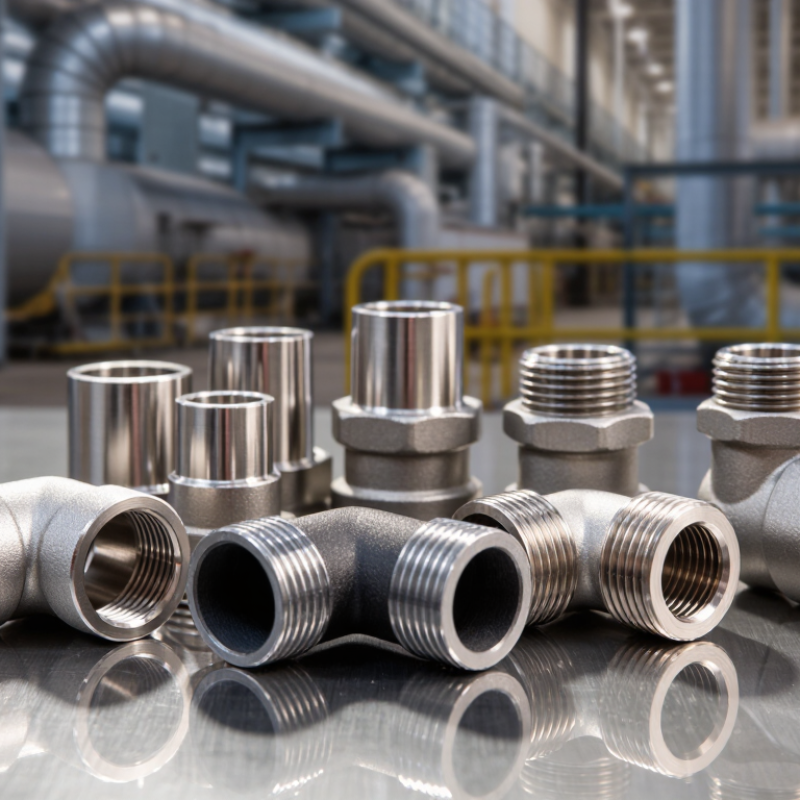
10 Best ASME B16.9 Buttweld Fittings Suppliers

ASME B16.9 Buttweld Fittings: Standards and Product Scope

ASME B16.9 defines factory-made wrought butt-weld fittings for piping assemblies. Its scope covers dimensions, tolerances, marking, and end preparation. Common products include elbows, tees, reducers, caps, and return bends. Size selection typically follows NPS, from 1/2 through 48, under the applicable edition. The standard does not replace material specifications or project design rules. That distinction matters.

World Steel Association World Steel Association reported 1.88 billion tonnes of crude steel production in 2023. This indicates a large manufacturing base, not automatic fitting quality. The IEA’s World Energy Investment 2024 report estimated global energy investment near 3 trillion dollars. More pipelines may follow, yet demand does not define compliance. Buyers should match chemistry, wall thickness, schedule, weldability, and service temperature with project requirements. B16.9 dimensions must align with connecting pipe and welding procedures. A catalogue image is useful, but weak evidence. In shop-floor checks, dimensional inspection is sometimes treated as enough. That shortcut deserves reconsideration.

Tips: Request the exact standard edition, material certificate, dimensional report, and marking photographs. Verify outside diameter, center-to-end dimensions, and wall thickness during receipt inspection. Confirm whether impact testing, non-destructive examination, or corrosion allowance is required. Do not infer pressure capability from B16.9 alone. The piping code and design basis control it. A small bevel mismatch can create expensive field rework.

Key Criteria for Evaluating Reliable Fittings Suppliers

10 Best ASME B16.9 Buttweld Fittings Suppliers

Key Criteria for Evaluating Reliable Fittings Suppliers

Reliable suppliers should prove dimensional control, material traceability, and production consistency. ASME B16.9 covers factory-made wrought buttwelding fittings, including dimensions, tolerances, and testing expectations. A serious supplier should provide mill test certificates, heat numbers, wall-thickness records, and inspection reports for every shipment.

In practical sourcing, I would check whether the supplier matches fitting dimensions with the latest project specifications. “Equivalent” is not always equivalent. The 2023 ISO Survey reported about 1.2 million ISO 9001 certificates worldwide, but certification alone cannot prove product quality. Audit the scope, certificate validity, and actual manufacturing site. The World Steel Association reported global crude steel production above 1.8 billion tonnes in 2023. That scale makes raw-material verification especially important. Ask how steel is purchased, tested, marked, and stored. Factory photos help, but controlled records matter more.

Tips: Compare three recent inspection files before ordering. Confirm chemical composition, tensile results, heat treatment, and dimensional measurements. Request sample markings and packaging photos. Do not rely only on a polished website. Some suppliers may offer attractive prices while hiding inconsistent schedules or subcontracted production. I would also review nonconformity records, even though many buyers avoid that conversation. A supplier willing to explain past mistakes may be more dependable than one claiming perfection. Consider independent inspection for critical elbows, tees, and reducers, especially when pressure, corrosion, or temperature risks are high.

Profiles of the 10 Best ASME B16.9 Fittings Suppliers

The ten strongest ASME B16.9 buttweld fittings suppliers share measurable strengths, not just attractive catalogs. The first profile is a certified manufacturer with documented dimensional control. The second specializes in carbon steel elbows, tees, reducers, and caps. The third focuses on stainless steel for corrosive service. The fourth maintains seamless production for demanding pressure applications. The fifth offers welded fittings with clear weld procedures and inspection records.

The sixth profile combines forging expertise with reliable heat treatment. The seventh provides large-diameter fittings for pipelines and structural projects. The eighth keeps common sizes in stock, reducing project delays. The ninth supplies custom wall thicknesses with engineering support. The tenth demonstrates dependable export packaging, traceability, and material certificates. Each supplier should support ASME B16.9 dimensions and applicable ASTM material requirements. Certificates alone are not enough. Buyers should review mill test reports, inspection plans, and corrective-action records.

Industry data gives this market practical context. The World Steel Association reported approximately 1.88 billion tonnes of crude steel production in 2023, showing the scale of the upstream supply chain. Grand View Research valued the global industrial valves market at about USD 76.36 billion in 2023, with continued infrastructure demand through 2030. Fittings follow many of the same project cycles, especially in energy, water, and process facilities. Site experience still matters. A polished website cannot reveal ovality, poor bevel preparation, or inconsistent heat numbers. One weakness remains common: some supplier evaluations rely too heavily on price. That approach deserves reconsideration. Small documentation gaps can become serious installation problems.

10 Best ASME B16.9 Buttweld Fittings Suppliers - Profiles of the 10 Best ASME B16.9 Fittings Suppliers
Profile Primary Manufacturing Region Core ASME B16.9 Product Coverage Typical Nominal Size Range Common Material Grades Applicable Product Standards Quality and Documentation Capability Best-Fit Applications Selection Score
Supplier Profile 01 East Asia Long-radius elbows, concentric and eccentric reducers, tees, caps, and stub ends NPS 1/2 to NPS 48; larger sizes commonly available by project inquiry Carbon steel, low-temperature carbon steel, austenitic stainless steel, duplex stainless steel ASME B16.9; material requirements commonly aligned with ASTM and ASME material specifications Mill test certificates, dimensional inspection reports, heat-number traceability, hydrostatic or PMI testing when specified General process piping, water treatment, power generation, and fabricated pipe spools 9.4/10
Supplier Profile 02 South Asia Seamless and welded elbows, equal and reducing tees, reducers, and end caps NPS 1/2 to NPS 24 for standard production; larger sizes subject to tooling and order quantity Carbon steel, stainless steel, nickel alloys, and selected alloy steels ASME B16.9; ASME B16.25 for buttwelding ends; ASTM A234, A403, A420, and A860 where applicable Material certificates, dimensional records, visual inspection, hardness testing, and non-destructive examination by specification Oil and gas, chemical processing, petrochemical, and industrial maintenance 9.2/10
Supplier Profile 03 Western Europe High-integrity carbon steel, stainless steel, and alloy steel fittings for engineered systems NPS 1/2 to NPS 36, with custom fabrication for selected large-diameter requirements Carbon steel, stainless steel, chrome-moly steel, duplex, and nickel-based alloys ASME B16.9; EN 10253 may be requested for European projects; applicable ASTM or EN material specifications Full traceability, inspection and test plans, third-party inspection support, PMI, ultrasonic testing, and radiography when required Refineries, thermal power, offshore facilities, and safety-critical process lines 9.1/10
Supplier Profile 04 North America Standard and custom buttweld fittings, including heavy-wall elbows, tees, reducers, and cross fittings NPS 1/2 to NPS 48; custom dimensions available for engineered projects Carbon steel, stainless steel, alloy steel, and high-yield pipe-grade materials ASME B16.9; ASME B16.25; ASTM A234, A403, A420, and A860 depending on material and service Dimensional certificates, heat traceability, weld procedure records, NDE reports, and compliance documentation Pipeline construction, utility systems, power plants, and heavy industrial piping 9.0/10
Supplier Profile 05 Southeast Asia Commercial-grade and project-grade elbows, tees, reducers, caps, and pipe nipples NPS 1/2 to NPS 24; selected sizes available in larger outside diameters Carbon steel, stainless steel, galvanized carbon steel, and low-temperature grades ASME B16.9; ASTM material specifications; project-specific dimensional and welding requirements Mill certificates, visual and dimensional inspection, coating records, and third-party inspection by arrangement Water infrastructure, HVAC, fire protection, shipbuilding, and general fabrication 8.8/10
Supplier Profile 06 Middle East Heavy-duty fittings for hydrocarbon processing, gas transmission, and utility piping NPS 1/2 to NPS 36; heavy-wall and sour-service requirements available by specification Carbon steel, low-temperature steel, stainless steel, and chrome-moly alloy steel ASME B16.9; ASME B16.25; ASTM A234, A420, A403, and project-specific pipeline standards Heat-number traceability, PMI, hardness testing, NDE, coating inspection, and documentation packages for EPC projects Oil and gas, LNG, desalination, district energy, and large infrastructure projects 8.7/10
Supplier Profile 07 Eastern Europe Buttweld elbows, tees, reducers, caps, and fittings manufactured from pipe or plate NPS 1/2 to NPS 30; non-standard dimensions available for approved drawings Carbon steel, stainless steel, alloy steel, and low-temperature service grades ASME B16.9; EN 10253; ASME B16.25; relevant ASTM or EN material standards Dimensional control, material certification, weld inspection, ultrasonic testing, and pressure testing where required Industrial plants, district heating, chemical facilities, and mechanical contracting 8.6/10
Supplier Profile 08 East Asia Large-volume standard fittings with broad size coverage and private-label-free export documentation NPS 1/2 to NPS 60 for selected fitting types; availability varies by wall thickness Carbon steel, stainless steel, alloy steel, duplex stainless steel, and nickel alloys ASME B16.9; ASME B16.25; ASTM A234, A403, A420, A860, and selected UNS-based alloy specifications Batch traceability, dimensional inspection, PMI, surface examination, radiography, and third-party inspection support Large EPC packages, power generation, chemical processing, and bulk industrial supply 8.5/10
Supplier Profile 09 South America Carbon steel and stainless steel elbows, tees, reducers, caps, and custom spool components NPS 1/2 to NPS 24 for routine production; larger sizes available for project orders Carbon steel, stainless steel, low-temperature steel, and selected alloy steels ASME B16.9; ASME B16.25; ASTM A234, A403, and A420 where applicable Material certificates, dimensional reports, visual inspection, weld documentation, and NDE by customer requirement Mining, pulp and paper, food processing, water treatment, and general process industries 8.3/10
Supplier Profile 10 Central and Southern Europe Precision-fabricated fittings for hygienic, chemical, pharmaceutical, and high-purity piping systems NPS 1/2 to NPS 20; specialized dimensions available to approved drawings 304/304L stainless steel, 316/316L stainless steel, duplex stainless steel, and nickel alloys ASME B16.9; ASME B16.25; applicable ASTM, EN, and project material specifications Full material traceability, surface-finish records, dimensional inspection, PMI, weld inspection, and passivation documentation Pharmaceutical production, food and beverage, biotechnology, chemical processing, and clean utilities 8.2/10

Note: Size ranges, material availability, testing requirements, and delivery conditions vary by supplier, fitting type, wall thickness, and project specification. Buyers should verify current certificates, manufacturing location, dimensional compliance, and inspection requirements before placing an order.

Comparing Materials, Manufacturing Quality, and Certifications

10 Best ASME B16.9 Buttweld Fittings Suppliers: Comparing Materials, Manufacturing Quality, and Certifications

Selecting among the 10 best ASME B16.9 buttweld fittings suppliers requires more than checking price. Material traceability matters. Request heat numbers, chemical composition, tensile results, and impact-test values for each batch. For stainless steel fittings, verify the specified grade against the mill test report. Carbon steel fittings also need controlled wall thickness and clear bevel geometry. A small mismatch can complicate welding and create stress concentrations.

Manufacturing quality should be visible, not merely promised. Inspectors should review forming methods, heat treatment records, dimensional reports, and non-destructive testing results. ASME B16.9 covers dimensions, tolerances, and pressure-related design requirements, but it does not replace project-specific material standards. I would check ovality with calibrated tools and compare the measured wall thickness against the purchase specification. It takes minutes.

Certifications add confidence, but they are not automatic proof of product quality. The ISO Survey 2022 recorded 1,265,216 ISO 9001 certificates worldwide, showing how common quality systems have become. Still, an impressive certificate can hide weak batch control. Ask whether the certificate covers the actual manufacturing site and product scope. Review welding qualifications, calibration dates, and corrective-action records. Suppliers aligned with ASTM or EN material requirements, supported by third-party inspection, usually provide stronger evidence. Some evaluations remain imperfect; paperwork cannot reveal every handling error, damaged bevel, or poorly protected fitting.

How to Select the Right Supplier for Your Project

When comparing the 10 best ASME B16.9 buttweld fittings suppliers, avoid judging by price alone. The right supplier must match your project’s pressure, temperature, material, and dimensional requirements. Begin by checking whether the supplier provides fittings manufactured to ASME B16.9. Confirm wall thickness, outside diameter, bend radius, and weld-end preparation. Small gaps matter.

Ask for material test reports, heat numbers, inspection records, and full product traceability. Reliable documentation should connect each fitting to its raw material and production batch. Check whether the supplier can provide carbon steel, stainless steel, alloy steel, or special-grade fittings when required. Their technical team should understand corrosion risks, welding procedures, and applicable project specifications.

Delivery performance also deserves close attention. Request realistic lead times, packaging details, and replacement procedures for damaged goods. A supplier may offer excellent certificates but lack stable production capacity. That weakness can delay fabrication. In practical sourcing, a polished catalog is not proof of consistent quality. Consider a sample inspection or factory audit when the project allows it. Communication matters too. Slow replies often become bigger problems during urgent engineering changes. I would also compare previous project experience, although references can be incomplete and should not be accepted blindly.

FAQS

What documents should a reliable fittings supplier provide?

Request material test reports, heat numbers, wall-thickness records, and inspection reports. Each fitting should connect to its material batch. Missing links deserve questions.

Does certification alone prove fitting quality?

No. Certification shows a system exists, but it does not guarantee every shipment. Check certificate scope, validity, and the actual production site.

Which dimensions should buyers verify?

Check outside diameter, wall thickness, bend radius, and weld-end preparation. Small dimensional gaps can cause difficult field welding. Measure samples yourself when possible.

How can buyers confirm material traceability?

Match markings on each fitting with heat numbers and material reports. Also review chemical composition, tensile results, and heat-treatment records. Paperwork can still contain errors.

Why should buyers compare recent inspection files?

Three recent files can reveal inconsistent testing or changing production quality. Compare measurements, dates, materials, and nonconformity records. Patterns matter.

What materials should a supplier be able to handle?

Requirements may include carbon steel, stainless steel, alloy steel, or special grades. The technical team should understand corrosion, welding, pressure, and temperature conditions.

How should delivery capability be evaluated?

Request realistic lead times, packaging details, and damaged-goods replacement procedures. A strong certificate cannot repair a late shipment. Schedules sometimes fail.

When is an independent inspection useful?

Consider it for critical elbows, tees, and reducers exposed to pressure or heat. It can verify dimensions, markings, materials, and packaging before shipment. This adds cost, but prevents expensive surprises.

Conclusion

This guide to the 10 Best ASME B16.9 Buttweld Fittings Suppliers explains the standards, dimensions, pressure considerations, and product scope that define reliable seamless and welded fittings for industrial piping systems. It outlines commonly required products such as elbows, tees, reducers, and caps, while emphasizing the importance of accurate dimensions, compatible materials, consistent wall thickness, and dependable performance under demanding service conditions.

The article also presents practical criteria for evaluating suppliers, including manufacturing capability, quality-control procedures, testing methods, traceability, delivery reliability, and relevant certifications. It compares material options such as carbon steel, stainless steel, and alloy steel, helping readers understand how manufacturing quality and documentation affect project safety and long-term value. Finally, it offers a clear selection framework based on pressure ratings, operating temperature, corrosion exposure, connection requirements, project specifications, budget, and after-sales support, enabling buyers to choose a supplier that meets both technical and commercial expectations.

Elowen

Elowen

Elowen is a dedicated marketing professional with a strong understanding of the company’s products, customers, and industry environment. Through thoughtful research and clear communication, Elowen helps translate complex product capabilities into practical insights that are easy for readers to......