
Choosing the right ASTM A234 WPB Pipe Fittings affects pressure integrity, installation time, and long-term maintenance. The World Steel Association reported global crude steel production of approximately 1.88 billion tonnes in 2024, a useful measure of the industry’s scale, but not a guarantee of fitting quality. Buyers still need product-level evidence. Ask for material test reports, heat numbers, dimensions, and traceability that connect each fitting to its stated grade.
ASTM A234/A234M covers wrought carbon and alloy steel fittings for moderate- and high-temperature service. For a practical comparison, check the grade, size, wall thickness, manufacturing route, and end preparation against the project specification. A smooth elbow can look convincing on a warehouse floor. Its paperwork and measured dimensions matter more. Also confirm applicable design requirements, such as ASME B16.9 for factory-made wrought butt-welding fittings, where specified.
This guide evaluates sourcing considerations, documentation, and supplier claims. It also points out an uncomfortable reality: a low quotation may leave important details unclear. The materials provided for this introduction contain no verifiable named expert quotation, so I will not invent one. That gap matters. Buyers should favor documented technical answers over polished sales language, and verify every claim before placing an order.
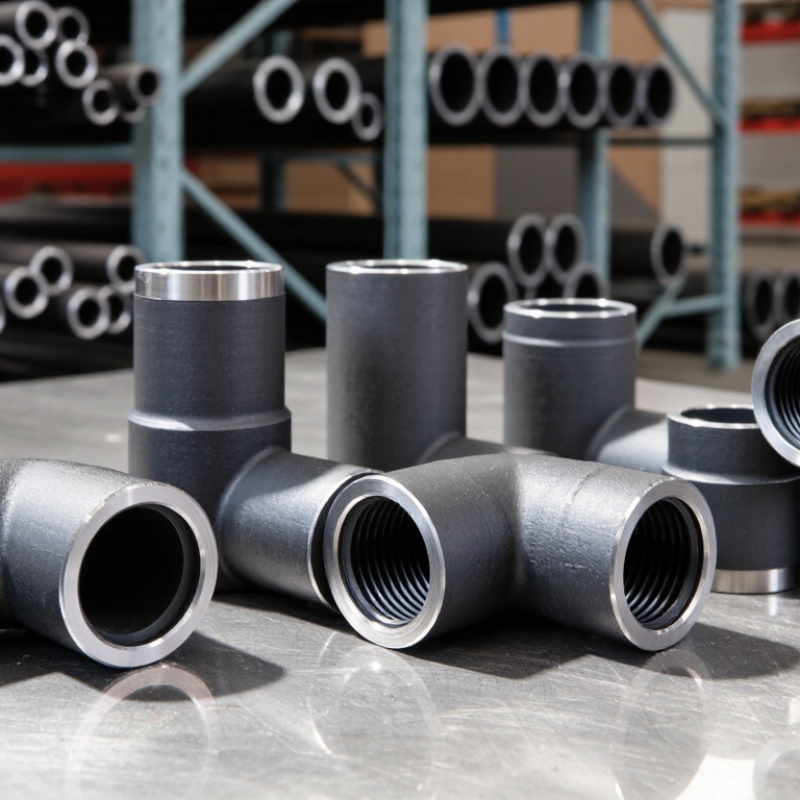
ASTM A234 WPB fittings are made from carbon steel for moderate- and higher-temperature service. Their specified minimum tensile strength is 60 ksi, while minimum yield strength is 35 ksi. Tensile strength describes resistance to breaking under a pulling load. Yield strength marks when permanent deformation may begin. Both values are minimums, not promises that every fitting has exactly these properties.
For buyers, these figures help compare material requirements, but they do not establish a fitting’s pressure capacity on their own. Size, wall thickness, temperature, connection design, and the piping system’s design conditions also matter. Check the material test report and match its heat number to the fitting’s identification. Look for the specified grade and relevant test results. The numbers can feel reassuring, but they are only part of the selection decision.
Tips: Confirm the grade, dimensions, and documentation before purchase. Ask how the fitting’s forming and heat treatment were controlled. Small details matter. If a value or marking is unclear, pause and verify it with the supplier or a qualified engineer.
ASTM A234 WPB specifies minimum mechanical strength requirements of 60 ksi tensile strength and 35 ksi yield strength. These are specification minimums, not guaranteed test results for every fitting; confirm the applicable standard edition and material test documentation for your purchase.
ASTM A234 WPB is widely used for wrought carbon-steel butt-welding fittings in pressure piping. Its carbon content is limited to 0.30% by weight. That ceiling matters: carbon supports strength, but excessive carbon can make welding and heat-affected areas more demanding. The exact chemistry should be checked against the applicable ASTM edition and the purchase specification, not inferred from the grade name alone.
Carbon is only one part of the chemistry. WPB requirements also control elements such as manganese, phosphorus, and sulfur, while the standard sets mechanical-property requirements. Buyers should review the material test report for heat-specific results, including chemistry and tensile properties. Check that the report matches the fitting markings and ordered size. Small paperwork gaps happen.
For a practical receiving check, compare the fitting’s grade, dimensions, wall thickness, and heat number with the order documents. Confirm that any required heat treatment or inspection records are available. A 0.30% carbon result does not, by itself, prove suitability for every service or welding procedure. The project engineer’s specifications still matter, especially when low-temperature toughness, sour service, or demanding operating conditions apply. Verification takes time, but assumptions can cost more.
For ASTM A234 WPB fittings, manufacturing route and dimensions should be checked together. ASTM A234/A234M covers wrought carbon-steel fittings for moderate- and high-temperature service. Confirm whether the ordered fitting is seamless or welded, and verify that its material documentation matches the purchase specification. ASME B16.9 sets key dimensions and tolerances for factory-made butt-welding fittings. Its tabulated dimensions are useful at the shop floor: a long-radius 90-degree elbow in NPS 2 has a 76.2 mm center-to-end dimension; NPS 4 is 152.4 mm. Check the applicable edition and fitting type before using these figures.
Seamless construction can avoid a longitudinal pipe seam, while welded fittings may require closer review of weld location and inspection records. Neither route should be accepted on appearance alone. Confirm wall thickness, outside diameter, end preparation, heat number traceability, and any project-specific examination requirements.
A drawing can look right and still be wrong at the weld end. This detail is easy to miss.
Tips: Cite ASTM A234/A234M for material requirements and ASME B16.9 for dimensions. Ask suppliers to state the manufacturing route on the quotation, then compare the delivered fitting’s markings and measurements with the approved documents. Small dimensional mismatches can complicate fit-up.
2026 Best ASTM A234 WPB Pipe Fittings for Buyers
A sound selection starts with the pipe, not the fitting catalogue. Match the fitting’s NPS and schedule to the connected pipe, then verify dimensions against the project specification. A schedule mismatch can leave a visible step inside the joint, even when the nominal size appears correct. ASTM A234 WPB is a wrought carbon steel grade commonly specified for pressure piping, but the grade alone does not establish suitability for every service.
Check operating pressure, temperature, fluid, and any corrosion allowance before purchase. Confirm that the project permits WPB and that the required fitting type and dimensions meet the applicable specification. Ask for material test reports and heat-number traceability. These records help verify the grade and link delivered components to production documentation. One detail buyers sometimes overlook is low-temperature toughness; do not assume standard grade selection covers it.
Tips: Compare fitting and pipe wall thickness, not just NPS. Check markings and documents on receipt. If service conditions are unclear, pause and have the piping engineer review the selection. A quick visual match is useful, but it is not a design check.
| Example Selection | Fitting and End Type | NPS | Pipe Outside Diameter | Schedule / Nominal Wall Reference | Material Grade | Typical Buyer Check | Service Consideration | Relevant Standard Check |
|---|---|---|---|---|---|---|---|---|
| Small-bore direction change | 90-degree long-radius elbow, butt-welding ends | NPS 2 | 2.375 in (60.3 mm) | Schedule 40 pipe reference: 0.154 in (3.91 mm) nominal wall | ASTM A234 WPB | Confirm NPS, schedule or specified wall, elbow angle, radius, end preparation, and dimensional standard. | Check design temperature, pressure, fluid, corrosion allowance, and applicable piping-code requirements. | ASTM A234/A234M for material; ASME B16.9 for factory-made wrought butt-welding fitting dimensions. |
| Higher-wall branch connection | Equal tee, butt-welding ends | NPS 4 | 4.500 in (114.3 mm) | Schedule 80 pipe reference: 0.337 in (8.56 mm) nominal wall | ASTM A234 WPB | Verify run and branch sizes, wall thickness at each end, reinforcement/design basis, and end preparation. | Assess branch loads, thermal cycling, flow conditions, and the design rules of the project piping code. | ASTM A234/A234M; ASME B16.9. Confirm that the fitting configuration and dimensions suit the piping design. |
| Reducer for a line-size change | Concentric butt-welding reducer | NPS 6 × NPS 4 | 6 in end: 6.625 in (168.3 mm); 4 in end: 4.500 in (114.3 mm) | Schedule 40 reference: NPS 6 wall 0.280 in (7.11 mm); NPS 4 wall 0.237 in (6.02 mm) | ASTM A234 WPB | Specify large and small end NPS, schedule or actual wall at both ends, reducer type, and end-to-end dimensions. | Check flow, pressure drop, orientation, drainage or venting needs, and any project-specific transition requirements. | ASTM A234/A234M; ASME B16.9 for applicable butt-welding fitting dimensions. |
| Large-bore direction change | 45-degree long-radius elbow, butt-welding ends | NPS 8 | 8.625 in (219.1 mm) | Schedule 40 pipe reference: 0.322 in (8.18 mm) nominal wall | ASTM A234 WPB | Confirm angle, radius, NPS, matching wall, material documentation, and dimensional tolerances. | Consider support loads, thermal expansion, vibration, and the design conditions specified for the line. | ASTM A234/A234M; ASME B16.9. Confirm the project’s required inspection and testing provisions. |
| Socket-weld or threaded connection | Forged fitting, socket-welding or threaded ends | Size and pressure class as specified | Not selected by pipe outside diameter alone | Specify fitting pressure class and connection details; a pipe schedule designation alone is not sufficient. | Confirm the product specification and grade required for the forged fitting; do not assume ASTM A234 WPB applies. | Identify fitting type, end connection, nominal size, pressure class, material specification, and applicable code. | Check pressure-temperature limits and connection suitability under the governing design code. | ASME B16.11 covers forged socket-welding and threaded fittings. Verify the applicable material specification separately. |
Selection note: ASTM A234 WPB is a wrought carbon-steel fitting grade for moderate- and high-temperature service. Schedule wall values shown are nominal pipe dimensions commonly listed in ASME B36.10M; they are reference values, not a fitting pressure rating. Final selection must match the piping design, applicable code, design pressure and temperature, corrosion allowance, material documentation, and purchaser requirements. Pressure capability must be established from the applicable design rules and product standards.
2026 Best ASTM A234 WPB Pipe Fittings for Buyers
Quality checks begin with the MTR, not the fitting’s appearance. Match its ASTM A234/A234M grade, heat number, chemistry, heat treatment, and mechanical-test results to the purchase order. Then compare the heat number on the certificate with the fitting stencil and packing list. A mismatch needs resolution before acceptance. Small detail. Big risk.
ASTM A234/A234M’s published mechanical-property requirements specify at least 60 ksi tensile strength and 35 ksi yield strength for WPB. Check the reported results against the applicable specification and product form. ASME B16.9 provides dimensional requirements for factory-made butt-welding fittings, so verify size, wall thickness, and end preparation against the ordered schedule. Ask which tests apply, and require results or an approved test plan; do not assume every fitting receives an individual pressure test. PMI can help screen alloy identity, but it does not replace the MTR’s heat-specific chemistry. I would still flag unclear records, even when the paperwork looks complete.
Carbon is limited to 0.30% by weight. Check the heat-specific material test report; the grade name alone is not enough.
No. Suitability also depends on mechanical properties, service conditions, and the project requirements. I would not treat one chemistry result as a complete approval.
Match the grade, heat number, chemistry, heat treatment, and mechanical results to the order. Then compare the report’s heat number with the fitting marking and packing list. Small mismatch, serious question.
The stated minimum tensile strength is 60 ksi, and the minimum yield strength is 35 ksi. Check results against the applicable specification and product form.
Compare size, wall thickness, outside diameter, and end preparation with the approved documents. For example, a long-radius 90-degree elbow in NPS 2 has a 76.2 mm center-to-end dimension. Verify the applicable edition and fitting type.
Confirm the manufacturing route on the quotation and material documents. Welded fittings may need closer review of weld location and inspection records. Appearance alone tells little.
Not necessarily. Ask which tests apply and request the results or an approved test plan. Do not assume testing was performed on every piece.
Check markings, dimensions, wall thickness, heat traceability, and required inspection records. A drawing can look right while the weld end is wrong. I would pause over unclear paperwork, even when the fitting seems fine.
ASTM A234 WPB Pipe Fittings are commonly selected for pressure piping systems where strength, reliable fabrication, and dimensional compatibility matter. The grade has minimum tensile strength of 60 ksi and minimum yield strength of 35 ksi, while its carbon content is limited to 0.30%. Buyers should also review the applicable chemistry and mechanical-property requirements to confirm that the fittings suit the intended service conditions.
These fittings may be manufactured as seamless or welded products, with dimensions commonly specified to ASME B16.9. Before ordering, match the nominal pipe size (NPS), schedule, material grade, and operating conditions to the piping design. For quality verification, check material test reports (MTRs), heat-number traceability, and any testing required by the purchase specification. These steps help ensure the fittings meet project requirements and can be properly identified and inspected.