Choosing a Carbon Steel ASTM A105 Flange supplier takes more than comparing prices. A reliable supplier should explain material grades, manufacturing routes, inspection records, and applicable dimensions in plain terms. ASTM A105 covers forged carbon-steel piping components for ambient and higher-temperature service, but the flange’s suitability still depends on the project design. Check the required pressure class, facing, size, and governing standard before requesting a quote. Small mismatches matter.
Quality expert W. Edwards Deming is often associated with the principle, “Quality is everyone’s responsibility.” That idea fits flange procurement: supplier controls, inspection, and buyer verification all matter. Ask for material test reports and heat-number traceability, then confirm that the documents match the markings on the flange. Look closely at the bore, raised face, bolt holes, and surface finish. A polished certificate is not proof by itself. It deserves a second look.
This guide compares suppliers using practical signals: technical responsiveness, documented quality systems, production capability, stock availability, and clear delivery terms. It also considers whether a supplier can discuss heat treatment, testing, and order-specific requirements without vague assurances. A strong candidate answers detailed questions and flags limits early. Not every low-cost offer is poor, and not every impressive website signals dependable production. That judgment can be uncomfortable. Buyers should verify claims, request current documentation, and involve qualified engineers when service conditions or specifications are uncertain. The aim is a sound shortlist, not a rushed winner.
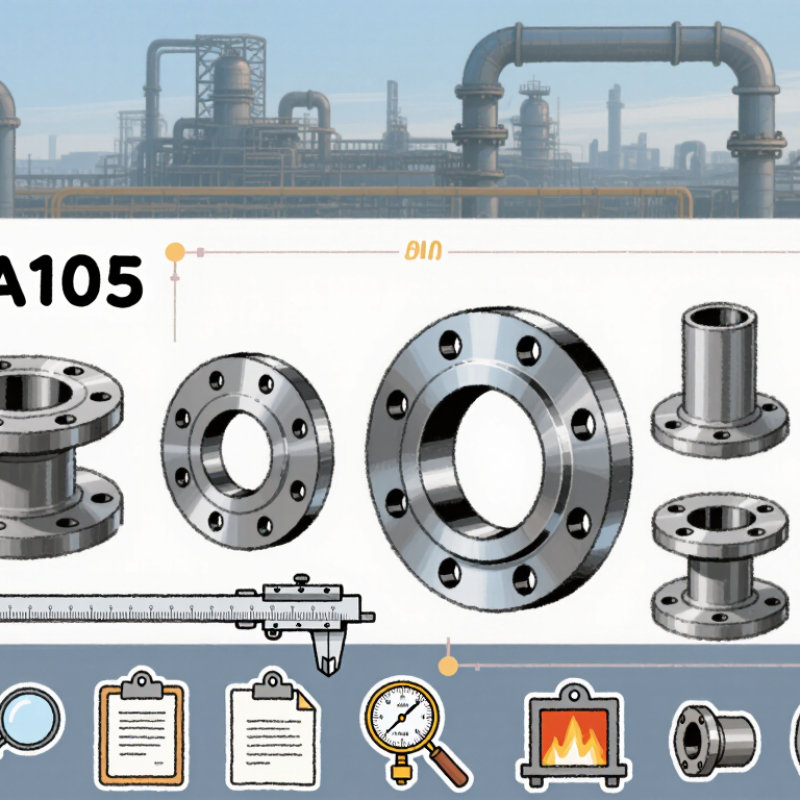
An ASTM A105 carbon steel flange is a forged piping component made from carbon steel specified under ASTM A105/A105M. It provides a bolted connection between pipes, valves, pumps, or other equipment. The forging process helps create a dense, dependable part for pressure service. Common uses include refineries, power facilities, and process piping operating at ambient or elevated temperatures.
A105 describes the material, not the flange’s dimensions or pressure class. Those details are typically selected under applicable piping standards, such as ASME B16.5, and must match the system design. Small details matter. A flange’s pressure rating depends on factors including temperature, size, material condition, and the connected components. A105N, for example, indicates normalized material; it is not interchangeable with every A105 condition without review. Buyers should check markings and material test reports, then confirm the gasket, bolts, and mating flange are compatible. Carbon steel can corrode in wet or aggressive environments, so coating, insulation, or another material may be needed. The grade name alone does not tell the whole story. Verify the actual service conditions before specifying a flange.
An ASTM A105 flange is a forged carbon-steel piping component made to ASTM A105/A105M. The chart shows the specification’s commonly cited minimum tensile and yield strengths.
These are minimum material-property values, not flange pressure ratings. When evaluating suppliers, check material test certificates, dimensions, pressure class, and compliance with the applicable standards and purchase requirements.
ASTM A105 is a forged carbon-steel specification for piping components used in ambient and higher-temperature service. ASTM A105/A105M specifies minimum tensile strength of 485 MPa and minimum yield strength of 250 MPa. These are material requirements, not guarantees of service life. The World Steel Association’s World Steel in Figures 2024 reports global crude-steel production of 1,892.2 million tonnes in 2023. That broad industry figure is not flange-specific, but it highlights why documented material traceability matters.
For dimensions and pressure-temperature ratings, buyers commonly check ASME B16.5, which covers NPS 1/2 through 24 and Classes 150 through 2500. Larger sizes may fall under ASME B16.47. Class numbers are not direct pressure ratings; allowable pressure varies with material group and operating temperature. Fit matters. Confirm the flange standard, nominal size, class, facing, bore, and heat-treatment records against the project specification.
Common A105 flange types include weld-neck, slip-on, blind, socket-weld, threaded, and lap-joint designs. Weld-neck flanges suit many demanding piping connections, while blind flanges close line ends or pressure-test openings. Slip-on types are often selected for simpler installation, but joint details still matter. A datasheet can look complete and still omit a critical facing or bore detail. Check the mating flange and gasket before approving a supplier’s offer.
Evaluating an ASTM A105 flange supplier starts with the purchase details. Specify nominal size, pressure class, facing, bore, and any coating or machining needs. Small differences matter. A raised face and a ring-type joint face are not interchangeable. Ask how the supplier checks dimensions against your drawing and the applicable standard.
Review the material test report and confirm that its heat number matches the flange marking and shipping records. Check that the report identifies the material and provides required chemical and mechanical test results. Ask about forging controls, inspection methods, and calibration of measuring equipment. A polished certificate is reassuring, but paper alone cannot prove traceability. Request sample records or an inspection plan. Keep the questions practical.
Consider how the supplier handles nonconforming parts, packaging, and delivery changes. For critical orders, agree in writing on inspection points and the documents required before shipment. Verify that any proposed testing matches the purchase specification and service requirements. A low quote can hide unclear scope or extra costs; a high quote is no guarantee either. Supplier evaluation is not perfectly tidy. I would compare evidence, response quality, and consistency, then note what remains uncertain.
Use this supplier evaluation scorecard to compare documented capabilities. Suggested weights are a practical evaluation model, not an industry certification or ranking. Confirm the applicable standards and editions in the purchase specification.
| Evaluation dimension | What to verify | Evidence to request | Suggested weight | Evaluation guidance |
|---|---|---|---|---|
| Material specification | Flanges are supplied to the specified ASTM A105/A105M requirements for forged carbon-steel piping components, including the ordered grade and any stated supplementary requirements. | Material test report (MTR), purchase-order specification review, and product marking details. | 20% | Check that the MTR identifies the material specification and edition required by the order; do not treat “A105” alone as proof that every order requirement is met. |
| Dimensions and pressure class | Flange type, nominal pipe size (NPS), pressure class, facing, dimensions, tolerances, and drilling match the applicable purchase specification and dimensional standard. | Dimensioned drawings, inspection records, and a stated standard such as ASME B16.5 or ASME B16.47, where applicable. | 20% | ASME B16.5 covers NPS 1/2 through NPS 24; ASME B16.47 covers large-diameter steel flanges from NPS 26 through NPS 60. Confirm scope, class, and edition against the order. |
| Traceability and documentation | Heat or lot identification can be linked from each flange to its material records and inspection documentation. | Sample MTR, marking photographs, heat-number traceability procedure, and document index. | 15% | Compare markings on the product with the MTR and packing list. Agree in advance on required certificates and record-retention expectations. |
| Inspection and testing controls | The supplier has documented checks appropriate to the specification, including material verification, dimensional inspection, visual examination, and any explicitly ordered testing. | Inspection and test plan (ITP), inspection reports, calibration records, and test reports when required by the order. | 15% | Distinguish requirements of the product standard from additional purchaser requirements. Do not assume a particular nondestructive test is mandatory unless specified. |
| Quality management | A documented quality-management system covers order review, purchasing, production or sourcing controls, nonconformities, and corrective actions. | Current quality-system certificate, its scope and validity, audit information, and sample corrective-action records. | 10% | Verify certificates with the issuing certification body where feasible. A quality-system certificate does not by itself certify a flange as compliant. |
| Manufacturing or sourcing transparency | The supplier clearly identifies whether it manufactures, stocks, or sources the product and explains controls over subcontractors and material origin. | Process overview, facility or stock verification, subcontractor-control procedure, and origin documentation where contractually required. | 10% | Assess the actual supply chain and responsibility for conformity rather than relying on a “manufacturer” or “stockist” label alone. |
| Delivery and order management | Quoted lead time, available sizes and classes, production capacity, packaging, and delivery commitments are consistent with the project schedule. | Written quotation, delivery schedule, stock confirmation, packaging specification, and documented performance information when available. | 5% | Check whether quoted dates are based on confirmed stock or estimated production; record any delivery assumptions in the purchase order. |
| Commercial clarity and after-sales support | Quotation terms, inspection access, nonconformance handling, warranty terms, and response responsibilities are clear and consistent with the contract. | Quotation, terms and conditions, written warranty, escalation contacts, and sample nonconformance-resolution workflow. | 5% | Compare total delivered cost and contractual protections, not unit price alone. Clarify remedies for incorrect or nonconforming goods before purchase. |
| Total suggested evaluation weight | 100% | Adjust weights to suit project risk, service conditions, and contractual requirements. | ||
Suggested scoring: Rate each dimension from 0 to 5 (0 = no evidence, 3 = acceptable documented evidence, 5 = strong and independently verifiable evidence), then apply the suggested weight. Treat standards compliance, traceability, and safety-critical contractual requirements as pass/fail gates where appropriate.
2026 Best Carbon Steel ASTM A105 Flange Suppliers: Comparing Supplier Capabilities and Quality Controls
Supplier comparisons should begin with evidence, not catalogue claims. Ask for material test reports linked to each flange’s heat number, plus records for chemical composition, tensile strength, heat treatment, and dimensions. ASTM A105/A105M specifies forged carbon-steel piping components, but a standard alone does not prove consistent production control. Check whether the supplier can trace a finished flange back to its original material batch. Paperwork matters. Verify that markings remain legible after handling, and compare measured dimensions with the purchase specification. For critical service, clarify inspection and testing scope before ordering; extra checks are not automatically included.
Scale makes traceability worth examining closely. The World Steel Association’s World Steel in Figures 2024 reports global crude steel production of 1,888.2 million tonnes in 2023. That figure describes the wider steel industry, not flange quality, but it underlines why batch-level records matter across complex supply chains. Compare suppliers on audit access, calibration records, nonconformance handling, and their ability to provide inspection results promptly. A polished certificate pack can still leave gaps. I would also question vague claims such as “100% tested” unless the supplier defines the test, acceptance criteria, and sampled quantity. Small details are easy to miss. So are inconsistencies between certificates, markings, and delivered goods.
Selecting an ASTM A105 flange supplier in 2026 starts with matching documents to the exact order. ASTM A105/A105M covers carbon-steel forgings for piping applications, while ASME B16.5 defines flange dimensions and pressure-temperature ratings for covered sizes. Request a material test report and confirm its heat number matches the flange marking. Check chemistry, tensile results, dimensions, and any required heat-treatment records. Ask for evidence. A polished brochure is not proof.
Supplier capacity matters, but traceability matters just as much. World Steel Association’s World Steel in Figures 2025 reports 1,882.6 million tonnes of crude steel production in 2024. That global scale makes clear records important when material passes through multiple production stages. Ask how the supplier controls subcontracting, inspection records, and certificate revisions. Compare the quoted grade, size, pressure class, and delivery date against your purchase specification. If anything differs, request written clarification before approval.
Tips: Request a sample traceability pack before placing a large order. Check that certificates, markings, and inspection records refer to the same heat and product. Confirm the supplier’s inspection equipment is calibrated, and agree on any independent inspection needs in advance. Small gaps in paperwork can become costly delays; I would not treat a low price as a quality signal.
It is a forged carbon steel part that connects pipes, valves, pumps, or other equipment. Bolts secure the connection.
No. A105 describes the material. Size and pressure class come from the project design and applicable piping standards.
It specifies minimum tensile strength of 485 MPa and minimum yield strength of 250 MPa. These values do not guarantee service life.
Size, temperature, material condition, and connected components all matter. Class numbers alone are not pressure ratings.
It indicates normalized material. Do not assume it is interchangeable with every A105 condition; check project requirements.
Common types include weld-neck, slip-on, blind, socket-weld, threaded, and lap-joint flanges. Fit matters.
Check markings, material test reports, size, class, facing, and bore. Confirm the gasket, bolts, and mating flange match.
Yes, especially in wet or aggressive environments. Coating, insulation, or another material may be needed.
They appear in refineries, power facilities, and process piping at ambient or elevated temperatures. Actual conditions still need review.
Not always. It may omit a facing or bore detail, and I might still miss a project-specific requirement.
This guide explains what a Carbon Steel ASTM A105 Flange is and how its material grade, pressure rating, dimensions, and manufacturing requirements relate to its intended service. It reviews common flange types, including weld neck, slip-on, socket weld, threaded, and blind designs, highlighting the importance of matching the configuration and applicable specifications to the piping system.
It also outlines a practical way to assess suppliers in 2026. Buyers can compare production capabilities, material traceability, inspection procedures, documentation, delivery capacity, and technical support rather than relying on price alone. Before selecting a supplier, confirm that product records and quality controls meet the project’s stated requirements, clarify testing and acceptance criteria, and verify communication and after-sales arrangements. A structured comparison helps reduce procurement uncertainty and supports a suitable choice for the application.